Thermal management is the critical control factor in glycerol conversion processes. Cooling jackets and heat exchangers stabilize continuous flow reactors by actively removing the latent heat generated during exothermic reactions like ketalization and esterification. By preventing heat accumulation, these systems arrest thermal runaway and maintain the precise conditions required for consistent chemical synthesis.
Uncontrolled heat in glycerol processing leads to catalyst degradation and fluctuating product quality. By maintaining an isothermal state, cooling systems preserve the catalyst's physical integrity and lock in specific product ratios for reliable, long-term operation.
Managing Exothermic Reaction Dynamics
Counteracting Heat Generation
Glycerol ketalization and esterification are inherently exothermic, releasing significant energy as the reaction proceeds. Cooling jackets utilize circulating cooling media to continuously strip away this latent heat the moment it is generated.
Preventing Thermal Runaway
Without active thermal removal, the heat generated would accelerate the reaction rate, creating a dangerous feedback loop. Efficient heat exchange acts as a localized brake, preventing this thermal runaway and ensuring process safety.
Safeguarding Catalyst Integrity
Mitigating Sintering Risks
Excessive temperatures pose a physical threat to the catalyst bed through a process known as sintering. Cooling systems prevent the heat from reaching levels where the catalyst material fuses or degrades, preserving its active surface area.
Extending Service Life
By mitigating thermal stress, the mechanical and chemical degradation of the catalyst is significantly slowed. This thermal protection directly extends the overall service life of the catalyst, reducing the frequency of costly replacements.
Achieving Process Uniformity
Maintaining an Isothermal State
In continuous flow systems, the goal is not just cooling, but temperature uniformity. Precisely arranged heat exchangers ensure the entire catalyst bed remains at an ideal, constant (isothermal) temperature throughout the process.
Controlling Product Distribution
Temperature variances can shift the reaction pathway, leading to unpredictable yields. Maintaining isothermal conditions ensures a consistent product distribution, specifically stabilizing the ratios of mono-, di-, and triacetin across production batches.
Operational Considerations and Trade-offs
Complexity of Reactor Design
Achieving a truly isothermal state requires precise engineering of the heat exchanger arrangement. Inadequate coverage can lead to localized "hot spots" within the flow reactor, compromising the batch despite general cooling.
Dependence on Ancillary Systems
The stability of the glycerol conversion becomes entirely dependent on the continuous circulation of the cooling media. Any interruption or fluctuation in the cooling loop immediately jeopardizes the reactor's stability and the catalyst's health.
Optimizing Your Thermal Strategy
To maximize the efficiency of your continuous flow reactor, align your thermal management with your specific production targets:
- If your primary focus is Catalyst Longevity: Prioritize cooling capacity that aggressively caps peak temperatures to eliminate the risk of sintering.
- If your primary focus is Product Consistency: Ensure your heat exchanger arrangement provides uniform coverage to maintain a strictly isothermal bed, securing precise acetin ratios.
Precise thermal control transforms glycerol conversion from a potentially volatile reaction into a predictable, scalable manufacturing process.
Summary Table:
| Feature | Impact on Glycerol Conversion | Primary Benefit |
|---|---|---|
| Exothermic Control | Prevents heat accumulation in ketalization/esterification | Arrests thermal runaway |
| Catalyst Protection | Mitigates sintering and thermal stress | Extends catalyst service life |
| Isothermal State | Maintains uniform temperature throughout the bed | Ensures consistent product ratios |
| Heat Exchangers | Eliminates localized hot spots in flow reactors | Optimizes yield and safety |
Enhance Your Chemical Synthesis with KINTEK Precision
Maximize your laboratory's efficiency and ensure process stability with KINTEK’s advanced thermal management solutions. Whether you are performing complex glycerol conversions or high-pressure synthesis, our comprehensive range of high-temperature reactors, cooling solutions (including ULT freezers and cold traps), and precision hydraulic presses are engineered to meet the strictest research standards.
Why choose KINTEK?
- Superior Thermal Control: Prevent catalyst degradation and achieve perfect isothermal states.
- Tailored Equipment: From CVD/PECVD systems to high-pressure autoclaves, we provide tools for every stage of material research.
- Reliable Performance: High-quality consumables like PTFE products and ceramics to support long-term operation.
Ready to stabilize your production and extend your catalyst life? Contact KINTEK today for a consultation and find the perfect cooling or reactor system for your specific application.
References
- Federico M. Perez, Francisco Pompeo. Transformations of Glycerol into High-Value-Added Chemical Products: Ketalization and Esterification Reactions. DOI: 10.3390/reactions4040034
This article is also based on technical information from Kintek Solution Knowledge Base .
Related Products
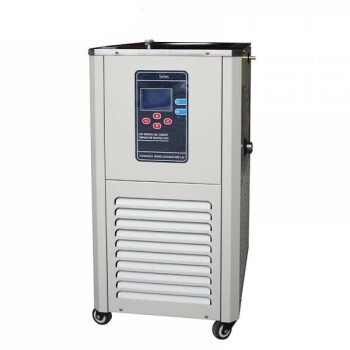
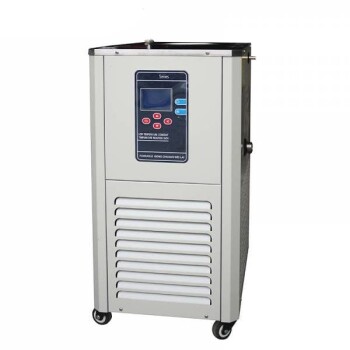
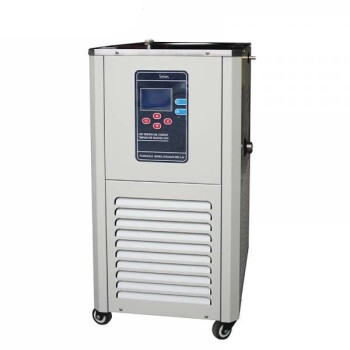
- 10L Chilling Circulator Cooling Water Bath Low Temperature Constant Temperature Reaction Bath
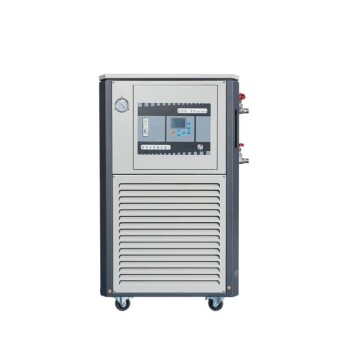
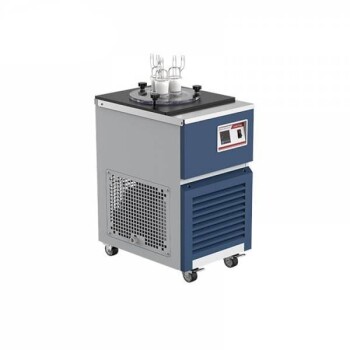
- 5L Heating Chilling Circulator Cooling Water Bath Circulator for High and Low Temperature Constant Temperature Reaction
- 50L Heating Chilling Circulator Cooling Water Bath Circulator for High and Low Temperature Constant Temperature Reaction
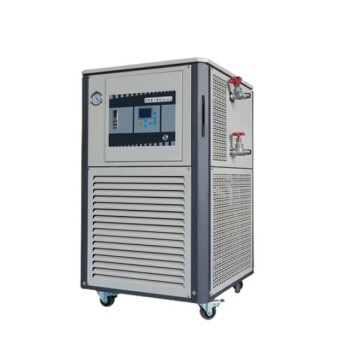
- 20L Heating Chilling Circulator Cooling Water Bath Circulator for High and Low Temperature Constant Temperature Reaction
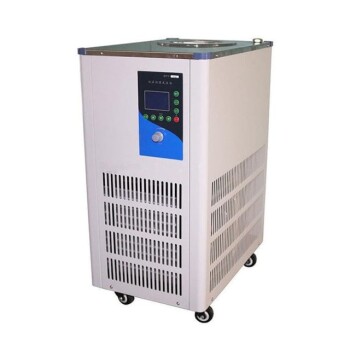
- 10L Heating Chilling Circulator Cooling Water Bath Circulator for High and Low Temperature Constant Temperature Reaction
People Also Ask
- What is the necessity of a circulating water bath in chlorate production? Optimize Yield & Purity with Precision
- What is the role of low-temperature cooling baths in bio-oil collection? Maximize Yield Through Rapid Quenching
- What is the purpose of a cooling circulation water bath system in electrochemical experiments? Enhance Lab Precision
- Why is a circulating water chiller required for Prussian Blue nanoparticles? Ensure Stability & Batch Reproducibility
- What function does a circulating cooling chiller perform during the gas adsorption isotherm testing of nanoporous carbon?