Crushing and sieving systems serve as the foundational control point for the quality of high-performance silicide powder materials. These mechanical processes directly dictate the particle size distribution, which regulates the efficiency of chemical synthesis and the structural reliability of the final material under thermal stress.
The precision of these systems determines the material's success: crushing maximizes chemical reactivity by increasing surface area, while sieving guarantees the uniformity required to prevent mechanical failure during service.
The Impact of Crushing on Chemical Efficiency
Converting Bulk to Fine Particles
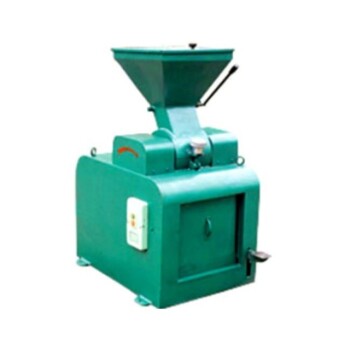
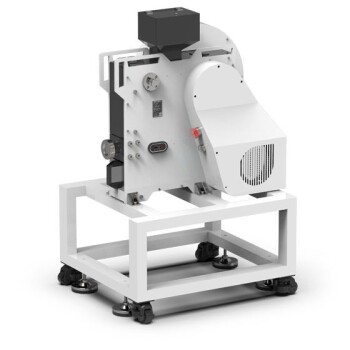
Industrial-grade crushing equipment is the first step in processing. Its primary function is to mechanically reduce bulk raw materials into fine particles.
Increasing Specific Surface Area
The reduction of particle size has a direct geometric consequence. It significantly increases the specific surface area of the powder.
Enhancing Reaction Activity
A high specific surface area is critical for synthesis. By exposing more surface area, crushing systems significantly enhance the activity of subsequent chemical reactions.
This increased activity ensures that the synthesis process is efficient and thorough, leading to a higher quality precursor material.
The Role of Sieving in Structural Integrity
Ensuring Particle Consistency
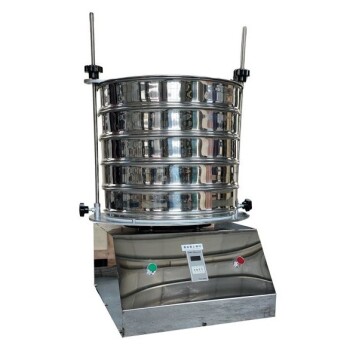
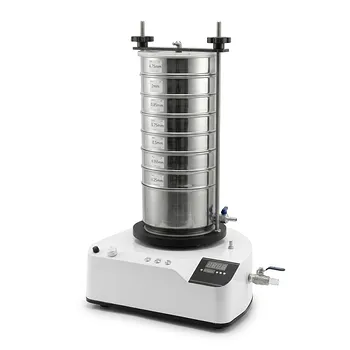
Once the material is crushed, high-precision sieving systems filter the output. Their specific role is to ensure the absolute consistency of powder particle size across the batch.
Preventing Uneven Thermal Expansion
Inconsistent particle sizes are a major liability for high-performance materials. If particles vary significantly in size, they may expand at different rates when heated.
Mitigating Stress During Service
High-precision sieving directly addresses this risk. By ensuring uniformity, these systems prevent uneven thermal expansion stress within the final silicide material.
This uniformity is critical for maintaining the structural integrity of the material when it is deployed in high-temperature service environments.
Common Pitfalls to Avoid
The Risk of Inadequate Crushing
If crushing systems fail to produce sufficiently fine particles, the specific surface area will remain low. This leads to incomplete or sluggish chemical reactions, compromising the purity and quality of the synthesized material.
The Danger of Poor Sieving
If sieving systems lack precision, the final powder will suffer from a wide particle size distribution. This lack of homogeneity introduces internal stress points that can cause cracking or failure under thermal load.
Making the Right Choice for Your Goal
To optimize your silicide material production, prioritize your processing systems based on your specific performance targets:
- If your primary focus is Synthesis Efficiency: Prioritize high-performance crushing equipment to maximize specific surface area and chemical reactivity.
- If your primary focus is Component Reliability: Invest heavily in high-precision sieving to ensure particle uniformity and eliminate thermal expansion risks.
Control the particle at the start of the process, and you secure the performance of the final product.
Summary Table:
| System Component | Primary Function | Impact on Material Quality |
|---|---|---|
| Crushing System | Particle size reduction & surface area increase | Maximizes chemical reactivity & synthesis efficiency |
| Sieving System | Particle size filtration & classification | Ensures uniformity & prevents thermal expansion stress |
| Synergy | Controlled particle distribution | Guarantees structural reliability & high-purity output |
Elevate Your Powder Processing with KINTEK Precision
Don't let inconsistent particle sizes compromise your research or production. KINTEK specializes in advanced laboratory solutions designed to ensure the structural integrity and chemical efficiency of your high-performance materials. Whether you are refining silicides or developing new alloys, our high-performance crushing and milling systems, alongside our precision sieving equipment and hydraulic presses, provide the control you need to succeed.
From high-temperature furnaces and reactors to essential lab consumables like ceramic crucibles and PTFE products, KINTEK is your partner in material science excellence. Contact us today to discover how our comprehensive range of equipment and expertise can optimize your lab's workflow and material quality!
References
- S. V. Lytovchenko. High-Temperature Silicides: Properties and Application. DOI: 10.26565/2312-4334-2016-3-01
This article is also based on technical information from Kintek Solution Knowledge Base .
Related Products
- Laboratory Test Sieves and Sieving Machines
- Three-dimensional electromagnetic sieving instrument
- Laboratory Sealed Hammer Crusher for Efficient Sample Preparation
- Laboratory Vibratory Sieve Shaker Machine for Dry and Wet Three-Dimensional Sieving
- Spark Plasma Sintering Furnace SPS Furnace
People Also Ask
- What are laboratory test sieves used for? A Guide to Particle Size Analysis
- How do you calculate the sieve test? Master Particle Size Distribution for Quality Control
- How does a lab test sieve contribute to biomass charcoal powder preparation? Achieve Uniform Particle Size
- What are the specifications for test sieves? A Guide to ASTM & ISO Standards for Accurate Particle Analysis
- What materials are required for sieving? Achieve Accurate Particle Size Analysis