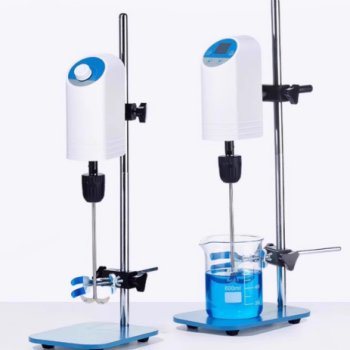
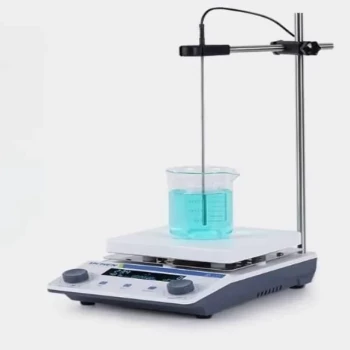
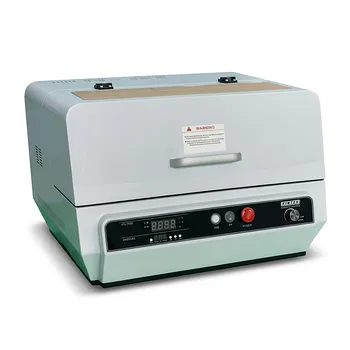
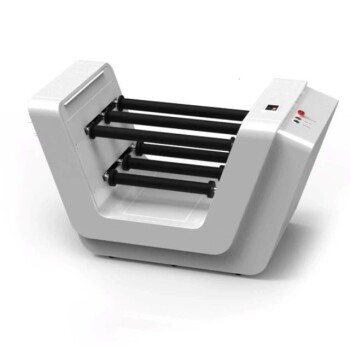
High-precision stirring and dispersion devices facilitate the solution intercalation method by applying intense kinetic energy—specifically through high-speed shear or ultrasonication—to a polymer solution containing nano-fillers. This mechanical force is essential for breaking down particle agglomerates and driving polymer chains into the microscopic interlayer spaces of the filler material.
In nano-bio-composite production, the goal is not simple mixing, but structural integration. High-precision devices provide the necessary energy to overcome particle cohesion, ensuring polymer chains successfully penetrate nano-filler layers to create high-performance materials.
The Mechanics of Intercalation
Applying High-Speed Shear and Ultrasonic Energy
Standard mixing is often insufficient to separate nano-materials, which tend to clump together due to surface forces. High-precision devices utilize high-speed shear forces or ultrasonic energy to physically disrupt these agglomerates. This creates a homogeneous distribution of nano-fillers throughout the liquid medium.
Driving Polymer Chain Migration
Once the fillers are dispersed, the polymer chains must navigate into the tight spaces between the filler layers. The energy provided by these devices increases the mobility of the system. This encourages the polymer chains to migrate into the interlayer structures (galleries) of the nano-fillers.
Determining the Final Structure
Achieving Uniform Distribution
The primary reference highlights that the ultimate goal is the uniform distribution of fillers. Without high-precision dispersion, the composite will have weak spots caused by clumps of unincorporated filler. Proper dispersion ensures consistent mechanical and barrier properties across the entire material.
Locking in the Structure via Evaporation
The stirring process sets the stage for the final solidification. As the solvent evaporates, the polymer chains that have migrated into the layers are "locked" in place. This results in the formation of stable intercalated or exfoliated nanocomposites.
Intercalated vs. Exfoliated Outcomes
The degree of dispersion impacts the final architecture.
- Intercalated: Polymer chains are inserted between layers, but the layers maintain a structured order.
- Exfoliated: The layers are completely separated and dispersed individually, often yielding the highest performance gains.
Operational Considerations and Trade-offs
Balancing Energy Input
While high energy is required to separate nano-layers, excessive shear can sometimes degrade sensitive bio-polymer chains. The "high-precision" aspect of these devices is critical to finding the sweet spot where dispersion occurs without damaging the polymer matrix.
The Window of Operation
The dispersion must be maintained until the solvent begins to evaporate. If the stirring stops too early, particles may re-agglomerate before the polymer chains are fully locked into the interlayer structures.
Optimizing Your Composite Production
To achieve the best results with solution intercalation, consider your specific structural goals:
- If your primary focus is mechanical strength (Exfoliation): Maximize shear or ultrasonic intensity to fully separate filler layers, ensuring individual dispersion before the solvent evaporates.
- If your primary focus is structural order (Intercalation): Use controlled, consistent agitation to insert polymer chains into galleries without completely delaminating the filler structure.
High-precision dispersion turns a simple mixture into a structurally engineered nano-material.
Summary Table:
| Feature | Intercalated Structure | Exfoliated Structure |
|---|---|---|
| Mechanism | Polymer chains inserted between layers | Layers completely separated and dispersed |
| Energy Requirement | Moderate precision & controlled agitation | High-intensity shear or ultrasonication |
| Material Benefit | Maintains structural order & stability | Maximum mechanical strength & barrier gains |
| Dispersion Goal | Uniform insertion into galleries | Individual layer delamination |
Elevate Your Material Research with KINTEK Precision Solutions
Precision is the difference between a simple mixture and a high-performance nano-bio-composite. At KINTEK, we specialize in the advanced laboratory equipment necessary to master the solution intercalation method.
Our comprehensive range of high-precision stirring systems, ultrasonic homogenizers, and dispersion tools provides the exact kinetic energy required to break down agglomerates and ensure uniform polymer migration. Beyond dispersion, we support your entire workflow with:
- High-temperature furnaces and vacuum systems for controlled solvent evaporation.
- Centrifuges and milling systems for precursor preparation.
- Specialized consumables including PTFE products and high-purity crucibles.
Ready to optimize your composite production and achieve superior exfoliation? Contact our technical experts today to find the perfect equipment configuration for your lab's unique requirements.
References
- Haina, Muhammad Umer Farooq. Recent Trends in Preparation and Applications of Biodegradable Polymer Composites. DOI: 10.32604/jrm.2020.010037
This article is also based on technical information from Kintek Solution Knowledge Base .
Related Products
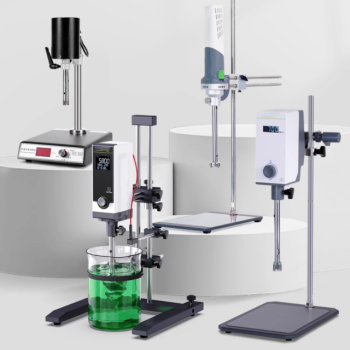
- High Performance Laboratory Stirrers for Diverse Applications
- Lab Sterile Slapping Type Homogenizer for Tissue Mashing and Dispersing
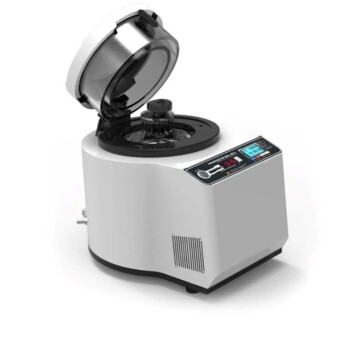
- Laboratory Benchtop High Speed Small Centrifuge for Low Temp Serum Separation Dehydration Research
- Laboratory Small Constant Temperature Heated Magnetic Stirrer Heater and Stirrer
- High Performance Lab Homogenizer for Pharma Cosmetics and Food R&D
People Also Ask
- How does a laboratory stirrer influence MOF product quality? Master Precision in Non-Solvothermal Synthesis
- What critical role does a Laboratory Stirrer play during leaching? Enhance Titanium-Magnesium Waste Recovery
- What is the primary function of laboratory stirring equipment in the preparation of compost leachate? Optimize Extraction
- What is a laboratory mixer? A Guide to Achieving Perfect Sample Homogeneity
- What is a laboratory mixer used for? Choose the Right Tool for Liquids or Solids