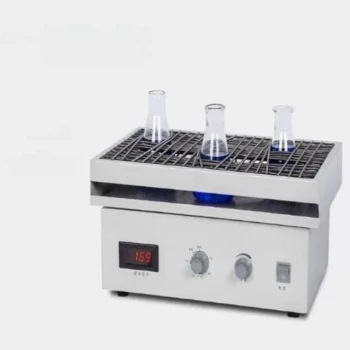
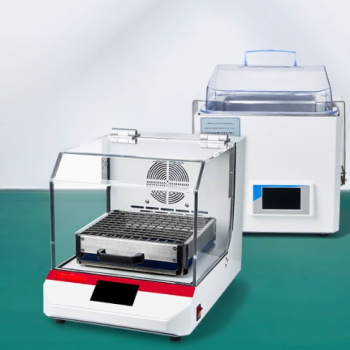
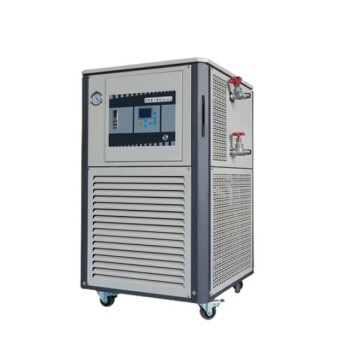
Continuous mechanical motion serves as the fundamental mechanism by which laboratory constant temperature shakers or stirrers ensure material uniformity. By maintaining a consistent kinetic environment, these devices force multiple metal precursor solutions and the catalyst carrier to achieve thorough contact and diffusion at the molecular level.
Core Takeaway The primary role of the shaker is to prevent the formation of local concentration gradients within the solution. By ensuring a uniform distribution of active components in the liquid phase, the equipment sets the critical foundation for forming homogeneous bimetallic alloy or core-shell structures during subsequent processing.
The Mechanism of Uniformity
Driving Molecular-Level Diffusion
The central challenge in preparing bimetallic nanocatalysts is ensuring that two different metal precursors mix evenly with the support material (carrier).
The shaker addresses this by generating continuous mechanical motion. This physical agitation breaks down static boundary layers around the carrier particles. It forces the metal precursor solutions to penetrate deeply and evenly, ensuring diffusion occurs at the molecular level rather than just on the macroscopic surface.
Eliminating Concentration Gradients
In a static or poorly mixed environment, metal ions tend to cluster, creating "hot spots" of high concentration and "dead zones" of low concentration.
The shaker provides a uniform kinetic environment that disrupts these clusters. This constant movement ensures that the ratio of metal precursors to the carrier remains consistent throughout the entire volume of the mixture. This prevents local variations that would otherwise lead to inconsistent catalytic performance.
Structural Implications
Facilitating Specific Architectures
The uniformity achieved during this mixing stage is directly responsible for the architecture of the final catalyst.
Because the precursors are mixed without gradients, the system is primed to form homogeneous bimetallic alloy structures. Alternatively, depending on the synthesis design, this precise control allows for the creation of distinct core-shell structures.
Enabling Synergistic Effects
The ultimate goal of using bimetallic catalysts is to leverage the synergy between two metals.
By ensuring thorough contact via mechanical stirring, the active sites are distributed in a way that maximizes their interaction. This precise distribution is what enables significant synergistic effects once the material undergoes drying and heat treatment.
Understanding the Trade-offs
The Limits of Mechanical Mixing
While the shaker ensures uniformity in the liquid phase, it cannot permanently "lock" the structure in place on its own. It is strictly a preparatory step.
Once the shaking stops and the solvent evaporation begins (typically in a laboratory oven), there is a risk of migration or agglomeration. If the subsequent drying process is not temperature-controlled (as noted in supplementary contexts regarding oven usage), the uniformity achieved by the shaker can be undone.
Kinetic Energy vs. Carrier Integrity
There is a balance to be struck regarding the intensity of the motion.
While "thorough contact" is required, excessive mechanical force could potentially damage fragile carrier structures (such as mesoporous channels). The goal is to maximize diffusion without physically degrading the support material before the precursors settle.
Making the Right Choice for Your Goal
To ensure high-performance bimetallic nanocatalysts, apply the mechanical motion strategy based on your specific structural targets:
- If your primary focus is Homogeneous Alloys: Ensure the shaker provides vigorous, continuous motion to drive absolute molecular mixing of both precursors before they adsorb onto the carrier.
- If your primary focus is Core-Shell Structures: Rely on the shaker to create a uniform kinetic environment that prevents local concentration gradients, ensuring the "shell" precursor covers the "core" evenly.
The shaker is the architect of potential; it organizes the components perfectly so the subsequent heat treatment can solidify a high-quality catalyst.
Summary Table:
| Feature | Mechanism | Impact on Nanocatalysts |
|---|---|---|
| Mechanical Motion | Molecular-level diffusion | Breaks boundary layers for deep carrier penetration |
| Kinetic Environment | Eliminates concentration gradients | Prevents precursor clustering and 'dead zones' |
| Structural Control | Precise precursor distribution | Enables homogeneous alloy or core-shell architectures |
| Mixing Intensity | Controlled agitation | Maximizes synergistic effects without damaging carriers |
Elevate Your Nanocatalyst Research with KINTEK Precision
Achieving the perfect bimetallic architecture requires more than just mixing; it demands precision. KINTEK specializes in high-performance laboratory equipment designed to meet the rigorous standards of material science. From our advanced constant temperature shakers and stirrers that ensure flawless precursor uniformity to our high-temperature furnaces (muffle, tube, vacuum) and crushing systems for post-processing, we provide the tools you need for breakthrough results.
Whether you are developing core-shell structures or synergistic alloys, our comprehensive portfolio—including high-pressure reactors, ultrasonic homogenizers, and specialized ceramics—is engineered to support your entire workflow.
Ready to optimize your catalyst performance? Contact our laboratory specialists today to find the ideal solution for your research needs.
References
- Jhonatan Luiz Fiorio, Giovanna Machado. Nanoengineering of Catalysts for Enhanced Hydrogen Production. DOI: 10.3390/hydrogen3020014
This article is also based on technical information from Kintek Solution Knowledge Base .
Related Products
- Laboratory Small Constant Temperature Heated Magnetic Stirrer Heater and Stirrer
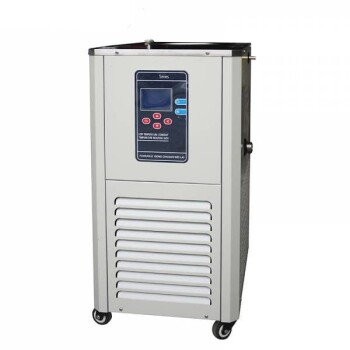
- High Temperature Constant Temperature Heating Circulator Water Bath Chiller Circulator for Reaction Bath
- Laboratory Multifunctional Small Speed-Adjustable Horizontal Mechanical Shaker for Lab
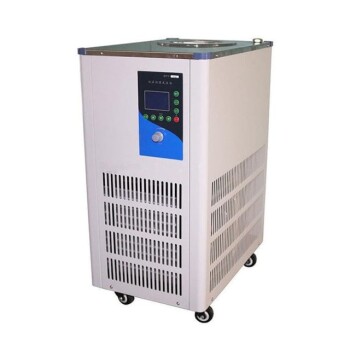
- 5L Chilling Circulator Cooling Water Bath Circulator for Low Temperature Constant Temperature Reaction Bath
- Laboratory Oscillating Orbital Shaker
People Also Ask
- What role does a magnetic stirrer with heating play in ZnO nanoparticle synthesis? Precision Control for Quality Results
- What role does a constant temperature heating magnetic stirrer play in MFC-HAp synthesis? Achieve Material Homogeneity
- What is the function of a laboratory magnetic stirrer in Ni–Cr–P electrodeposition? Optimize Ion Transport & Coating
- Why is a laboratory magnetic stirrer required for benzoic acid esters? Boost Reaction Speed & Yield with High RPM
- What role does a laboratory magnetic stirrer play in TiO2 and TiO2-Ag sol preparation? Master Chemical Kinetics