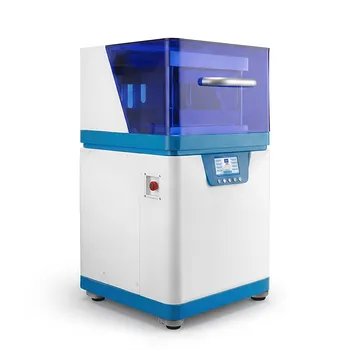
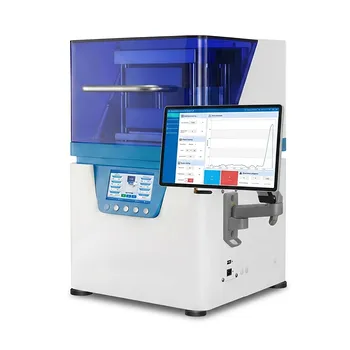
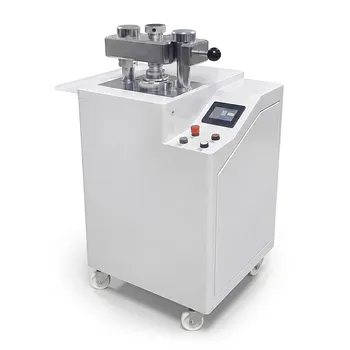
Laboratory hydraulic presses and precision molds are the essential tools used to transform loose molybdenum dioxide (MoO2) powders into a cohesive "green body." This process applies mechanical force to rearrange particles, establish initial porosity, and provide the structural integrity required for the target to survive the high-temperature sintering process.
The laboratory hydraulic press serves as the critical bridge between raw powder and a finished target, using controlled pressure to define the geometric shape and internal pore structure. This mechanical compaction ensures that the MoO2 target maintains dimensional consistency and the specific density required for industrial or experimental applications.
The Role of Mechanical Compaction in Target Formation
Transforming Powder into Green Bodies
The primary function of the hydraulic press is to compress loose, mixed powders into a green body—a solid, unfired disk. By applying high pressure within a mold, the press forces particles into close contact, creating enough mechanical interlocking to hold a specific shape.
Defining Geometric Dimensions
Matching molds, often made of high-strength steel, dictate the final diameter and thickness of the MoO2 disk. This precision ensures that every target produced is dimensionally consistent, which is vital for fitting into sputtering systems or experimental chambers after the sintering phase.
Establishing Initial Density and Porosity
The amount of pressure applied directly influences the green density of the MoO2 target. For porous materials, the press must be calibrated to reduce voids just enough to provide strength while leaving a network of interconnected pores that will be finalized during sintering.
Optimizing Material Properties through Pressure
Particle Rearrangement and Plastic Deformation
Under the high force of the press, micron or nano-sized MoO2 particles undergo plastic deformation and sliding. This movement excludes trapped air and increases the contact area between particles, which significantly reduces contact resistance and improves the material's intrinsic physical property measurements.
Enhancing Sintering Kinetics
A well-compacted green body provides a high-density foundation that accelerates the sintering process. By maximizing the contact points between MoO2 particles, the hydraulic press allows for more efficient mass transport during high-temperature heating, resulting in a more uniform final structure.
Reducing Internal Gradients
High-precision presses apply uniform pressure across the entire surface of the powder. This uniformity is critical to prevent density gradients, which can cause the target to warp, crack, or shrink unevenly when subjected to the intense heat of a furnace.
Understanding the Trade-offs
The Risk of Over-Compaction
While high pressure increases strength, it can also lead to "capping" or laminations, where the green body develops internal horizontal cracks upon being ejected from the mold. If the pressure is too high, the resulting target may become too dense, losing the specific porous characteristics required for MoO2 applications.
Handling Strength vs. Target Porosity
There is a constant balance between making a target strong enough to handle and keeping it porous enough for its intended use. Low compaction pressure preserves void spaces but results in a fragile green body that may crumble during the transition to the sintering furnace.
Making the Right Choice for Your Goal
How to Apply This to Your Project
Achieving the perfect MoO2 target requires aligning your press settings with your desired material outcome.
- If your primary focus is High Porosity: Use lower, precisely controlled compaction pressures (often near the lower limit of the material's stability) to maintain large internal voids while ensuring the disk can be handled.
- If your primary focus is Structural Integrity: Utilize higher pressures (e.g., 100 MPa or more) and precision-aligned molds to maximize particle interlocking and prevent cracking during the sintering cycle.
- If your primary focus is Precise Dimensionality: Ensure the mold and plunger are meticulously cleaned and lubricated to allow for smooth ejection of the green body without edge chipping.
The synergy between a high-precision hydraulic press and a matching mold is what ultimately determines the reliability and performance of a porous molybdenum dioxide target.
Summary Table:
| Process Step | Role of Press/Mold | Impact on MoO2 Target |
|---|---|---|
| Compaction | Mechanical Interlocking | Transforms loose powder into a solid "green body." |
| Shaping | Precision Mold Cavity | Ensures dimensional consistency and uniform thickness. |
| Pore Control | Calibrated Pressure | Defines initial density and interconnected pore networks. |
| Loading | Uniform Force Distribution | Prevents density gradients, warping, and cracking during sintering. |
Elevate Your Material Synthesis with KINTEK Precision
Achieving the perfect balance of porosity and structural integrity in MoO2 targets requires equipment that delivers absolute control. KINTEK specializes in advanced laboratory solutions, providing high-performance manual and automatic hydraulic presses (pellet, hot, and isostatic) alongside precision-engineered molds to ensure your green bodies are defect-free and ready for the furnace.
Beyond compaction, our portfolio supports your entire workflow with:
- High-Temperature Furnaces: Muffle, vacuum, and atmosphere furnaces for optimized sintering.
- Material Preparation: Crushing, milling, and sieving systems for uniform powder feedstock.
- Advanced Consumables: High-purity ceramics and crucibles for contamination-free processing.
Whether you are refining sputtering targets or advancing battery research, KINTEK provides the reliability and technical support you need. Contact our experts today to find the ideal pressing solution for your specific MoO2 applications!
References
- Xiangrong Hu, Tatsuya Suzuki. Development of Porous MoO2 Pellet Target for 99Mo/99mTc Generator. DOI: 10.3390/ma16206713
This article is also based on technical information from Kintek Solution Knowledge Base .
Related Products
- Automatic Hydraulic Hot Press with 500x500mm Heating Plates and Multi Stage PLC Control for Material Sintering
- Heated Hydraulic Press Machine with Heated Plates for Vacuum Box Laboratory Hot Press
- Automatic High Temperature Heated Hydraulic Press Machine with Heated Plates for Lab
- Manual High Temperature Heated Hydraulic Press Machine with Heated Plates for Lab
- 24T 30T 60T Heated Hydraulic Press Machine with Heated Plates for Laboratory Hot Press
People Also Ask
- How do hydraulic presses facilitate material solidification in Low-Temperature LPS? Optimize Your Material Densification
- Why is 800 MPa required for TiNiPdCu alloy green bodies? Master High-Density Compaction for Superior Material Strength
- How does KBr pellet preparation facilitate FTIR of high-ash mud? Precision Sample Prep for Structural Analysis
- Why is an industrial hydraulic press with precision stainless steel molds used? For Uniform Mo-Fe Precursor Compacts.
- Purpose of Coaxial Ring Molds & Presses in EM Testing? Achieve Precise VNA Data & Fit