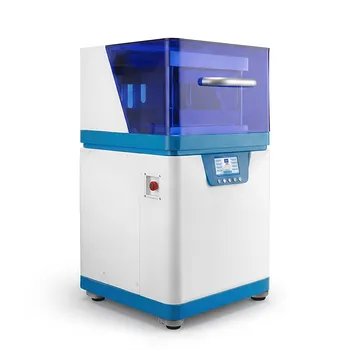
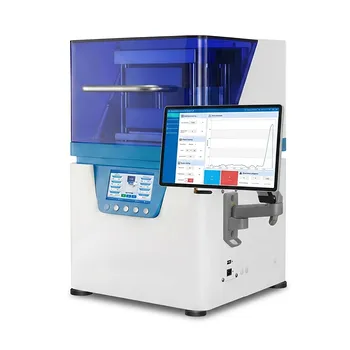
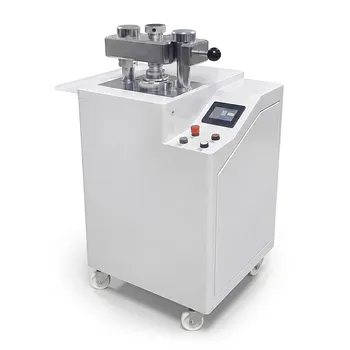
The laboratory hydraulic press is the primary tool for achieving electrode densification and contact stability. It applies precise, high-magnitude pressure to electrode materials—active sulfur, conductive agents, and binders—to force a dense rearrangement of particles. This mechanical compaction is essential for reducing internal resistance and establishing the continuous pathways necessary for electron and ion transport.
A hydraulic press transforms loose composite mixtures into cohesive, high-performance electrodes by maximizing particle-to-particle contact and minimizing internal porosity. This process is critical for reducing interfacial impedance, which directly dictates the battery's rate performance and cycle life.
Achieving Structural Densification
Eliminating Internal Porosity
In its raw state, an electrode composite contains significant voids and air pockets that act as insulators. A hydraulic press applies axial pressure to eliminate internal pores, physically squeezing particles together to create a solid, continuous medium.
Promoting Dense Rearrangement
High-pressure application forces the active materials, conductive agents, and binders to undergo dense rearrangement. This ensures that the conductive carbon network is tightly interwoven with the sulfur particles, preventing "dead zones" where active material cannot participate in electrochemical reactions.
Ensuring Uniform Electrode Thickness
Precise pressure control allows researchers to achieve a uniform thickness and consistent loading across the entire electrode surface. This uniformity is vital for preventing localized current density spikes, which can lead to premature battery failure or safety issues.
Enhancing Electrochemical Performance
Reducing Interfacial Resistance
The most critical function of the press is the reduction of interfacial resistance between the active material and the electrolyte or conductive additives. By minimizing the gaps between solid particles, the press facilitates a smoother flow of electrons and lithium ions throughout the composite structure.
Securing Contact with the Current Collector
The press enhances the mechanical bonding and electrical contact between the electrode layer and the current collector (such as aluminum foil or nickel foam). This robust interface ensures that electrons generated during the chemical reaction are efficiently collected and moved through the external circuit.
Improving Rate Performance and Cycle Life
By establishing stable and low-resistance contact points, the hydraulic press directly contributes to enhanced rate performance. This allows the battery to charge and discharge more quickly while maintaining its structural integrity over hundreds of cycles.
Critical Role in Solid-State Systems
Establishing Ion Transport Channels
In all-solid-state lithium-sulfur batteries, liquid electrolytes are absent, making solid-solid contact the only way for ions to move. Extremely high pressures (often exceeding 300 MPa) are required to fuse electrode and electrolyte powders into dense pellets, creating the necessary ion transport channels.
Reducing Grain Boundary Resistance
For halide or sulfide solid-state electrolytes, high-pressure cold-pressing significantly increases the contact area between powder particles. This process effectively reduces grain boundary resistance, allowing lithium ions to move freely across the interface between the electrolyte and the composite cathode.
Understanding the Trade-offs
The Risk of Over-Compression
While densification is necessary, excessive pressure can lead to over-compression, which may collapse the pore structure entirely. In liquid electrolyte systems, some residual porosity is required to allow the electrolyte to "wet" the internal surfaces of the electrode.
Mechanical Stress and Foil Damage
Applying extreme pressure to slurry-coated foils can cause mechanical deformation or tearing of the current collector. Finding the "sweet spot"—such as the 18 MPa often cited for liquid systems versus the 360 MPa for solid-state pellets—is essential for maintaining the structural integrity of the battery components.
How to Apply This to Your Project
Recommendations for Success
To optimize your electrode fabrication process, select your pressing parameters based on your specific battery chemistry and form factor.
- If your primary focus is liquid electrolyte systems: Use moderate pressure (typically around 10–20 MPa) to enhance electrical contact with the current collector while preserving enough porosity for electrolyte infiltration.
- If your primary focus is all-solid-state pellet cells: Prioritize extremely high pressures (300–400 MPa) to eliminate grain boundaries and ensure seamless ion transport between the solid electrolyte and active materials.
- If your primary focus is structural integrity on foam substrates: Use precise, consistent pressure (e.g., 10 MPa) to ensure the active material is deeply embedded into the nickel mesh or foam without crushing the 3D structure.
Proper application of hydraulic pressure is the bridge between a raw material mixture and a functional, high-efficiency lithium-sulfur electrode.
Summary Table:
| Key Factor | Role in Fabrication | Impact on Battery Performance |
|---|---|---|
| Densification | Eliminates voids and air pockets | Lowers internal resistance |
| Contact Stability | Maximizes particle-to-particle contact | Enhances rate performance |
| Uniformity | Ensures consistent electrode thickness | Prevents current spikes & failure |
| Solid-Solid Contact | Fuses powders in all-solid-state cells | Establishes ion transport channels |
Optimize Your Battery Research with KINTEK
At KINTEK, we understand that precision is paramount in lithium-sulfur battery fabrication. We offer a comprehensive range of high-performance laboratory hydraulic presses (pellet, hot, and isostatic) to help you achieve the perfect electrode densification and contact stability.
Beyond pressing solutions, our portfolio features high-temperature furnaces, crushing and milling systems, and advanced cooling solutions to support your entire material science workflow. Whether you are developing liquid electrolyte systems or cutting-edge all-solid-state batteries, KINTEK provides the reliability and technical support you need to succeed.
Contact KINTEK Today to Enhance Your Fabrication Process!
References
- Liping Zhao, Gang Liu. Preparation of an N–S dual-doped black fungus porous carbon matrix and its application in high-performance Li–S batteries. DOI: 10.3389/fchem.2023.1288013
This article is also based on technical information from Kintek Solution Knowledge Base .
Related Products
- Automatic Hydraulic Hot Press with 500x500mm Heating Plates and Multi Stage PLC Control for Material Sintering
- Automatic High Temperature Heated Hydraulic Press Machine with Heated Plates for Lab
- Heated Hydraulic Press Machine with Heated Plates for Vacuum Box Laboratory Hot Press
- Manual High Temperature Heated Hydraulic Press Machine with Heated Plates for Lab
- 24T 30T 60T Heated Hydraulic Press Machine with Heated Plates for Laboratory Hot Press
People Also Ask
- How do hydraulic presses facilitate material solidification in Low-Temperature LPS? Optimize Your Material Densification
- Why is 800 MPa required for TiNiPdCu alloy green bodies? Master High-Density Compaction for Superior Material Strength
- How does KBr pellet preparation facilitate FTIR of high-ash mud? Precision Sample Prep for Structural Analysis
- Why is an industrial hydraulic press with precision stainless steel molds used? For Uniform Mo-Fe Precursor Compacts.
- Purpose of Coaxial Ring Molds & Presses in EM Testing? Achieve Precise VNA Data & Fit