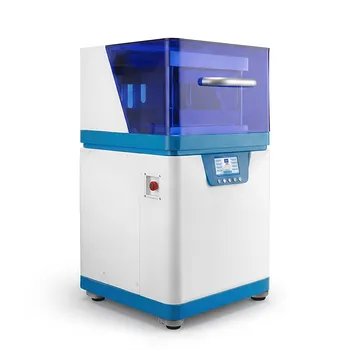
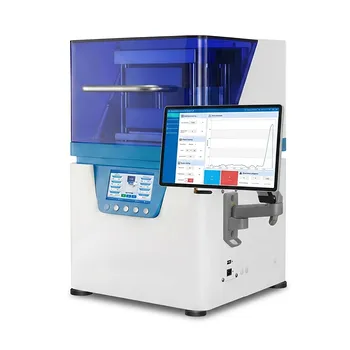
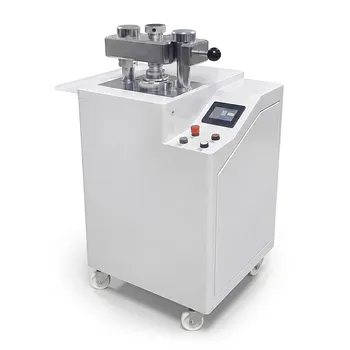
The laboratory hydraulic press is the critical instrument for ensuring the structural and electrical integrity of supercapacitor electrodes. It functions by applying uniform, high-magnitude mechanical pressure to a mixture of active materials, binders, and conductive agents, bonding them securely to a current collector substrate. This process transforms a loose slurry or powder into a dense, high-performing electrode sheet with minimized internal resistance.
The primary role of the hydraulic press in supercapacitor fabrication is to maximize the physical and electrical contact between the active material and the current collector. By optimizing this interface, researchers can significantly reduce contact resistance and ensure the electrode remains mechanically stable throughout thousands of charge-discharge cycles.
Achieving Optimal Electrical Connectivity
Minimizing Interfacial Contact Resistance
The hydraulic press forces the active material mixture—often containing microporous carbon and conductive agents—into direct, intimate contact with current collectors like nickel mesh, foil, or foam. This compression eliminates microscopic gaps at the interface, which is the most common source of high internal resistance in experimental cells.
Enhancing Charge Transfer Rates
By applying specific pressures (often ranging from 10 MPa to 30 MPa), the press facilitates an efficient pathway for electron transport. This tight mechanical contact ensures that electrons generated during the electrochemical reaction can move rapidly from the active substance to the current collector, directly improving the rate performance of the supercapacitor.
Facilitating Particle Rearrangement
In dry powder applications, high mechanical pressure (up to 80 MPa) causes the individual particles of activated carbon and binders to rearrange and bond. This densification creates a continuous conductive network within the electrode sheet itself, reducing the ohmic resistance of the bulk material.
Ensuring Mechanical and Structural Durability
Bonding Active Materials to Substrates
The press provides the mechanical energy required to "lock" the active slurry into the three-dimensional structure of substrates like nickel foam. This bonding is essential to prevent the active material from delaminating or shedding during subsequent assembly steps.
Resisting Electrolyte Flushing and Cycling
During operation, electrodes are immersed in liquid electrolytes and subjected to ion movement that can cause physical stress. A properly pressed electrode maintains its structural integrity, ensuring that the active material does not wash away or lose contact during electrolyte flushing or long-term cycling.
Enhancing Mechanical Strength
The use of binders like Polytetrafluoroethylene (PTFE) is most effective when combined with hydraulic pressure. The pressure helps the binder "fibrillate" or wrap around the active particles, providing the electrode sheet with the necessary mechanical strength for handling and testing.
Precision Control of Electrode Architecture
Uniformity and Density Calibration
A hydraulic press allows for the application of consistent, repeatable force across the entire surface of the electrode. This uniformity is vital for ensuring that the electrochemical properties are the same across the whole sheet, preventing "hot spots" of high current density.
Thickness and Porosity Regulation
Researchers use the press to achieve specific electrode thicknesses, such as 30 μm, which is critical for calculating gravimetric and volumetric capacitance. Controlled pressure allows for a balance between high density (for energy) and maintained porosity (for electrolyte access).
Understanding the Trade-offs
The Risk of Over-Compression
Applying excessive pressure (exceeding the material's requirements) can lead to the collapse of the internal pore structure of the active carbon. If the pores are crushed, the electrolyte cannot penetrate the material, which significantly reduces the available surface area and the resulting capacitance.
Substrate Deformation
Current collectors, especially delicate nickel foam or thin meshes, can be permanently deformed or crushed if the pressure is not carefully calibrated. This can alter the volume of the cell and lead to inconsistent results in standardized electrochemical testing.
Binder Distribution Issues
While pressure helps bonding, it must be applied uniformly to avoid binder migration. If the pressure is uneven, the binder may concentrate in certain areas, creating insulating patches that block electron flow and reduce the overall efficiency of the electrode.
How to Apply This to Your Fabrication Process
Recommendations Based on Your Research Goals
- If your primary focus is high power density: Prioritize higher pressures (25-30 MPa) to minimize interface resistance, but monitor the electrode thickness to ensure a short ion diffusion path.
- If your primary focus is maximum capacitance: Use moderate pressure (approx. 10 MPa) to ensure electrical contact while preserving the delicate micropore structure of the activated carbon.
- If your primary focus is long-term cycle life: Focus on the mechanical bond by maintaining pressure for a set duration (e.g., 1-5 minutes) to allow the binder to set firmly against the current collector.
The precise calibration of hydraulic pressure is the definitive factor in transitioning from a raw material mixture to a robust, high-efficiency supercapacitor electrode.
Summary Table:
| Application Phase | Typical Pressure | Core Benefit |
|---|---|---|
| Electrical Connectivity | 10 - 30 MPa | Minimizes contact resistance and improves rate performance |
| Structural Bonding | Variable | Secures active materials to substrates (e.g., nickel foam) |
| Particle Rearrangement | Up to 80 MPa | Creates a dense, continuous conductive network |
| Architecture Control | Precision Force | Regulates electrode thickness and electrolyte porosity |
Elevate Your Energy Storage Research with KINTEK
Precision is the heartbeat of high-performance supercapacitor development. At KINTEK, we understand that the right laboratory hydraulic press can mean the difference between a failing prototype and a breakthrough in electrode density.
Whether you need manual, electric, or heated hydraulic pellet presses for electrode fabrication, or specialized equipment like high-temperature furnaces (CVD, vacuum, atmosphere) and battery research tools, our portfolio is engineered for excellence. We support researchers and manufacturers with:
- Precision Pressing: Isostatic and hydraulic pellet presses for consistent, high-density electrode sheets.
- Material Processing: A complete range of crushing systems, planetary ball mills, and sieving equipment for perfect slurry preparation.
- Thermal Solutions: Advanced muffle and tube furnaces for material carbonization and synthesis.
- Lab Essentials: High-quality PTFE products, ceramics, and crucibles designed for rigorous chemical environments.
Ready to optimize your fabrication process and achieve superior capacitance? Contact our laboratory specialists today to find the perfect equipment solution for your specific research goals!
References
- Huijie Li, Chunyang Lu. Constructing Interconnected Microporous Structures in Carbon by Homogeneous Activation as a Sustainable Electrode Material for High-Performance Supercapacitors. DOI: 10.3390/molecules28196851
This article is also based on technical information from Kintek Solution Knowledge Base .
Related Products
- Automatic Hydraulic Hot Press with 500x500mm Heating Plates and Multi Stage PLC Control for Material Sintering
- Heated Hydraulic Press Machine with Heated Plates for Vacuum Box Laboratory Hot Press
- Automatic High Temperature Heated Hydraulic Press Machine with Heated Plates for Lab
- Manual High Temperature Heated Hydraulic Press Machine with Heated Plates for Lab
- 24T 30T 60T Heated Hydraulic Press Machine with Heated Plates for Laboratory Hot Press
People Also Ask
- How do hydraulic presses facilitate material solidification in Low-Temperature LPS? Optimize Your Material Densification
- Why is 800 MPa required for TiNiPdCu alloy green bodies? Master High-Density Compaction for Superior Material Strength
- How does KBr pellet preparation facilitate FTIR of high-ash mud? Precision Sample Prep for Structural Analysis
- Why is an industrial hydraulic press with precision stainless steel molds used? For Uniform Mo-Fe Precursor Compacts.
- Purpose of Coaxial Ring Molds & Presses in EM Testing? Achieve Precise VNA Data & Fit