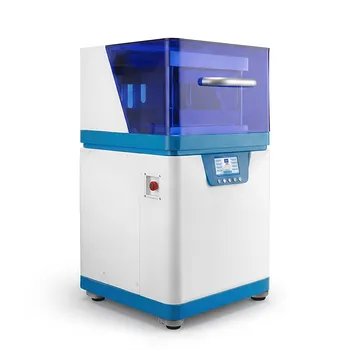
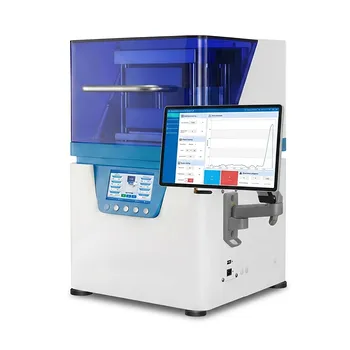
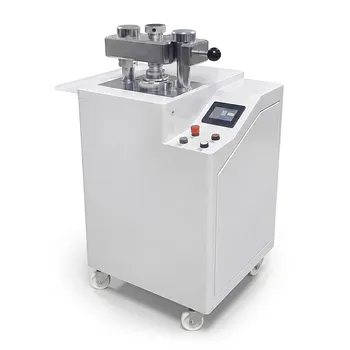
The requirement for 800 MPa of pressure is driven by the need to overcome the physical resistance of the metal powder and initiate plastic deformation. In the preparation of TiNiPdCu green bodies, this specific pressure level is essential to ensure a high-density compact that can support efficient atomic diffusion and achieve superior mechanical properties during the final sintering process.
Applying 800 MPa of pressure transforms loose TiNiPdCu powder into a high-density green body by forcing particles into intimate contact through plastic deformation and mechanical interlocking. This dense state is the critical prerequisite for efficient atomic diffusion and the elimination of porosity during the subsequent sintering process.
Overcoming Material Resistance and Rigidity
Neutralizing Friction and Elasticity
A laboratory hydraulic press must generate 800 MPa to overcome the internal friction and elastic resistance inherent between metal powder particles. At lower pressures, these forces prevent the particles from moving close enough to form a stable structure.
Initiating Plastic Deformation
High pressure is required to force the TiNiPdCu alloy particles to undergo plastic deformation. This physical change allows the particles to flatten and reshape, filling the microscopic gaps that exist in a loose powder state.
The Mechanics of Particle Consolidation
Achieving Maximum Density and Mechanical Interlocking
The 800 MPa load ensures tight packing of the powder, significantly increasing the relative density of the green body. This pressure causes mechanical interlocking, where the deformed particles "hook" into one another to provide structural integrity.
Promoting Cold-Weld Bonding
Under extreme pressure, the fresh metal surfaces of the particles come into such close contact that cold-weld bonding can occur. This bonding significantly enhances the splitting tensile strength of the green body, preventing it from cracking or fragmenting during handling.
Impact on the Sintering Process
Accelerating Solid-Phase Diffusion
High-density green bodies created at 800 MPa facilitate faster diffusion during solid-phase sintering. By minimizing the distance between atoms, the high-pressure compaction creates optimal pathways for atomic movement.
Minimizing Porosity for Enhanced Performance
The primary goal of using 800 MPa is to reduce porosity in the final alloy. A denser green body leads to a sintered product with a more uniform microstructure and superior mechanical properties.
Understanding the Trade-offs
Equipment and Tooling Wear
While 800 MPa is necessary for high-density alloys like TiNiPdCu, it places extreme stress on the steel molds and dies. Continuous operation at these limits requires high-strength materials to prevent tool deformation or failure.
Internal Stress and Capping
Excessive pressure can sometimes lead to residual internal stresses within the green body. If the pressure is released too quickly or if the powder is not properly lubricated, the compact may experience "capping" or delamination.
How to Apply These Principles to Your Process
Making the Right Choice for Your Goal
- If your primary focus is maximizing final alloy density: Ensure the hydraulic press maintains a consistent 800 MPa load to provide the necessary physical conditions for atomic diffusion.
- If your primary focus is preventing green body breakage: Focus on the "dwell time" at 800 MPa to allow for maximum mechanical interlocking and cold-weld bonding between particles.
- If your primary focus is extending tool life: Monitor the condition of your molds regularly, as the high pressures required for TiNiPdCu alloys accelerate wear compared to softer powders like aluminum.
By precisely controlling these high-pressure parameters, you can ensure the production of high-performance TiNiPdCu alloys with predictable and reliable structural characteristics.
Summary Table:
| Key Factor | Role of 800 MPa Pressure | Benefit to Green Body |
|---|---|---|
| Internal Resistance | Neutralizes friction and elastic recovery | Stable, uniform powder structure |
| Particle Morphology | Initiates plastic deformation and reshaping | Elimination of microscopic gaps |
| Structural Integrity | Promotes mechanical interlocking and cold-welding | High splitting tensile strength; no cracking |
| Sintering Kinetics | Maximizes relative density and atomic contact | Accelerated diffusion and reduced porosity |
Elevate Your Material Research with KINTEK Precision
Achieving the extreme 800 MPa pressure required for advanced TiNiPdCu alloys demands equipment that combines power with precision. KINTEK specializes in high-performance laboratory solutions designed to handle the rigors of alloy development. Our extensive portfolio includes:
- Advanced Hydraulic Presses: Manual, electric, and isostatic presses engineered for high-density pelletizing and powder consolidation.
- Thermal Processing: High-temperature muffle, vacuum, and atmosphere furnaces to optimize your post-compaction sintering.
- Sample Preparation: Precision crushing, milling systems, and high-strength steel dies built to withstand extreme loads.
Whether you are a researcher aiming for uniform microstructures or a laboratory manager seeking reliable throughput, KINTEK provides the technical expertise and durable tools to ensure your success. Contact our specialists today to find the perfect press for your application!
References
- Abid Hussain, Saif Ur Rehman. Influence of chemical composition on the amount of second phases precipitates and transformation temperatures of TiNiPdCu shape memory alloys prepared through novel powder metallurgy route. DOI: 10.1039/d3ra05513b
This article is also based on technical information from Kintek Solution Knowledge Base .
Related Products
- Automatic Hydraulic Hot Press with 500x500mm Heating Plates and Multi Stage PLC Control for Material Sintering
- Automatic High Temperature Heated Hydraulic Press Machine with Heated Plates for Lab
- Heated Hydraulic Press Machine with Heated Plates for Vacuum Box Laboratory Hot Press
- Manual High Temperature Heated Hydraulic Press Machine with Heated Plates for Lab
- 24T 30T 60T Heated Hydraulic Press Machine with Heated Plates for Laboratory Hot Press
People Also Ask
- How do hydraulic presses facilitate material solidification in Low-Temperature LPS? Optimize Your Material Densification
- How does KBr pellet preparation facilitate FTIR of high-ash mud? Precision Sample Prep for Structural Analysis
- Why is an industrial hydraulic press with precision stainless steel molds used? For Uniform Mo-Fe Precursor Compacts.
- Purpose of Coaxial Ring Molds & Presses in EM Testing? Achieve Precise VNA Data & Fit
- What process advantages do precision dies and hydraulic presses provide when preparing Ilmenite reduction samples?