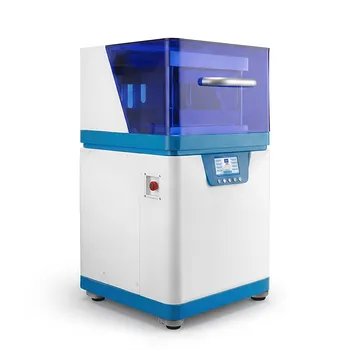
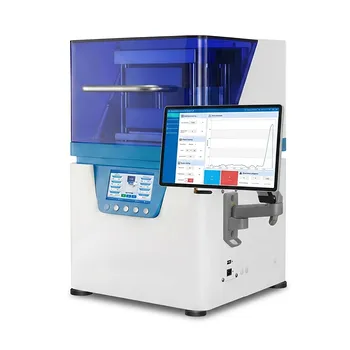
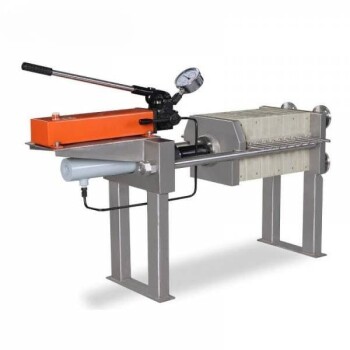
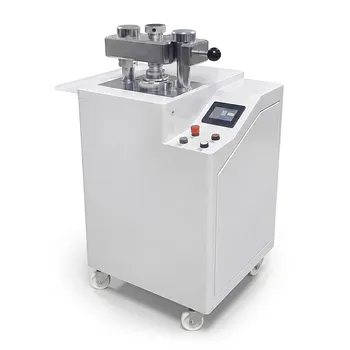
Industrial hydraulic presses and molds facilitate material solidification in Low-Temperature Liquid Phase Sintering (LPS) by applying extreme uniaxial pressure to a powder slurry within a temperature-controlled environment. This process, typically involving pressures up to 240 MPa at approximately 150°C, forces mechanical densification and the simultaneous expulsion of excess solvents, resulting in a solid bulk material without the need for extreme heat.
The core mechanism of solidification in LPS relies on high-pressure hydraulic force to rearrange particles and eliminate the liquid phase (solvent), creating a dense "green body" where atomic diffusion can occur efficiently at significantly lower energy thresholds than traditional sintering.
The Mechanics of Densification and Solidification
Mechanical Particle Rearrangement
The hydraulic press applies a stable, high-tonnage load that forces loose powder particles to shift and slide into a more compact configuration. This mechanical interlocking is the first step toward solidification, as it eliminates large internal voids and establishes the initial physical form of the component.
Expulsion of the Liquid Phase
In Low-Temperature LPS, the material starts as a slurry containing a solvent, such as deionized water. The sustained high pressure from the press acts as a mechanical pump, forcing this excess solvent out of the mold while the particles are compressed together.
Establishing Atomic Proximity
By reducing the distance between individual particles, the press increases the contact surface area across the material. This proximity is critical because it significantly shortens the path required for atomic diffusion, allowing the material to bond and solidify at temperatures as low as 150°C.
The Advantages of Low-Temperature Processing
Preventing Component Volatilization
Traditional high-temperature sintering often causes certain alloy elements to vaporize or "volatilize," altering the material's chemical composition. The low-temperature environment maintained during hydraulic pressing preserves the integrity of the alloy, ensuring the final product matches the intended specification.
Energy Efficiency and Sustainability
By substituting mechanical pressure for thermal energy, industrial presses significantly reduce the total power required for material production. This approach avoids the massive energy overhead of industrial furnaces, making the solidification process both cost-effective and environmentally friendly.
Improved Microstructural Uniformity
The use of precision molds and adjustable hydraulic pressure ensures that the resulting material has a uniform grain size and consistent density. This level of control prevents the structural defects and warping often associated with uneven thermal cooling in high-temperature processes.
Understanding the Trade-offs
Geometry and Shape Limitations
Because hydraulic presses typically apply uniaxial pressure (force from one or two directions), they are best suited for relatively simple geometric shapes like pellets, discs, or blocks. Complex parts with undercuts or intricate internal channels may suffer from uneven density distribution.
Tooling Wear and Mold Maintenance
Subjecting molds to pressures of 240 MPa and higher causes significant mechanical stress on the tooling. Over time, this can lead to deformation or surface fatigue, requiring high-grade tool steels and regular maintenance to ensure dimensional accuracy.
Pressure Sensitivity and Internal Stress
If the hydraulic pressure is released too rapidly after solidification, the "spring-back" effect can cause delamination or micro-cracking within the material. Controlled decompression cycles are necessary to manage the internal stresses created during the high-pressure phase.
Applying This Process to Your Project
Recommendations for Material Goals
- If your primary focus is maximizing material density: Ensure the hydraulic press is capable of maintaining a sustained, adjustable load above 240 MPa to fully eliminate voids.
- If your primary focus is preserving chemical purity: Use low-temperature LPS to prevent the volatilization of sensitive alloy components that would otherwise be lost in a high-temperature furnace.
- If your primary focus is reducing production costs: Prioritize the use of high-pressure hydraulic compaction to minimize the duration and temperature requirements of the sintering cycle.
By leveraging the mechanical power of hydraulic presses, manufacturers can achieve high-performance material solidification with a fraction of the thermal energy required by traditional methods.
Summary Table:
| Feature | Details |
|---|---|
| Core Mechanism | Uniaxial pressure + Solvent expulsion |
| Operating Pressure | Up to 240 MPa |
| Process Temperature | ~150°C (Low Thermal Energy) |
| Primary Advantage | Preserves alloy integrity & chemical purity |
| Best Geometries | Pellets, discs, and simple solid blocks |
Elevate Your Material Research with KINTEK Precision
Achieve superior material density and chemical purity with KINTEK’s industry-leading hydraulic solutions. Whether you are performing Low-Temperature Liquid Phase Sintering (LPS) or advanced powder metallurgy, our comprehensive range of hydraulic presses (pellet, hot, isostatic) and precision molds are engineered to deliver the stable, high-tonnage loads (up to 240+ MPa) your project demands.
Why partner with KINTEK?
- Preserve Integrity: Maintain alloy specifications by avoiding high-temperature volatilization.
- Energy Efficiency: Reduce overhead by substituting thermal energy with mechanical force.
- Versatile Solutions: From lab-scale pellet presses to robust crushing and milling systems, we provide the tools for every stage of material preparation.
Ready to optimize your solidification process and reduce production costs? Contact our laboratory equipment experts today!
References
- Bo Zhu, Yun Zheng. Enhanced thermoelectric performance in Bi<sub>0.5</sub>Sb<sub>1.5</sub>Te<sub>3</sub>/SiC composites prepared by low-temperature liquid phase sintering. DOI: 10.1039/d2ta09850d
This article is also based on technical information from Kintek Solution Knowledge Base .
Related Products
- Automatic Hydraulic Hot Press with 500x500mm Heating Plates and Multi Stage PLC Control for Material Sintering
- Automatic High Temperature Heated Hydraulic Press Machine with Heated Plates for Lab
- Heated Hydraulic Press Machine with Heated Plates for Vacuum Box Laboratory Hot Press
- Manual High Temperature Heated Hydraulic Press Machine with Heated Plates for Lab
- 24T 30T 60T Heated Hydraulic Press Machine with Heated Plates for Laboratory Hot Press
People Also Ask
- Why is 800 MPa required for TiNiPdCu alloy green bodies? Master High-Density Compaction for Superior Material Strength
- How does KBr pellet preparation facilitate FTIR of high-ash mud? Precision Sample Prep for Structural Analysis
- Why is an industrial hydraulic press with precision stainless steel molds used? For Uniform Mo-Fe Precursor Compacts.
- Purpose of Coaxial Ring Molds & Presses in EM Testing? Achieve Precise VNA Data & Fit
- What process advantages do precision dies and hydraulic presses provide when preparing Ilmenite reduction samples?