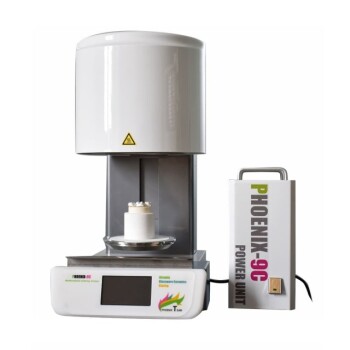
Precision drying is the critical control point for determining the structural integrity and performance of GPTMS-modified cellulose sensors. By facilitating a controlled thermal treatment, precision ovens manage the transition from sol to gel and ensure slow solvent evaporation, directly preventing the formation of microscopic defects.
Core Takeaway A properly calibrated drying program is essential for preventing pinholes and cracks caused by rapid solvent escape, thereby guaranteeing the continuity and high reproducibility of the sensor membrane layer.
The Role of Controlled Thermal Treatment
Managing the Sol-Gel Transition
Precision ovens facilitate the delicate transition from sol to gel during the coating process. This phase change requires a stable thermal environment to ensure the chemical network forms correctly.
Without precise temperature control, the chemical cross-linking may occur unevenly. This results in a membrane that lacks the necessary uniformity for accurate sensing.
Controlling Solvent Evaporation
The primary function of the equipment during curing is to ensure the slow evaporation of solvents. Rapid changes in temperature can cause solvents to flash off too quickly.
When solvents escape rapidly, they disrupt the film surface. Controlled heating mitigates this, allowing the solvent to leave the matrix without damaging the developing structure.
Preventing Surface Defects
A calibrated drying program specifically prevents the GPTMS coatings from developing pinholes or cracks. These defects are structural failures that occur when the internal pressure of evaporating solvents exceeds the strength of the film.
By eliminating these imperfections, the equipment ensures the continuity of the sensor membrane layer. A continuous film is non-negotiable for reliable electrical or optical sensor performance.
Preserving Nanofiber Structure
Gentle Removal of Residuals
Beyond the curing stage, laboratory ovens are critical for processing washed precursors. Maintaining a constant temperature, such as 60 degrees Celsius, allows for the gentle removal of moisture and residual ethanol.
This step cleans the material without subjecting it to thermal shock. It prepares the surface for subsequent modification without degrading the base material.
Avoiding Structural Collapse
Controlled drying prevents the physical structure of the nanofibers from collapsing. If evaporation is too aggressive, capillary forces can crush the delicate nanofiber architecture.
Proper drying also prevents severe agglomeration. This ensures the precursors maintain good dispersibility and structural integrity, which are vital for uniform coating in later stages.
Understanding the Risks of Improper Drying
The Danger of Rapid Evaporation
The most significant risk in this process is uncontrolled solvent escape. If the drying equipment cannot maintain a stable ramp rate, the solvent will force its way out of the film.
This leads to immediate structural compromise. The resulting sensor will likely exhibit high noise, poor sensitivity, or complete mechanical failure due to micro-cracking.
Inconsistency and Poor Reproducibility
If the thermal treatment varies between batches, the sensor performance will fluctuate wildly. Precision equipment eliminates this variable.
High reproducibility is only possible when the drying parameters are identical every time. Inconsistent drying is often the hidden cause of batch-to-batch variance in sensor output.
Optimizing Your Preparation Protocol
To ensure the highest quality GPTMS-modified cellulose sensors, align your drying strategy with your specific processing stage:
- If your primary focus is Precursor Preparation: Maintain a constant, low temperature (e.g., 60°C) to prevent agglomeration and preserve nanofiber dispersibility.
- If your primary focus is Film Curing: Prioritize a calibrated drying program that facilitates slow solvent evaporation to eliminate pinholes and cracks.
Ultimately, the quality of your sensor membrane is defined not just by the chemistry, but by the precision of the thermal energy applied to it.
Summary Table:
| Drying Variable | Impact on Film Quality | Potential Risk of Failure |
|---|---|---|
| Temperature Ramp Rate | Controls solvent evaporation speed | Rapid heating causes pinholes and cracks |
| Sol-Gel Transition | Ensures uniform chemical cross-linking | Uneven thermal zones lead to membrane defects |
| Precursor Drying | Maintains nanofiber dispersibility | High heat causes structural collapse/agglomeration |
| Equipment Stability | Ensures batch-to-batch reproducibility | Thermal fluctuations cause sensor inconsistency |
| Curing Environment | Guarantees film continuity | Surface disruption leads to poor sensing performance |
Precision drying is the bridge between chemical synthesis and high-performance sensing. KINTEK understands that even the smallest thermal fluctuation can compromise your GPTMS-modified cellulose sensors. From high-stability laboratory ovens and vacuum drying solutions to advanced crushing, milling, and pellet presses, we provide the precision equipment necessary for flawless material preparation. Whether you are optimizing battery research, developing specialized electrodes, or engineering next-gen sensors, our portfolio of high-temperature furnaces and cooling solutions ensures your results are reproducible and your films are defect-free. Contact KINTEK today to elevate your lab's precision!
References
- Himani Shivhare -, Dr Preeti Chincholikar -. 3-Glycidoxypropyltrimethoxysilan: Description, and Analysis of Works Approaches and Applications. DOI: 10.36948/ijfmr.2023.v05i05.6389
This article is also based on technical information from Kintek Solution Knowledge Base .
Related Products
- High Temperature Muffle Oven Furnace for Laboratory Debinding and Pre Sintering
- Laboratory Scientific Electric Heating Blast Drying Oven
- Dental Porcelain Zirconia Sintering Ceramic Furnace Chairside with Transformer
- 56L Vertical Laboratory Vacuum Drying Oven
- 23L Laboratory Vacuum Drying Oven
People Also Ask
- Why is the annealing treatment in a high-temperature muffle furnace critical for the preparation of an Sb-SnO2 interlayer?
- What function does a high-temperature muffle furnace serve in Ti3AlC2 MAX phase synthesis? Master Molten Salt Diffusion
- What role does a calcination furnace play in preparing hollow core-shell particles? Achieve Perfect Nano-Structures
- What are the main components of a high-temperature muffle furnace? A Guide to the Core Systems
- What is the role of a high-temperature muffle furnace in preparing Cs-aluminosilicate waste? Key Simulation Insights