Precise thermal regulation lies at the heart of this synthesis method. By maintaining a reaction mixture at exactly 170°C for 8 hours under nitrogen protection, the system creates a specific thermodynamic environment. This environment, combined with the reducing properties of the solvent, forces platinum atoms to adopt a directional, non-spherical growth pattern directly on the carbon support.
By relying on strict thermodynamic parameters rather than chemical shape-directing agents, this approach achieves morphology control without surfactants. This ensures the resulting nanoparticle surface remains clean, preventing residue from blocking the catalyst's active sites.
The Mechanics of Directional Growth
The Role of Thermodynamic Stability
The system uses a sustained temperature of 170°C for an 8-hour duration. This is not an arbitrary setting; it provides the specific energy required to promote anisotropic (directional) growth rather than standard spherical accumulation.
The Reducing Solvent
Instead of adding external reducing agents, the process utilizes the reducing properties of the solvent itself. At the elevated temperature, the solvent drives the reduction of platinum precursors at a rate that favors specific crystal facet growth.
Environmental Control
To ensure the reaction proceeds without interference from atmospheric oxygen, the entire process occurs under nitrogen protection. Continuous stirring ensures that the heat and the reducing solvent are distributed uniformly, preventing localized hot spots that could alter the morphology.
The Surfactant-Free Advantage
Eliminating Surface Barriers
Standard synthesis methods often use surfactants (like PVP) to mold nanoparticles into specific shapes. However, these surfactants tend to adhere strongly to the particle surface.
Preserving Active Sites
This controlled heating method acts as a one-pot, surfactant-free process. Because no shape-directing chemicals are used, the surface of the platinum nanoparticle remains "clean," ensuring that the active sites are fully exposed for catalytic reactions.
Understanding the Trade-offs
Process Sensitivity
Because this method relies on thermodynamic equilibrium rather than chemical capping agents to control shape, the parameters are highly sensitive. Deviations from the 170°C setpoint or the 8-hour duration can lead to irregular shapes or incomplete growth.
Time Intensity
This is not a rapid synthesis technique. The requirement for a stable 8-hour hold time means production cycles are longer compared to flash-reduction methods, requiring robust equipment capable of maintaining stability over long periods.
Making the Right Choice for Your Goal
Achieving the correct morphology requires a strict adherence to the process parameters to balance growth rate and directionality.
- If your primary focus is Catalytic Activity: Prioritize this surfactant-free method to ensure maximum exposure of active sites without the need for post-synthesis cleaning.
- If your primary focus is Process Consistency: Ensure your heating equipment can maintain 170°C with negligible fluctuation under continuous stirring to guarantee uniform particle shape.
Mastering the balance between temperature, time, and inert atmosphere is the key to unlocking high-performance, non-spherical platinum catalysts.
Summary Table:
| Parameter | Specification | Function |
|---|---|---|
| Temperature | 170°C | Provides energy for anisotropic (directional) growth |
| Duration | 8 Hours | Ensures thermodynamic equilibrium and complete growth |
| Atmosphere | Nitrogen | Prevents oxidation and ensures chemical purity |
| Method | Surfactant-Free | Maintains clean active sites for higher performance |
| Mechanism | Reducing Solvent | Facilitates controlled reduction without external agents |
Maximize Your Catalytic Efficiency with KINTEK Precision
Precise morphology control demands equipment that guarantees absolute thermal stability. KINTEK specializes in providing researchers with high-performance laboratory solutions, including high-temperature high-pressure reactors, autoclaves, and atmosphere-controlled furnaces designed to maintain exact thermodynamic parameters like the 170°C/8-hour threshold.
Whether you are developing surfactant-free catalysts or advanced energy materials, our portfolio—from crushing and milling systems to specialized electrolytic cells and ceramics—is engineered to ensure your active sites remain clean and your results reproducible.
Ready to elevate your nanoparticle synthesis? Contact KINTEK today to find the perfect equipment for your laboratory.
References
- Mark D. Lim, Xianguo Li. Development of Non-Spherical Platinum Nanoparticles on Carbon Supports for Oxygen Reduction Reaction. DOI: 10.3390/catal13101322
This article is also based on technical information from Kintek Solution Knowledge Base .
Related Products
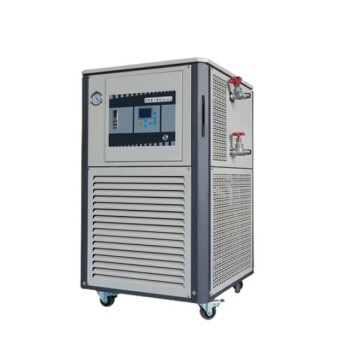
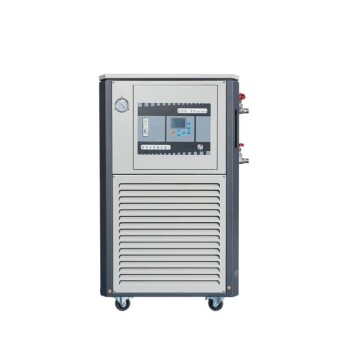
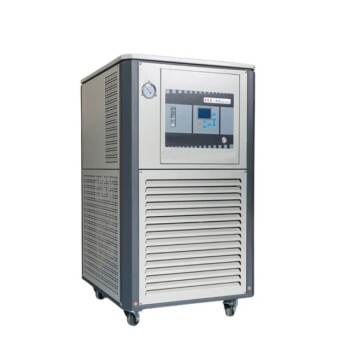
- 100L Heating Chilling Circulator Cooling Water Bath Circulator for High and Low Temperature Constant Temperature Reaction
- 10L Heating Chilling Circulator Cooling Water Bath Circulator for High and Low Temperature Constant Temperature Reaction
- 50L Heating Chilling Circulator Cooling Water Bath Circulator for High and Low Temperature Constant Temperature Reaction
- Multi Heating Zones CVD Tube Furnace Machine Chemical Vapor Deposition Chamber System Equipment
- 5L Heating Chilling Circulator Cooling Water Bath Circulator for High and Low Temperature Constant Temperature Reaction
People Also Ask
- What is the necessity of a circulating water bath in chlorate production? Optimize Yield & Purity with Precision
- How does a constant temperature circulator support the leaching reaction of gold scrap? Optimize Gold Recovery Results
- How do constant temperature circulators impact weight-loss immersion tests? Ensure Precision in Corrosion Analysis
- What function does a circulating cooling chiller perform during the gas adsorption isotherm testing of nanoporous carbon?
- What is the importance of a circulating water cooling system? Key to Protecting Your High-Temperature Lab Equipment