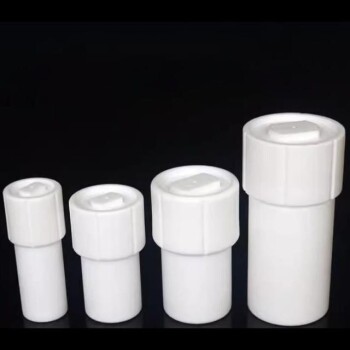
A fixed-bed tube reactor ensures experimental accuracy by creating a highly controlled, stable environment that rigorously mimics industrial conditions on a laboratory scale. By utilizing high-temperature resistant materials like quartz or stainless steel alongside an integrated preheating system, the reactor eliminates thermal fluctuations and flow inconsistencies. This precision allows researchers to subject honeycomb catalysts to simulated flue gases at a constant space velocity, ensuring the observed kinetic behavior mirrors reality.
The core advantage of this reactor design is the isolation of variables; by stabilizing temperature and flow rates via a preheating section and precise control systems, it transforms volatile industrial variables into measurable, reproducible laboratory data.
The Foundation of Reactor Stability
Material Selection for Inertness
To prevent the reactor walls from interfering with the chemical reaction, the tube is constructed from high-temperature resistant quartz or stainless steel.
This ensures that the reaction space remains chemically inert, meaning the observed activity is solely due to the catalyst, not the reactor vessel itself.
Precise Temperature Regulation
The system utilizes an integrated temperature control system to maintain exact thermal conditions.
This is critical for low-temperature evaluations, such as those at 100°C, where even minor fluctuations can significantly alter the reaction rate of the SCR process.
The Role of the Preheating Section
Before the gas reaches the catalyst, it passes through a dedicated preheating section.
This ensures the gas mixture is at the target temperature before contact, preventing thermal gradients that could skew the kinetic data.
Replicating Industrial Kinetics
Simulating Real-World Gas Composition
The reactor is designed to handle complex simulated flue gases containing NO, NH3, SO2, and H2O.
By introducing these specific components in a controlled manner, the system accurately models the chemical challenges found in actual flue gas denitrification.
Maintaining Constant Space Velocity
Accuracy depends on how the gas flows through the honeycomb-shaped Mn-Ce/Al2O3 catalysts.
The reactor ensures the gas passes through the catalyst channels at a constant space velocity, which is essential for determining the true kinetic behavior of the reaction.
Critical Variables to Monitor
The Impact of Thermal Instability
If the preheating section or temperature control fails, the kinetic data becomes unreliable.
Without a stable thermal baseline, it is impossible to distinguish between catalyst activity and temperature-induced reaction rate changes.
Flow Rate Consistency
Experimental accuracy is compromised if the space velocity fluctuates during the run.
Inconsistent flow changes the contact time between the gas and the catalyst, leading to data that does not accurately reflect the catalyst's efficiency in an industrial setting.
Making the Right Choice for Your Goal
To ensure your SCR evaluations yield actionable data, consider the following based on your specific research focus:
- If your primary focus is catalyst durability: Prioritize the use of quartz or stainless steel tubes to ensure the reactor withstands corrosive gases like SO2 and H2O over long test durations.
- If your primary focus is kinetic modeling: rigorous calibration of the preheating section and flow controllers is essential to maintain the constant space velocity required for accurate math modeling.
By strictly controlling the thermal and physical environment, the fixed-bed tube reactor bridges the gap between theoretical chemistry and practical industrial application.
Summary Table:
| Feature | Accuracy Mechanism | Benefit to SCR Evaluation |
|---|---|---|
| Material Selection | Quartz or Stainless Steel | Chemically inert environment; prevents vessel-induced interference. |
| Preheating Section | Integrated gas pre-treatment | Eliminates thermal gradients and ensures gas reaches target temperature. |
| Thermal Control | Integrated control systems | Maintains stable temperatures (e.g., 100°C) for reliable kinetic data. |
| Flow Management | Constant space velocity | Accurately models gas-catalyst contact time for industrial replication. |
| Gas Composition | Controlled injection (NO, NH3, SO2, H2O) | Rigorous simulation of real-world industrial flue gas conditions. |
Maximize Your Catalyst Research Accuracy with KINTEK
Transition from theoretical chemistry to practical industrial application with KINTEK’s precision-engineered laboratory solutions. As experts in high-temperature furnaces (CVD, PECVD, vacuum, atmosphere) and specialized high-temperature high-pressure reactors, we provide the stable environment necessary for rigorous SCR activity evaluations.
Whether you need robust stainless steel or quartz reactors, high-performance crushing and milling systems for catalyst preparation, or cooling solutions for process control, KINTEK offers a comprehensive portfolio designed for reliability and reproducibility.
Ready to elevate your laboratory's experimental precision? Contact us today to explore our full range of high-temperature equipment and essential consumables tailored for your specific research goals.
References
- Chengzhi Wang, Peng Cao. Poisoning Effect of SO2 on Honeycomb Cordierite-Based Mn–Ce/Al2O3Catalysts for NO Reduction with NH3 at Low Temperature. DOI: 10.3390/app8010095
This article is also based on technical information from Kintek Solution Knowledge Base .
Related Products
- Customer Made Versatile CVD Tube Furnace Chemical Vapor Deposition Chamber System Equipment
- Vertical Laboratory Tube Furnace
- Laboratory Rapid Thermal Processing (RTP) Quartz Tube Furnace
- Multi Heating Zones CVD Tube Furnace Machine Chemical Vapor Deposition Chamber System Equipment
- Customizable High Pressure Reactors for Advanced Scientific and Industrial Applications
People Also Ask
- What is a CVD tube furnace? A Complete Guide to Thin-Film Deposition
- What is the function of a high-temperature CVD tube furnace in 3D graphene foam prep? Master 3D Nanomaterial Growth
- How does a CVD tube furnace inhibit the sintering of silver supports? Boost Membrane Durability and Performance
- What is the function of a tube furnace in CVD SiC synthesis? Achieving Ultra-Pure Silicon Carbide Powders
- What is the difference between hot wall CVD and cold wall CVD? Choose the Right System for Your Process