Knowledge How does a freeze dryer contribute to the production of TPG powders? Preserving Nanostructure with KINTEK
Author avatar

Tech Team · Kintek Solution

Updated 1 day ago

How does a freeze dryer contribute to the production of TPG powders? Preserving Nanostructure with KINTEK


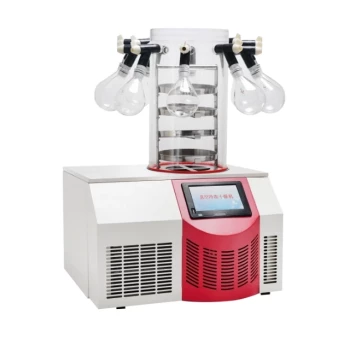
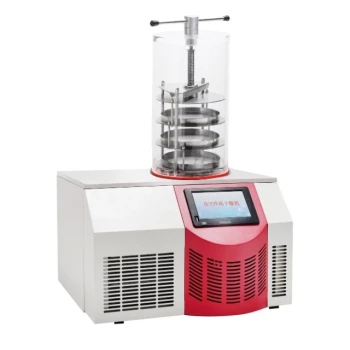
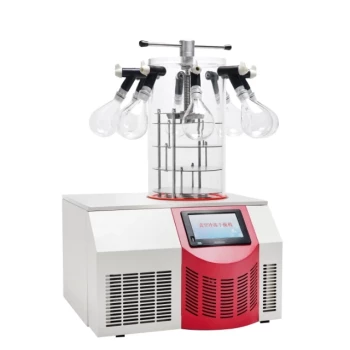
A freeze dryer contributes to the production of tea polyphenol/graphene (TPG) powders by removing moisture through sublimation rather than evaporation. By operating in a vacuum environment at ultra-low temperatures (approximately -50 °C), the system transitions water directly from a solid state to a gas, bypassing the liquid phase entirely.

The critical value of this process is the elimination of surface tension and capillary forces. This prevents the graphene nanosheets from collapsing or stacking, thereby preserving their structural integrity for high-performance applications.

The Mechanism of Preservation

Bypassing Liquid Evaporation

Conventional thermal drying relies on turning liquid water into steam. In contrast, a freeze dryer utilizes sublimation. This process allows moisture to leave the material without ever becoming a liquid, which is the root cause of many structural defects in nanomaterials.

Eliminating Capillary Forces

When liquid water evaporates, it exerts capillary forces on the material's structure. These forces are often strong enough to pull delicate nanostructures together. By maintaining a frozen state until the water is removed, freeze drying effectively neutralizes these forces.

Protecting Graphene Structure

Preventing Irreversible Stacking

Graphene nanosheets have a natural tendency to stack and agglomerate. Standard drying methods exacerbate this due to the surface tension of evaporating water. Freeze drying prevents this irreversible stacking, keeping the sheets separated and distinct.

Maintaining Specific Surface Area

The performance of graphene is heavily dependent on its surface area. Because the nanosheets are prevented from clumping together, the high specific surface area of the functionalized graphene is preserved. This ensures the material retains its intended chemical and physical properties.

Downstream Application Benefits

Excellent Redispersibility

A major challenge with graphene powders is getting them to mix well into other materials later. Because the freeze-dried TPG powder does not agglomerate, it retains excellent redispersibility. This is particularly vital when the powder needs to be integrated into epoxy resin matrices, ensuring a uniform composite.

Understanding the Constraints

Process Complexity

While freeze drying yields superior structural results, it requires strictly controlled environmental conditions. Achieving the necessary vacuum and maintaining ultra-low temperatures (e.g., -50 °C) demands specialized equipment compared to standard thermal drying. It is a process designed for quality and performance rather than speed.

Making the Right Choice for Your Goal

To determine if freeze drying is the correct approach for your TPG powder production, consider your end-use requirements.

  • If your primary focus is preserving structural integrity: Freeze drying is essential to prevent the collapse and stacking of nanosheets caused by capillary forces.
  • If your primary focus is material performance in composites: The method ensures the high specific surface area required for effective dispersion in epoxy resins.

Freeze drying is not merely a drying method; it is a structural preservation technique essential for high-quality graphene applications.

Summary Table:

Feature Freeze Drying (Sublimation) Conventional Thermal Drying (Evaporation)
Phase Transition Solid to Gas (Direct) Liquid to Gas
Capillary Forces Eliminated High (Causes structural collapse)
Material Structure Preserved nanosheets Irreversible stacking/agglomeration
Surface Area High specific surface area Reduced surface area
Redispersibility Excellent in resins/matrices Poor due to clumping

Elevate Your Material Science with KINTEK Solutions

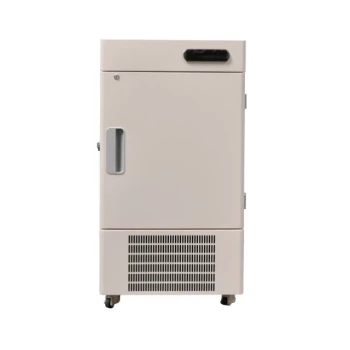
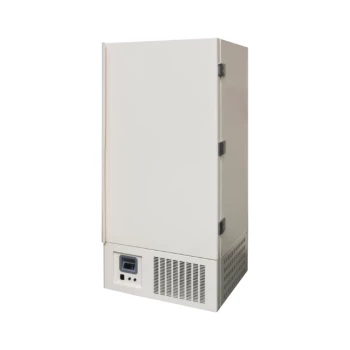
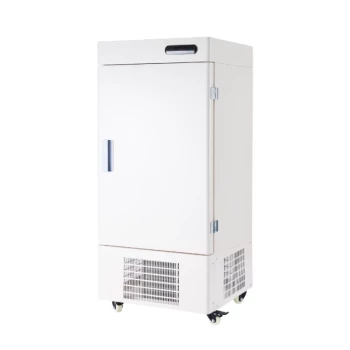
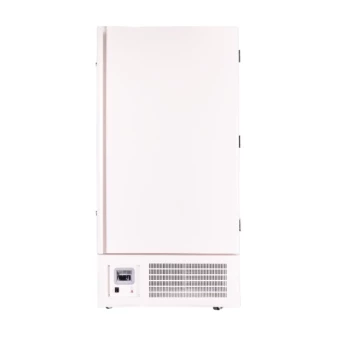
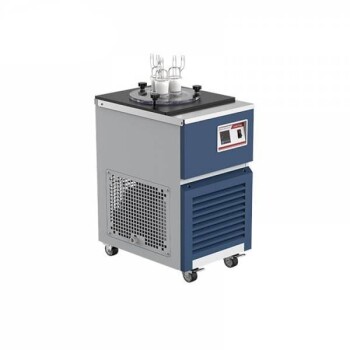
Structural integrity is the difference between a mediocre composite and a high-performance breakthrough. KINTEK specializes in professional-grade laboratory equipment, providing the advanced freeze dryers, ULT freezers, and cold traps necessary to produce superior TPG powders without the risk of irreversible stacking.

Whether you are functionalizing graphene for epoxy resins or developing next-generation battery materials, our comprehensive portfolio—including high-temperature furnaces, crushing systems, and hydraulic presses—ensures your lab has the precision tools required for excellence.

Ready to preserve your material's potential? Contact our technical experts today to find the perfect drying solution for your research goals.

References

  1. Youwei Guo, Yi He. One-Step Method for Preparing Dispersive Tea Polyphenol/Graphene Nanosheets Enhanced with Anticorrosion Performance. DOI: 10.3390/coatings9110731

This article is also based on technical information from Kintek Solution Knowledge Base .

Related Products

People Also Ask

Related Products

Benchtop Laboratory Freeze Dryer for Lab Use

Benchtop Laboratory Freeze Dryer for Lab Use

Premium benchtop laboratory freeze dryer for lyophilization, preserving samples with ≤ -60°C cooling. Ideal for pharmaceuticals & research.

Vacuum Cold Trap Chiller Indirect Cold Trap Chiller

Vacuum Cold Trap Chiller Indirect Cold Trap Chiller

Boost vacuum system efficiency and prolong pump life with our Indirect Cold Trap. Built-in chilling system with no need for fluid or dry ice. Compact design and easy to use.

30T 40T Split Automatic Heated Hydraulic Press Machine with Heated Plates for Laboratory Hot Press

30T 40T Split Automatic Heated Hydraulic Press Machine with Heated Plates for Laboratory Hot Press

Discover our split automatic heated lab press 30T/40T for precise sample preparation in material research, pharmacy, ceramics, and electronics industries. With a small footprint and heating up to 300°C, it's perfect for processing under vacuum environment.

Heated Hydraulic Press Machine with Heated Plates for Vacuum Box Laboratory Hot Press

Heated Hydraulic Press Machine with Heated Plates for Vacuum Box Laboratory Hot Press

Enhance your lab's precision with our lab press for vacuum box. Press pills and powders with ease and precision in a vacuum environment, reducing oxidation and improving consistency. Compact and easy to use with a digital pressure gauge.

Custom PTFE Teflon Parts Manufacturer for PTFE Tweezers

Custom PTFE Teflon Parts Manufacturer for PTFE Tweezers

PTFE tweezers inherit the excellent physical and chemical properties of PTFE, such as high temperature resistance, cold resistance, acid and alkali resistance, and corrosion resistance to most organic solvents.

Lab-Scale Vacuum Induction Melting Furnace

Lab-Scale Vacuum Induction Melting Furnace

Get precise alloy composition with our Vacuum Induction Melting Furnace. Ideal for aerospace, nuclear energy, and electronic industries. Order now for effective smelting and casting of metals and alloys.

Graphite Vacuum Furnace IGBT Experimental Graphitization Furnace

Graphite Vacuum Furnace IGBT Experimental Graphitization Furnace

IGBT experimental graphitization furnace, a tailored solution for universities and research institutions, with high heating efficiency, user-friendliness, and precise temperature control.

Circulating Water Vacuum Pump for Laboratory and Industrial Use

Circulating Water Vacuum Pump for Laboratory and Industrial Use

Efficient circulating water vacuum pump for labs - oil-free, corrosion-resistant, quiet operation. Multiple models available. Get yours now!

Vacuum Hot Press Furnace Machine for Lamination and Heating

Vacuum Hot Press Furnace Machine for Lamination and Heating

Experience clean and precise lamination with Vacuum Lamination Press. Perfect for wafer bonding, thin-film transformations, and LCP lamination. Order now!

Electric Heated Hydraulic Vacuum Heat Press for Lab

Electric Heated Hydraulic Vacuum Heat Press for Lab

The Electric Vacuum Heat Press is a specialized heat press equipment that operates in a vacuum environment, utilizing advanced infrared heating and precise temperature control for high quality, rugged and reliable performance.

Small Vacuum Heat Treat and Tungsten Wire Sintering Furnace

Small Vacuum Heat Treat and Tungsten Wire Sintering Furnace

The small vacuum tungsten wire sintering furnace is a compact experimental vacuum furnace specially designed for universities and scientific research institutes. The furnace features a CNC welded shell and vacuum piping to ensure leak-free operation. Quick-connect electrical connections facilitate relocation and debugging, and the standard electrical control cabinet is safe and convenient to operate.

Laboratory Hydraulic Press Lab Pellet Press for Button Battery

Laboratory Hydraulic Press Lab Pellet Press for Button Battery

Efficiently prepare samples with our 2T Button Battery Press. Ideal for material research labs and small-scale production. Small footprint, lightweight, and vacuum-compatible.

Oil Free Diaphragm Vacuum Pump for Laboratory and Industrial Use

Oil Free Diaphragm Vacuum Pump for Laboratory and Industrial Use

Oil-free diaphragm vacuum pump for labs: clean, reliable, chemical-resistant. Ideal for filtration, SPE, and rotary evaporation. Maintenance-free operation.

Graphite Vacuum Furnace High Thermal Conductivity Film Graphitization Furnace

Graphite Vacuum Furnace High Thermal Conductivity Film Graphitization Furnace

The high thermal conductivity film graphitization furnace has uniform temperature, low energy consumption and can operate continuously.

Vacuum Heat Treat and Sintering Furnace with 9MPa Air Pressure

Vacuum Heat Treat and Sintering Furnace with 9MPa Air Pressure

The air pressure sintering furnace is a high-tech equipment commonly used for the sintering of advanced ceramic materials. It combines vacuum sintering and pressure sintering techniques to achieve high-density and high-strength ceramics.

Vertical High Temperature Graphite Vacuum Graphitization Furnace

Vertical High Temperature Graphite Vacuum Graphitization Furnace

Vertical high temperature graphitization furnace for carbonization and graphitization of carbon materials up to 3100℃.Suitable for shaped graphitization of carbon fiber filaments and other materials sintered in a carbon environment.Applications in metallurgy, electronics, and aerospace for producing high-quality graphite products like electrodes and crucibles.

Graphite Vacuum Furnace Bottom Discharge Graphitization Furnace for Carbon Materials

Graphite Vacuum Furnace Bottom Discharge Graphitization Furnace for Carbon Materials

Bottom-out graphitization furnace for carbon materials, ultra-high temperature furnace up to 3100°C, suitable for graphitization and sintering of carbon rods and carbon blocks. Vertical design, bottom discharging, convenient feeding and discharging, high temperature uniformity, low energy consumption, good stability, hydraulic lifting system, convenient loading and unloading.

Large Vertical Graphite Vacuum Graphitization Furnace

Large Vertical Graphite Vacuum Graphitization Furnace

A large vertical high-temperature graphitization furnace is a type of industrial furnace used for the graphitization of carbon materials, such as carbon fiber and carbon black. It is a high-temperature furnace that can reach temperatures of up to 3100°C.

Graphite Vacuum Continuous Graphitization Furnace

Graphite Vacuum Continuous Graphitization Furnace

High-temperature graphitization furnace is a professional equipment for graphitization treatment of carbon materials. It is a key equipment for the production of high-quality graphite products. It has high temperature, high efficiency and uniform heating. It is suitable for various high-temperature treatments and graphitization treatments. It is widely used in metallurgy, electronics, aerospace, etc. industry.

Vacuum Heat Treat Sintering Brazing Furnace

Vacuum Heat Treat Sintering Brazing Furnace

A vacuum brazing furnace is a type of industrial furnace used for brazing, a metalworking process that joins two pieces of metal using a filler metal that melts at a lower temperature than the base metals. Vacuum brazing furnaces are typically used for high-quality applications where a strong, clean joint is required.


Leave Your Message