A gas flow control system acts as the primary regulator of reaction kinetics during surface treatment. It contributes to the process by strictly managing the flow rate and exposure duration of reactant gases, such as pure oxygen (O2) or carbon dioxide (CO2). This precision allows for the reliable formation of a protective coating on LPSC powders with a programmable thickness.
By stabilizing the supply of gas and the time of exposure, the control system converts a volatile chemical reaction into a repeatable manufacturing process, enabling the creation of protective layers specifically between 19 and 70 nm thick.
Governing the Reaction Environment
Regulating Reactant Supply
The fundamental role of the gas flow control system is to deliver a consistent stream of reactant gas.
Whether using pure oxygen (O2) or carbon dioxide (CO2), the system ensures the LPSC powders are exposed to a uniform concentration of gas. This stability is required to maintain consistent reaction kinetics across the entire batch of powder.
Managing Treatment Duration
Beyond flow rate, the system precisely controls how long the solid-gas interaction occurs.
Typical treatment windows range from 0.5 to 1.5 hours. The control system ensures the process operates exactly within these timeframes, preventing under-exposure or over-saturation of the particle surfaces.
Determining Layer Characteristics
Formation of Specific Compounds
The control system facilitates the chemical transformation necessary to create a protective shell.
By regulating the introduction of CO2, the system enables the formation of Li2CO3 (Lithium Carbonate). Alternatively, controlling the flow of O2 allows for the creation of oxysulfides.
Precision at the Nanoscale
The ultimate value of the flow control system is its ability to dictate layer thickness.
Through the manipulation of flow intensity and time, operators can target a specific coating thickness, typically achieving results between 19 and 70 nm. This control is vital, as the thickness defines the effectiveness of the protective layer.
Understanding the Process Sensitivity
The Risk of Kinetic Instability
If the gas flow fluctuates, the reaction kinetics become unpredictable.
Inconsistent flow leads to uneven coating, where some particles may have thick protective shells while others remain vulnerable. The control system mitigates this by eliminating variable flow rates.
Balancing Thickness and Performance
There is a strict trade-off between protection and material interaction.
A layer that is too thin (below 19 nm) may fail to offer adequate protection. Conversely, exceeding the upper limit (70 nm) due to poor time management could impede the functional properties of the LPSC powder.
Optimizing Your Treatment Strategy
To ensure the highest quality surface modification for LPSC powders, align your control parameters with your specific end-goals.
- If your primary focus is material consistency: Prioritize a stabilized flow rate to ensure uniform reaction kinetics across the entire powder bed.
- If your primary focus is layer dimensions: Adjust the treatment duration within the 0.5 to 1.5-hour window to precisely dial in the thickness between 19 and 70 nm.
Precision in gas delivery is the defining factor between a random chemical reaction and a engineered surface modification.
Summary Table:
| Parameter | Influence on LPSC Powder Treatment | Resulting Benefit |
|---|---|---|
| Gas Flow Rate | Regulates reactant supply (O2/CO2) | Uniform reaction kinetics & material consistency |
| Treatment Time | Manages duration (0.5 - 1.5 hours) | Precise control over coating thickness (19-70 nm) |
| Gas Chemistry | Facilitates Li2CO3 or oxysulfide formation | Engineered protective shell for particle stability |
| Flow Stability | Eliminates kinetic instability | Prevents uneven coating and vulnerable particles |
Elevate Your Advanced Material Research with KINTEK
Precise surface modification of LPSC powders requires the highest standards of control and reliability. At KINTEK, we specialize in providing state-of-the-art laboratory equipment designed for meticulous material engineering.
Our extensive portfolio includes:
- High-Temperature Furnaces & Reactors: Perfect for managing complex gas-solid reaction environments.
- Crushing, Milling & Sieving Systems: Ensure optimal powder consistency before treatment.
- Battery Research Tools: Specialized equipment for developing next-generation energy storage solutions.
- Precision Controls: Advanced flow management to achieve exact nanoscale coating thicknesses.
Whether you are working with vacuum CVD, atmospheric treatment, or high-pressure autoclaves, KINTEK delivers the expertise and consumables (from PTFE to ceramics) you need for repeatable results.
Ready to optimize your LPSC powder treatment? Contact our technical experts today to discover how our high-performance systems can enhance your laboratory's efficiency and precision.
Related Products
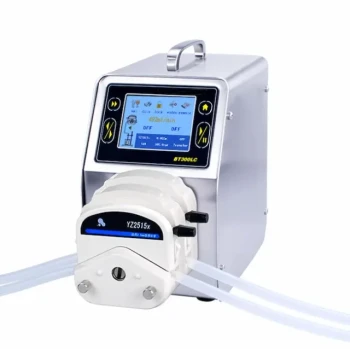
- Variable Speed Peristaltic Pump
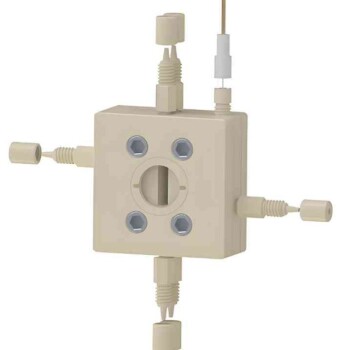
- Electrolytic Electrochemical Cell Gas Diffusion Liquid Flow Reaction Cell
- Customizable CO2 Reduction Flow Cell for NRR ORR and CO2RR Research
- Chemical Vapor Deposition CVD Equipment System Chamber Slide PECVD Tube Furnace with Liquid Gasifier PECVD Machine
- Controlled Nitrogen Inert Hydrogen Atmosphere Furnace
People Also Ask
- What is the core component of a peristaltic pump? The Flexible Tubing Explained
- How does a laboratory peristaltic pump contribute to the continuous operation of an electrochemical flow cell?
- What is sputtering rate? Master the Key to Controlling Thin Film Deposition Speed
- What is process monitoring in the context of a decontamination process? Ensure Safety and Compliance
- What chemicals are used in heat treatment? Master the Quenching Process for Optimal Metal Properties