A high-precision carbon heating block acts as the primary thermal engine within an Aerosol-Assisted Chemical Vapor Deposition (AACVD) reactor, directly dictating the physical architecture of the deposited film. By maintaining a strictly controlled temperature range—typically between 290°C and 330°C—it drives the specific chemical interactions necessary to build complex surface textures. This thermal energy is responsible for simultaneously evaporating solvents and triggering the accumulation of nanoparticles around microparticles, creating the dual-scale roughness required for hierarchical structures.
Core Takeaway The carbon heating block is not merely a heat source; it is the architect of surface morphology. Its precise thermal regulation enables the specific arrangement of TEOS-derived nanoparticles around PDMS microparticles, forming the "raspberry-like" hierarchical structures essential for superhydrophobicity.
The Role of Thermal Precision in Morphological Control
Initiating the Reaction Cascade
Located directly beneath the quartz tube, the carbon heating block serves as the core heating unit. It provides the activation energy required to initiate the deposition process.
As aerosol droplets approach the substrate, this heat triggers the immediate evaporation of solvents. This phase transition is the first critical step in allowing the precursor materials to react.
Facilitating Dual-Scale Growth
To form a hierarchical structure, the system must generate particles of varying sizes simultaneously. The heating block facilitates this by driving distinct chemical decompositions.
Specifically, the thermal environment induces the hydrolysis of TEOS (Tetraethyl orthosilicate). This reaction generates the necessary nanoscale particles that serve as the "fine" detail of the structure.
Assembling the "Raspberry" Architecture
While nanoparticles are forming, the heat also causes the decomposition of PDMS (Polydimethylsiloxane) into larger, micron-sized particles.
The high-precision control allows these two processes to intersect perfectly. The thermal environment forces the TEOS nanoparticles to accumulate and cluster around the PDMS microparticles.
This accumulation creates a raspberry-like hierarchical micro-nano structure. It is this specific geometric arrangement that significantly enhances the hydrophobicity of the final coating.
Critical Considerations for Thermal Control
The Narrow Operating Window
While the heating block can generally operate between 270°C and 450°C, the formation of specific hierarchical structures requires a tighter window.
The primary window for optimal raspberry-like structures is 290°C to 330°C. Operating outside this range may result in incomplete decomposition or improper particle aggregation.
Consequence of Thermal Instability
The "high-precision" nature of the carbon block is non-negotiable. If the temperature fluctuates, the balance between nucleation (new particle formation) and growth (particle enlargement) is disrupted.
Inconsistent heating leads to a failure in the hierarchical assembly. Without the precise clustering of nano-features on micro-features, the resulting film will lack the intended roughness and functional properties.
Optimizing Your AACVD Process
To ensure reproducible results when targeting complex surface structures, consider the following operational parameters:
- If your primary focus is creating raspberry-like hierarchical structures: Maintain the heating block temperature strictly between 290°C and 330°C to synchronize TEOS hydrolysis with PDMS decomposition.
- If your primary focus is general film thickness and coverage: You may utilize the block's broader range (up to 450°C) to accelerate solvent evaporation and increase general nucleation density, though this may alter surface morphology.
Success in AACVD relies not just on the chemistry of the precursors, but on the unwavering thermal stability that drives their assembly.
Summary Table:
| Feature | Role in Hierarchical Structure Formation |
|---|---|
| Optimal Temp Range | 290°C to 330°C for raspberry-like morphology |
| Phase Initiation | Rapid solvent evaporation and precursor activation |
| Nanoscale Growth | Drives TEOS hydrolysis to create fine nanoparticles |
| Micro-scale Growth | Triggers PDMS decomposition into micron-sized particles |
| Structural Assembly | Clusters nanoparticles onto microparticles for dual-scale roughness |
Elevate Your Material Research with KINTEK Precision
Precision thermal control is the difference between a simple film and a functional hierarchical masterpiece. KINTEK specializes in high-performance laboratory equipment designed for rigorous research environments. Whether you are developing superhydrophobic surfaces or advanced thin films, our comprehensive range of CVD/PECVD systems, high-temperature furnaces, and carbon heating solutions provides the unwavering stability your process demands.
Our value to you:
- Precision Engineering: Achieve exact temperature windows (290°C–330°C) critical for micro-nano assembly.
- Comprehensive Portfolio: From AACVD reactors and crushing systems to high-pressure autoclaves and crucibles.
- Tailored Solutions: Specialized tools for battery research, cooling solutions, and hydraulic presses.
Don't let thermal instability compromise your results. Contact our technical experts today to find the perfect equipment for your laboratory.
References
- Shuhui Li, Ivan P. Parkin. Efficiently texturing hierarchical superhydrophobic fluoride-free translucent films by AACVD with excellent durability and self-cleaning ability. DOI: 10.1039/c8ta05402a
This article is also based on technical information from Kintek Solution Knowledge Base .
Related Products
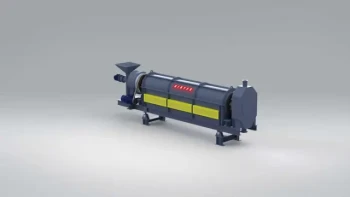
- Electric Rotary Kiln Small Rotary Furnace for Activated Carbon Regeneration
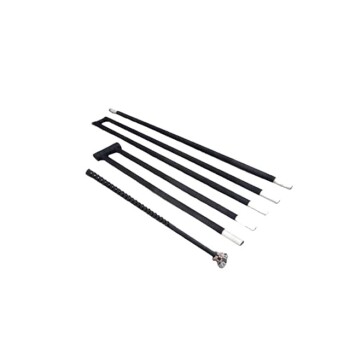
- Silicon Carbide SiC Thermal Heating Elements for Electric Furnace
People Also Ask
- What is a rotary kiln electric furnace? Achieve Superior Uniform Heating for Your Materials
- What is the temperature of activated carbon regeneration? Unlock the 1000°F Process for Reuse
- What is the regeneration temperature of activated carbon? Optimize Your Process with the Right Method
- What are the characteristics of the slipping, slumping, and rolling modes of bed motion? Optimize Your Rotary Process
- What are the parts of a carbon regeneration kiln? A Guide to Its Core Components and Function