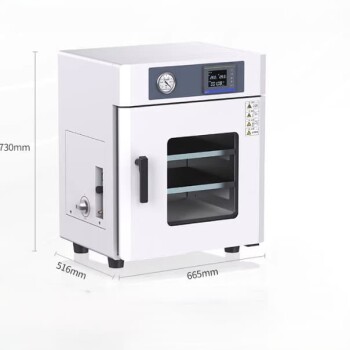
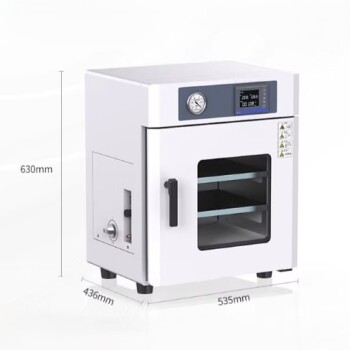
A high-precision oven serves as the critical mechanism for the thermal treatment of solid products following a hydrothermal reaction. By maintaining a constant temperature of 120 degrees Celsius, it completely removes physically adsorbed moisture to ensure the final sample consists solely of unreacted aluminum and generated boehmite (AlOOH).
Accurate calculation of aluminum conversion rates depends entirely on the purity of the sample weight. The high-precision oven eliminates water weight variables, establishing the necessary baseline for using the mass difference method effectively.
The Mechanics of Post-Process Drying
Removing Environmental Interferences
The primary function of the oven is to target and eliminate physically adsorbed moisture.
After the hydrothermal reaction, the solid products retain water on their surface. If this moisture is not removed, it adds artificial mass to the sample, distorting subsequent data.
Maintaining Consistent Thermal Conditions
The process requires a strict, constant temperature setting of 120 degrees Celsius.
A high-precision unit is utilized to ensure this temperature does not fluctuate. This stability is vital for treating the sample uniformly without inducing unwanted thermal degradation or incomplete drying.
Ensuring Analytical Precision
Defining the Sample Composition
The goal of this drying phase is to isolate the specific chemical components relevant to the study.
Once the drying process is complete, the final weight reflects only two materials: unreacted aluminum and the boehmite (AlOOH) generated during the reaction.
Enabling the Mass Difference Method
Scientific analysis of these products relies heavily on the mass difference method.
This calculation determines the aluminum conversion rate. It acts as a mathematical comparison of weights before and after the reaction.
Because this formula is sensitive to mass changes, the oven’s ability to strip away non-essential water weight is a prerequisite for generating valid, reproducible data.
Common Pitfalls to Avoid
The Risk of Temperature Fluctuation
While standard ovens provide heat, they often lack the stability required for analytical chemistry.
A lack of precision in maintaining the 120°C set point can lead to residual moisture (if too cool) or potential structural changes (if too hot).
Incomplete Moisture Removal
The most significant error source in this stage is halting the drying process too early.
If physically adsorbed moisture remains, the "mass difference" will be skewed, leading to an overestimation of the final product weight and incorrect conversion rate calculations.
Making the Right Choice for Your Goal
To ensure the integrity of your hydrothermal oxidation analysis, apply the following principles:
- If your primary focus is data validity: Prioritize the complete removal of adsorbed moisture to ensure your mass difference calculations reflect only Aluminum and AlOOH.
- If your primary focus is process repeatability: Utilize a high-precision oven capable of maintaining a strict 120°C standard to ensure every batch is treated under identical conditions.
Precision in post-processing is the invisible foundation of accurate reaction analysis.
Summary Table:
| Feature | Requirement | Impact on Analysis |
|---|---|---|
| Temperature Setting | Constant 120°C | Prevents thermal degradation and residual moisture |
| Target Contaminant | Physically adsorbed water | Eliminates artificial mass variables |
| Final Composition | Aluminum + Boehmite (AlOOH) | Isolates essential reactants for pure measurement |
| Methodology | Mass Difference Method | Enables precise calculation of aluminum conversion rates |
| Oven Precision | High-stability thermal control | Guarantees batch-to-batch repeatability and data validity |
Elevate Your Analytical Precision with KINTEK
Don't let moisture variables compromise your research data. KINTEK specializes in high-performance laboratory equipment, including high-precision ovens, high-temperature furnaces, and hydrothermal reactors designed to meet the rigorous demands of material science.
Whether you are performing hydrothermal oxidation, catalyst synthesis, or complex material drying, our precision solutions ensure uniform thermal conditions and reliable results. Our comprehensive portfolio also includes crushing and milling systems, hydraulic presses, and specialized ceramic consumables to support every stage of your workflow.
Ready to achieve superior accuracy in your lab? Contact our technical experts today to find the perfect drying and thermal treatment solutions for your specific applications.
References
- Grayr N. Ambaryan, Mikhail S. Vlaskin. Hydrothermal Oxidation of Coarse Aluminum Granules with Hydrogen and Aluminum Hydroxide Production: The Influence of Aluminum Purity. DOI: 10.3390/app13137793
This article is also based on technical information from Kintek Solution Knowledge Base .
Related Products
- High Temperature Muffle Oven Furnace for Laboratory Debinding and Pre Sintering
- High Pressure Laboratory Autoclave Reactor for Hydrothermal Synthesis
- Ultra-High Temperature Graphite Vacuum Graphitization Furnace
- 1400℃ Muffle Oven Furnace for Laboratory
- 56L Vertical Laboratory Vacuum Drying Oven
People Also Ask
- Why is the annealing treatment in a high-temperature muffle furnace critical for the preparation of an Sb-SnO2 interlayer?
- What is the role of a high-temperature muffle furnace in preparing Cs-aluminosilicate waste? Key Simulation Insights
- What is the significance of integrating a high-temperature muffle furnace into an impact wear testing system?
- What role does a high-temperature muffle furnace play in the synthesis of manganese/cobalt-modified ceramic catalysts?
- What is the primary function of high-temperature muffle or tube furnaces for ceramic coatings? Ensure Peak Durability