High-precision temperature control systems allow researchers to isolate the thermal drivers of stainless steel corrosion by maintaining a rigorous, constant environment, often at elevated levels like 70 °C. By stabilizing the temperature, these systems accurately accelerate reaction rates and ensure the data linearity required to verify that the corrosion mechanism is a thermally activated process.
Because corrosion kinetics follow exponential growth laws, even minor thermal fluctuations can introduce significant errors into your data. A precise heating system eliminates this variability, ensuring that observed changes in reaction rates are attributed solely to the intended thermal activation.
The Physics of Thermal Activation
Exponential Growth Laws
Corrosion and dissolution kinetics do not scale linearly with temperature; they follow exponential growth laws.
This means that as temperature rises, the rate of reaction increases dramatically rather than gradually.
Accelerating the Reaction Rate
To study these mechanisms efficiently, researchers often use a stable high-temperature environment.
By maintaining a specific setpoint, such as 70 °C, the system accelerates the corrosion process, making slow reactions observable within a reasonable experimental timeframe.
Ensuring Experimental Integrity
Achieving Data Linearity
For a researcher to confirm a specific activation mechanism, the experimental data must align with theoretical models.
High-precision control ensures the linearity of experimental data, which is the hallmark of a controlled, predictable process.
Verifying the Process
When the data is linear and consistent, it provides the necessary evidence to conclude the nature of the reaction.
This allows researchers to definitively verify that the corrosion process is indeed a thermally activated process driven by temperature, rather than other uncontrolled variables.
Equipment for Precision Control
Constant Temperature Water Baths
These systems submerge the reaction vessel in water maintained at a strict temperature.
They are highly effective for maintaining uniformity across the entire surface of the experiment.
Heating Mantles
Alternatively, heating mantles provide direct, controlled heat to reaction vessels.
These are essential when the required temperature or vessel shape makes a water bath impractical.
Understanding the Trade-offs
Sensitivity to Fluctuations
Because the growth laws are exponential, the margin for error in temperature control is incredibly small.
A "high-precision" system is not just a luxury; it is a necessity, as standard heating methods may fluctuate enough to render the exponential data useless.
Equipment Limitations
While water baths offer excellent stability, they are limited by the boiling point of the medium (water).
For studies requiring temperatures significantly higher than 100 °C to test extreme activation, alternative dry heating methods like mantles must be employed.
Making the Right Choice for Your Goal
To effectively study thermal activation mechanisms, you must align your equipment choice with your specific experimental needs.
- If your primary focus is proving kinetic theory: Prioritize stability above all else to ensure the linearity of your data points confirms the exponential growth law.
- If your primary focus is process acceleration: Utilize the highest stable temperature your equipment can sustain (e.g., 70 °C or higher) to minimize observation time.
Precision is the bridge between theoretical physics and observable reality in corrosion studies.
Summary Table:
| Feature | Impact on Corrosion Research | Benefit |
|---|---|---|
| Exponential Stability | Eliminates variability in growth law data | Accurate kinetic modeling |
| Data Linearity | Ensures experimental results match theory | Verification of activation mechanisms |
| Process Acceleration | Maintains stable high temps (e.g., 70°C) | Reduces experimental timeframe |
| Uniform Heating | Prevents localized thermal fluctuations | High integrity & reproducible results |
Elevate Your Material Research with KINTEK Precision
Precise thermal control is the difference between erratic data and breakthrough discoveries. KINTEK specializes in advanced laboratory solutions designed for the most demanding corrosion studies and thermal activation research.
Whether you require high-temperature furnaces (muffle, tube, or vacuum) for extreme environments, high-pressure reactors and autoclaves, or constant temperature cooling solutions, our equipment ensures the stability your data needs.
Unlock superior accuracy for your lab—contact our experts today to find the perfect heating or crushing system for your application!
References
- Alberto Ubaldini, G.L. Pintilei. A Study of Accelerated Corrosion of Stainless Steels under Highly Oxidizing Conditions. DOI: 10.3390/coatings14040390
This article is also based on technical information from Kintek Solution Knowledge Base .
Related Products
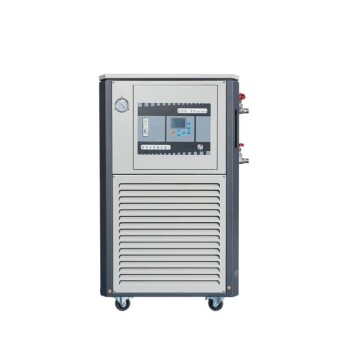
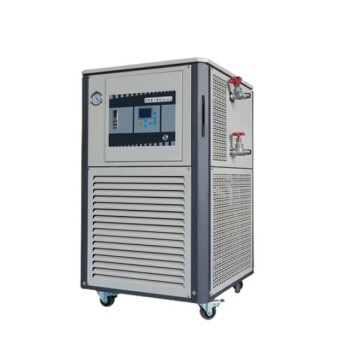
- High Temperature Constant Temperature Heating Circulator Water Bath Chiller Circulator for Reaction Bath
- Multi Heating Zones CVD Tube Furnace Machine Chemical Vapor Deposition Chamber System Equipment
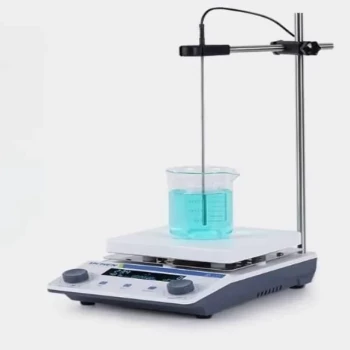
- Laboratory Small Constant Temperature Heated Magnetic Stirrer Heater and Stirrer
- Automatic High Temperature Heated Hydraulic Press Machine with Heated Plates for Lab
- 1400℃ Controlled Atmosphere Furnace with Nitrogen and Inert Atmosphere
People Also Ask
- What is the necessity of a circulating water bath in chlorate production? Optimize Yield & Purity with Precision
- How do constant temperature circulators impact weight-loss immersion tests? Ensure Precision in Corrosion Analysis
- How does a constant temperature circulator support the leaching reaction of gold scrap? Optimize Gold Recovery Results
- Why is a constant temperature water bath used for precursor storage in CVD? Achieve Stable Nanocrystalline SiC Deposition
- Why is a high-precision constant temperature water bath necessary for anaerobic digestion? Ensure Success at 37±0.02°C