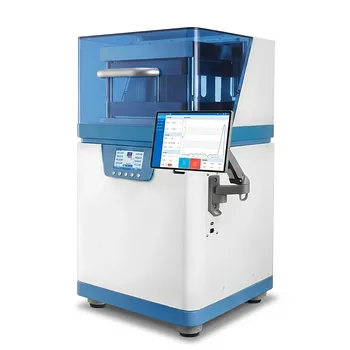
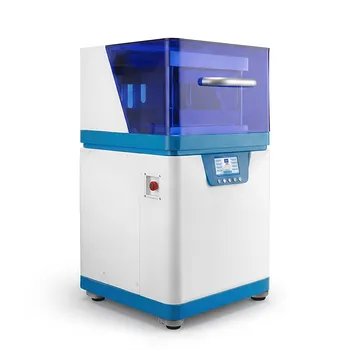
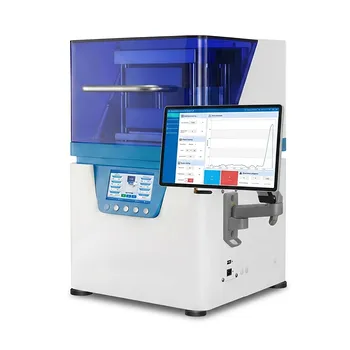
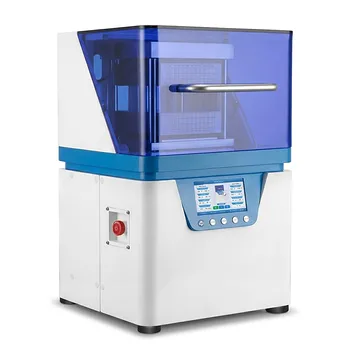
A laboratory high-pressure hydraulic press is the critical tool for transforming loose Calcium Cobalt Oxide (CCO) nanoribbons into high-performance bulk ceramics by simultaneously maximizing material density and inducing structural alignment. By applying static pressures between 200 MPa and 500 MPa, the press creates a "green body" where particles are packed tightly and oriented specifically to optimize electrical pathways. This mechanical processing step is foundational for achieving the high electrical conductivity required for efficient thermoelectric energy conversion.
The laboratory hydraulic press serves as the primary mechanism for "texturing" CCO ceramics, converting random powder into an ordered, high-density structure. This physical transformation is essential because the material's ability to conduct electricity and manage heat depends entirely on the orientation and contact of its internal nanostructures.
Maximizing Density and Eliminating Voids
Reducing Residual Porosity
The application of high-precision axial pressure forces loose CCO nanoribbon powders into a compact green body. This process significantly reduces inter-particle voids and residual porosity, which are detrimental to the material's structural integrity.
Facilitating Grain Fusion
High initial packing density is a prerequisite for successful sintering. By minimizing the gaps between particles, the press ensures that when the material is heated, the grains fuse more effectively, eliminating grain boundary impedance that would otherwise hinder performance.
Controlling Initial Packing
The press determines the initial packing density, which directly influences how the ceramic will shrink and densify during final heat treatment. Precise control over this stage prevents the formation of internal pore defects that could lead to micro-crack propagation.
Microstructural Texturing for Performance
Inducing Directional Alignment
Calcium Cobalt Oxide is highly dependent on its crystalline orientation. The hydraulic press applies static pressure that induces the directional alignment of flat nanoribbon particles.
Establishing Preferred Orientation
This alignment establishes a strong preferred orientation (texture) within the bulk material. When the nanoribbons are layered uniformly rather than randomly, the electrical resistance of the final ceramic is substantially lowered.
Enhancing Electrical Conductivity
The primary goal of using high-pressure compaction for CCO is the enhancement of electrical conductivity. A well-textured ceramic allows electrons to flow more efficiently across the aligned grain boundaries, which is a hallmark of high-performance thermoelectric materials.
Ensuring Structural Uniformity and Precision
Minimizing Density Gradients
A high-precision press reduces stress non-uniformity and density gradients within the green body. Without uniform pressure, different parts of the ceramic would densify at different rates, leading to warping or internal fractures.
Providing Mechanical Strength
The compaction process provides the green body with its preliminary mechanical strength. This "physical prototype" is necessary for the material to be handled and processed through subsequent high-temperature densification treatments without crumbling.
Improving Experimental Reproducibility
Precise, adjustable uniaxial pressure (typically between 100 and 500 MPa) ensures that each sample is produced under identical conditions. This reduces experimental data deviation, allowing researchers to accurately evaluate how different chemical compositions affect the final ceramic's properties.
Understanding the Trade-offs and Pitfalls
Pressure Limits and Material Stress
While higher pressure generally increases density, exceeding the optimal range (often around 500 MPa for CCO) can introduce internal stresses. These stresses may cause the green body to "spring back" or crack upon release from the mold.
The Risk of Non-Uniform Compaction
If the pressure is not applied perfectly uniaxially, it can create weak spots in the ceramic. These areas of low density become primary sites for structural failure or reduced electrical performance in the final sintered block.
Mold Friction and Edge Effects
Friction between the powder and the mold walls can lead to non-homogeneous density distribution. In laboratory settings, this often requires the use of lubricants or specific "double-action" pressing methods to ensure the center of the pellet is as dense as the edges.
How to Apply This to Your Research
Making the Right Choice for Your Goal
- If your primary focus is maximizing electrical conductivity: Prioritize a press capable of maintaining steady pressures at the higher end of the 200-500 MPa range to ensure maximum nanoribbon alignment.
- If your primary focus is material durability and strength: Focus on the precision of pressure application and slow decompression cycles to minimize internal stress and micro-cracking.
- If your primary focus is comparative material studies: Utilize a press with digital, high-precision pressure gauges to ensure that density variables are kept constant across all test specimens.
By mastering the application of high-pressure compaction, you can move beyond simple powder processing to the engineering of sophisticated, textured microstructures that define high-performance thermoelectric ceramics.
Summary Table:
| Feature | Impact on CCO Ceramics | Key Performance Benefit |
|---|---|---|
| High-Pressure Compaction | Reduces inter-particle voids & porosity | Facilitates grain fusion & sintering |
| Structural Texturing | Induces directional nanoribbon alignment | Enhances electrical conductivity |
| Uniaxial Precision | Minimizes density gradients & stress | Prevents cracking & improves durability |
| Pressure Control | Ensures identical sampling conditions | High experimental reproducibility |
Elevate Your Materials Research with KINTEK
Achieving peak performance in thermoelectric ceramics like Calcium Cobalt Oxide requires precision and reliability. KINTEK specializes in high-quality laboratory equipment designed to meet the rigorous demands of advanced materials science.
Our range of hydraulic presses (pellet, hot, isostatic) provides the exact pressure control needed for optimal density and microstructural texturing. Beyond compaction, we offer a comprehensive suite of solutions, including:
- High-temperature furnaces (muffle, tube, vacuum, CVD) for perfect sintering.
- Crushing and milling systems for precise powder preparation.
- High-temperature high-pressure reactors and autoclaves.
- Essential consumables like ceramics, crucibles, and PTFE products.
Ready to enhance your lab's efficiency and experimental accuracy? Contact us today to consult with our experts and find the ideal equipment for your research goals!
References
- Itzhak I. Maor, Gideon S. Grader. Superior Thermoelectric Performance of Textured Ca<sub>3</sub>Co<sub>4−</sub><i><sub>x</sub></i>O<sub>9+</sub><i><sub>δ</sub></i> Ceramic Nanoribbons. DOI: 10.1002/adfm.202304464
This article is also based on technical information from Kintek Solution Knowledge Base .
Related Products
- Automatic Laboratory Hot Press 400x400 mm with Programmable High Temperature and Hydraulic Force Control
- Automatic High Temperature Heated Hydraulic Press Machine with Heated Plates for Lab
- Manual High Temperature Heated Hydraulic Press Machine with Heated Plates for Lab
- Automatic Hydraulic Hot Press with 500x500mm Heating Plates and Multi Stage PLC Control for Material Sintering
- Heated Hydraulic Press Machine with Heated Plates for Vacuum Box Laboratory Hot Press
People Also Ask
- What is the primary function of a laboratory hot press in MEA assembly? Optimize Fuel Cell Bonding & Performance
- What specific conditions does a laboratory hot press provide for the assembly of fuel cell MEA? Expert Bond Tips.
- How do a laboratory hydraulic hot press and standardized steel molds ensure the quality of WPC test specimens?
- What are the core advantages of using a laboratory hot press to produce Bi2Se3? Achieve 93% Density & High Conductivity
- How does a laboratory heating hydraulic press contribute to the preparation of recycled graphite green bodies? - Optimize Density.