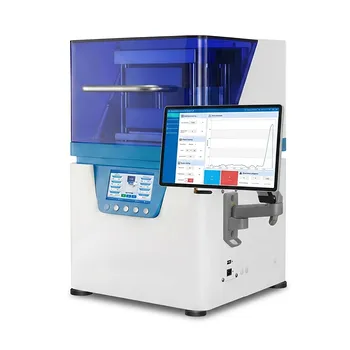
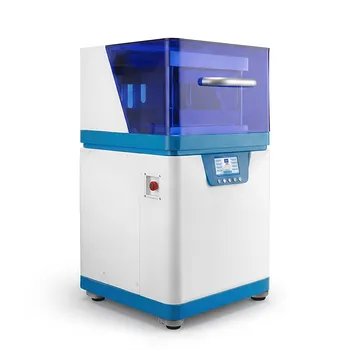
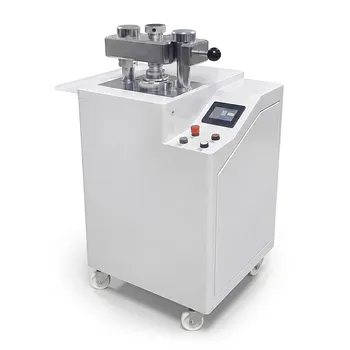
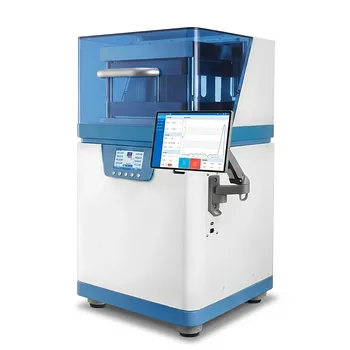
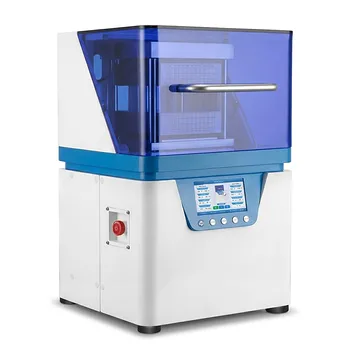
The primary role of a laboratory hydraulic press in preparing HOPG or single-crystal sample stages is to provide mechanical fixation and encapsulation. By applying uniform and highly controllable pressure, the press securely bonds the delicate sample to a rigid stainless steel support plate. This process ensures the sample remains perfectly stationary during long-duration scanning, which is critical for preventing imaging artifacts caused by mechanical vibrations or the loosening of the specimen.
A laboratory hydraulic press acts as a precision bonding tool that stabilizes single-crystal samples against a support structure. This mechanical integration is essential for maintaining the physical integrity and position of the sample during sensitive analytical procedures.
The Role of Mechanical Fixation in High-Resolution Imaging
Securing the Sample to Support Plates
For materials like highly oriented pyrolytic graphite (HOPG), maintaining a flat and immobile surface is paramount. The hydraulic press applies uniaxial pressure to encapsulate the sample, effectively sandwiching it between the crystal face and a metal support. This bonding process creates a single, rigid unit that is resistant to the lateral and vertical forces encountered during microscopy.
Minimizing Scanning Artifacts
High-resolution imaging often requires long exposure or scanning times, where even microscopic shifts can ruin data. The press eliminates mechanical vibrations and sample "drift" by ensuring there are no air gaps or loose interfaces between the crystal and the stage. By providing a stable physical position, the press allows for the collection of clean, repeatable data without the interference of noise caused by sample movement.
Controlled Pressure for Material Integrity
Unlike manual clamping, a hydraulic press provides controllable pressure that can be fine-tuned to the specific fragility of the single crystal. This precision prevents the crushing of the internal crystalline structure while still achieving a secure bond. The result is a securely fixed specimen that retains its inherent physical properties for accurate analysis.
Enhancing Sample Stability and Uniformity
Achieving Uniform Internal Density
While the primary goal for single crystals is fixation, the press also ensures uniform density within any surrounding encapsulation media or bonding agents. This uniformity prevents the formation of internal stress gradients that could potentially warp or crack the sample during thermal changes. A consistent internal environment is vital for maintaining the structural integrity of the sample stage throughout the experimental lifecycle.
Eliminating Micro-cracks and Air Pockets
The high-pressure environment of the hydraulic press is effective at removing air between particles and interfaces. This compression eliminates micro-cracks that could lead to structural failure under the vacuum or high-temperature conditions often found in advanced imaging suites. By increasing the contact area between the sample and its support, the press ensures a robust mechanical connection.
Standardizing Sample Preparation
Using a hydraulic press allows researchers to apply the exact same pressure across different experimental groups. This standardization is crucial for maintaining consistent evaluation standards, such as grain size evaluation or piezoelectric property measurements. It ensures that any observed variations in data are due to the sample's properties rather than inconsistencies in how it was mounted.
Understanding the Trade-offs
Risk of Crystalline Deformation
The most significant risk when using a hydraulic press on single crystals is over-pressurization, which can lead to lattice deformation or cleavage. While pressure is necessary for fixation, exceeding the material's yield strength can introduce unwanted strain that alters the sample's electronic or mechanical properties.
Surface Contamination Concerns
During the encapsulation process, there is a potential for surface contamination if the press plates or molds are not perfectly clean. Any foreign particulate pressed into the surface of an HOPG sample can create significant imaging artifacts. Researchers must balance the need for high-pressure fixation with the requirement for a pristine, atomic-scale surface.
How to Apply This to Your Project
Making the Right Choice for Your Goal
Effective sample preparation requires balancing the need for stability with the fragility of the crystal.
- If your primary focus is high-resolution scanning (AFM/STM): Prioritize the mechanical fixation aspect of the press to eliminate all possible sources of vibration and drift.
- If your primary focus is strain engineering or ferroelectric research: Use the press to ensure uniform internal density and the elimination of micro-cracks within the sample assembly.
- If your primary focus is material longevity and reusability: Focus on the encapsulation process to provide a protective, rigid environment that shields the crystal from environmental degradation.
By mastering the application of controlled pressure, you ensure that your sample stage provides a stable, artifact-free foundation for the most demanding analytical techniques.
Summary Table:
| Feature/Role | Impact on Sample Preparation | Key Benefit |
|---|---|---|
| Mechanical Fixation | Bonds sample to rigid support plates | Eliminates vibrations and scanning drift |
| Controlled Pressure | Fine-tuned uniaxial force application | Prevents lattice deformation/crushing |
| Encapsulation | Removes air pockets and micro-cracks | Ensures structural integrity under vacuum |
| Standardization | Repeatable pressure across batches | Consistent grain and property evaluation |
| Density Uniformity | Eliminates internal stress gradients | Prevents warping during thermal changes |
Elevate Your Research Precision with KINTEK
Achieving artifact-free, high-resolution imaging starts with flawless sample preparation. At KINTEK, we specialize in providing the high-precision tools necessary for demanding laboratory environments. Our range of laboratory hydraulic presses (manual, pellet, hot, and isostatic) is engineered to deliver the exact, controllable pressure required to secure delicate HOPG and single-crystal samples without compromising material integrity.
Beyond sample fixation, KINTEK offers a comprehensive ecosystem for materials science, including:
- High-Temperature Furnaces: Muffle, tube, vacuum, CVD, and PECVD systems for advanced thermal processing.
- Sample Processing: Crushing and milling systems, sieving equipment, and high-pressure reactors.
- Specialized Consumables: High-quality PTFE products, ceramics, crucibles, and electrochemical tools.
Whether you are focusing on AFM/STM scanning or strain engineering, our expert team is ready to help you find the perfect equipment to optimize your results.
Ready to enhance your lab's stability and efficiency? Contact KINTEK today to discuss your project requirements!
References
- Thorsten O. Schmidt, Aliaksandr S. Bandarenka. Electrochemical Scanning Tunneling Microscopy as a Tool for the Detection of Active Electrocatalytic Sites. DOI: 10.1007/s11244-023-01807-6
This article is also based on technical information from Kintek Solution Knowledge Base .
Related Products
- Fully Automatic Heated Hydraulic Lab Press for Materials Sintering and Sample Preparation
- Automatic Hydraulic Hot Press with 500x500mm Heating Plates and Multi Stage PLC Control for Material Sintering
- Automatic Laboratory Hydraulic Pellet Press Machine for Lab Use
- Automatic XRF Pellet Press 40 Ton Hydraulic Sample Preparation Press for Fluorescent Spectroscopy Analysis
- Laboratory Manual Hydraulic Pellet Press for Lab Use
People Also Ask
- How is a laboratory hydraulic press used in the preparation of modified biochar samples for FTIR analysis? Expert Guide
- How does a laboratory heating hydraulic press contribute to the preparation of recycled graphite green bodies? - Optimize Density.
- How does the laboratory hydraulic press contribute to the preparation of solid targets for laser ablation?
- What role does a laboratory hydraulic press play in perovskite-MOF glass fabrication? Master Material Densification
- Why use a laboratory hydraulic press for Fe2O3-CoP conductivity? Achieve Precise Material Characterization