Knowledge How does a laboratory hydraulic press ensure performance consistency for LDPC? Achieve Uniform Ceramic Substrates
Author avatar

Tech Team · Kintek Solution

Updated 2 days ago

How does a laboratory hydraulic press ensure performance consistency for LDPC? Achieve Uniform Ceramic Substrates


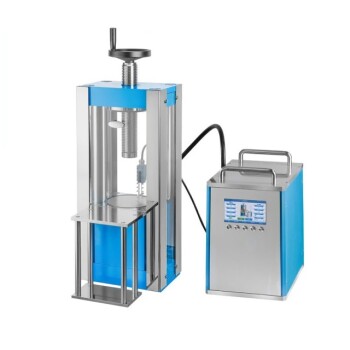
Precise pressure control is the fundamental mechanism by which a laboratory hydraulic press ensures consistency in Low-Density Porous Ceramic (LDPC) substrates. By compressing ceramic mixtures into standardized cylindrical forms, the equipment minimizes variability between samples. This mechanical precision is the prerequisite for reliable experimental data and reproducible manufacturing outcomes.

By eliminating internal density gradients through uniform particle packing, the press ensures that every fabricated substrate exhibits identical airflow distribution and stable initial filtration resistance.

Achieving Structural Uniformity

Standardizing the Form

The primary role of the hydraulic press is to create a repeatable physical standard. By compressing the raw mixture into fixed cylindrical forms, the press removes geometric variables from the equation.

This standardization ensures that every substrate begins its lifecycle with identical dimensions. Without this geometric consistency, downstream performance testing would be skewed by physical irregularities.

Eliminating Internal Gradients

Consistency is not just about the outer shape; it is about the internal structure. Uniform pressure control ensures that powder particles are packed tightly and evenly throughout the mold.

This even distribution is critical for reducing internal density gradients. If pressure were applied unevenly, some areas would be dense while others remained loose, leading to structural weak points.

Optimizing Particle Contact

Drawing on principles seen in high-performance ceramic fabrication, the press forces particles into close contact to eliminate irregular inter-particle gaps.

While specific pressures vary by material, the goal remains the same: to create a homogeneous "green" (unsintered) body. This mechanical uniformity prevents defects that could propagate during subsequent heating or sintering phases.

Translating Density to Performance

Ensuring Uniform Airflow

For LDPC substrates used in filtration, the internal structure dictates function. A substrate with uniform density will exhibit uniform airflow distribution.

This allows gas to pass through the filter evenly, utilizing the entire surface area rather than channeling through low-density "path of least resistance" zones.

Stabilizing Filtration Resistance

The ultimate measure of an LDPC substrate's quality in flue gas treatment is its initial filtration resistance. The hydraulic press ensures this metric remains stable across different batches.

By controlling the packing density during molding, the press guarantees that the resistance to gas flow is predictable and consistent from the very first use.

Operational Considerations and Trade-offs

Balancing Pressure and Porosity

While high pressure (often exceeding 250 MPa in dense ceramic applications) creates strength, LDPC substrates require a delicate balance. The goal is "low density" and porosity, not maximum density.

Operators must carefully calibrate the pressure to ensure structural integrity without crushing the pores necessary for filtration. Over-compression can lead to a substrate that is too dense to function effectively as a filter.

The Risk of Density Gradients

If the hydraulic press applies pressure too rapidly or unevenly, it can inadvertently create density gradients rather than solve them.

This usually occurs if the friction between the powder and the mold wall is not managed, leading to a dense outer shell and a lower-density core. Precise control systems on the press are required to mitigate this "capping" effect.

Ensuring Reproducibility in Your Process

To maximize the consistency of your LDPC substrates, tailor your approach to your specific testing goals:

  • If your primary focus is Filtration Efficiency: Prioritize uniform pressure distribution to ensure the airflow resistance is identical across all samples, preventing channeling.
  • If your primary focus is Mechanical Strength: Focus on particle packing optimization, ensuring the pressure is sufficient to eliminate large inter-particle gaps that could cause structural failure.

The hydraulic press is not just a molding tool; it is a precision instrument that defines the internal architecture of your material, directly dictating its reliability in real-world applications.

Summary Table:

Key Consistency Factor Mechanism of Action Impact on LDPC Performance
Geometric Standardization Cylindrical mold compression Eliminates dimensional variables for reliable testing
Density Uniformity Even particle packing Prevents internal gradients and structural weak points
Airflow Distribution Homogeneous internal structure Ensures gas passes evenly without channeling
Pressure Calibration Balanced force application Maintains necessary porosity while ensuring mechanical integrity

Elevate Your Materials Research with KINTEK Precision

Consistency is the backbone of reliable experimental data. At KINTEK, we specialize in high-performance laboratory hydraulic presses (pellet, hot, and isostatic) designed to provide the precise pressure control required for advanced LDPC substrates and technical ceramics.

Whether you are optimizing filtration efficiency or mechanical strength, our comprehensive range of laboratory equipment—from crushing and milling systems to high-temperature furnaces and PTFE consumables—ensures your workflow remains seamless and reproducible.

Ready to standardize your production? Contact our technical experts today to find the perfect equipment solution for your lab's unique requirements.

Related Products

People Also Ask

Related Products

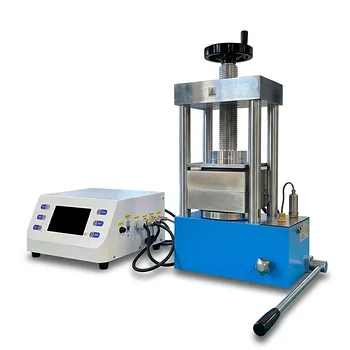
Automatic Heated Hydraulic Press Machine with Heated Plates for Laboratory Hot Press 25T 30T 50T

Automatic Heated Hydraulic Press Machine with Heated Plates for Laboratory Hot Press 25T 30T 50T

Efficiently prepare your samples with our Automatic Heated Lab Press. With a pressure range up to 50T and precise control, it's perfect for various industries.

Manual High Temperature Heated Hydraulic Press Machine with Heated Plates for Lab

Manual High Temperature Heated Hydraulic Press Machine with Heated Plates for Lab

The High Temperature Hot Press is a machine specifically designed for pressing, sintering and processing materials in a high temperature environment. It is capable of operating in the range of hundreds of degrees Celsius to thousands of degrees Celsius for a variety of high temperature process requirements.

Automatic High Temperature Heated Hydraulic Press Machine with Heated Plates for Lab

Automatic High Temperature Heated Hydraulic Press Machine with Heated Plates for Lab

The High Temperature Hot Press is a machine specifically designed for pressing, sintering and processing materials in a high temperature environment. It is capable of operating in the range of hundreds of degrees Celsius to thousands of degrees Celsius for a variety of high temperature process requirements.

Laboratory Hydraulic Press Lab Pellet Press Machine for Glove Box

Laboratory Hydraulic Press Lab Pellet Press Machine for Glove Box

Controlled environment lab press machine for glove box. Specialized equipment for material pressing and shaping with high precision digital pressure gauge.

Heated Hydraulic Press Machine with Integrated Manual Heated Plates for Lab Use

Heated Hydraulic Press Machine with Integrated Manual Heated Plates for Lab Use

Efficiently process heat-pressing samples with our Integrated Manual Heated Lab Press. With a heating range up to 500°C, it's perfect for various industries.

Automatic Laboratory Hydraulic Pellet Press Machine for Lab Use

Automatic Laboratory Hydraulic Pellet Press Machine for Lab Use

Experience efficient sample preparation with our Automatic Lab Press Machine. Ideal for material research, pharmacy, ceramics, and more. Features a compact size and hydraulic press functionality with heating plates. Available in various sizes.

Manual Heated Hydraulic Press Machine with Heated Plates for Laboratory Hot Press

Manual Heated Hydraulic Press Machine with Heated Plates for Laboratory Hot Press

The Manual Heat Press is a versatile piece of equipment suitable for a variety of applications, operated by a manual hydraulic system that applies controlled pressure and heat to the material placed on the piston.

Automatic Lab Cold Isostatic Press CIP Machine Cold Isostatic Pressing

Automatic Lab Cold Isostatic Press CIP Machine Cold Isostatic Pressing

Efficiently prepare samples with our Automatic Lab Cold Isostatic Press. Widely used in material research, pharmacy, and electronic industries. Provides greater flexibility and control compared to electric CIPs.

Small Injection Molding Machine for Lab Use

Small Injection Molding Machine for Lab Use

The small injection molding machinehas fast and stable movements; good controllability and repeatability, super energy saving; the product can be automatically dropped and formed; the machine body is low, convenient for feeding, easy to maintain, and no height restrictions on the installation site.

Rubber Vulcanizer Vulcanizing Machine Plate Vulcanizing Press for Lab

Rubber Vulcanizer Vulcanizing Machine Plate Vulcanizing Press for Lab

The Plate vulcanizing press is a kind of equipment used in the production of rubber products, mainly used for the vulcanization of rubber products. Vulcanization is a key step in rubber processing.

Electric Split Lab Cold Isostatic Press CIP Machine for Cold Isostatic Pressing

Electric Split Lab Cold Isostatic Press CIP Machine for Cold Isostatic Pressing

Split cold isostatic presses are capable of providing higher pressures, making them suitable for testing applications that require high pressure levels.

Metallographic Specimen Mounting Machine for Laboratory Materials and Analysis

Metallographic Specimen Mounting Machine for Laboratory Materials and Analysis

Precision metallographic mounting machines for labs—automated, versatile, and efficient. Ideal for sample prep in research and quality control. Contact KINTEK today!

Small Lab Rubber Calendering Machine

Small Lab Rubber Calendering Machine

Small lab rubber calendering machine is used for producing thin, continuous sheets of plastic or rubber materials. It is commonly employed in laboratories, small-scale production facilities, and prototyping environments to create films, coatings, and laminates with precise thickness and surface finish.

Vacuum Hot Press Furnace Machine for Lamination and Heating

Vacuum Hot Press Furnace Machine for Lamination and Heating

Experience clean and precise lamination with Vacuum Lamination Press. Perfect for wafer bonding, thin-film transformations, and LCP lamination. Order now!

Single Punch Electric Tablet Press Machine Laboratory Powder Tablet Punching TDP Tablet Press

Single Punch Electric Tablet Press Machine Laboratory Powder Tablet Punching TDP Tablet Press

The single-punch electric tablet press is a laboratory-scale tablet press suitable for corporate laboratories in pharmaceutical, chemical, food, metallurgical and other industries.

Single Punch Electric Tablet Press Machine TDP Tablet Punching Machine

Single Punch Electric Tablet Press Machine TDP Tablet Punching Machine

The electric tablet punching machine is a laboratory equipment designed for pressing various granular and powdery raw materials into discs and other geometric shapes. It is commonly used in pharmaceutical, healthcare products, food, and other industries for small batch production and processing. The machine is compact, lightweight, and easy to operate, making it suitable for use in clinics, schools, laboratories, and research units.

Laboratory Test Sieves and Vibratory Sieve Shaker Machine

Laboratory Test Sieves and Vibratory Sieve Shaker Machine

Efficiently process powders, granules, and small blocks with a high-frequency vibration sieve. Control vibration frequency, screen continuously or intermittently, and achieve accurate particle size determination, separation, and classification.

Lab Internal Rubber Mixer Rubber Kneader Machine for Mixing and Kneading

Lab Internal Rubber Mixer Rubber Kneader Machine for Mixing and Kneading

Lab internal rubber mixer is suitable for mixing, kneading and dispersing various chemical raw materials such as plastics, rubber, synthetic rubber, hot melt adhesive and various low-viscosity materials.

Single Punch Tablet Press Machine and Mass Production Rotary Tablet Punching Machine for TDP

Single Punch Tablet Press Machine and Mass Production Rotary Tablet Punching Machine for TDP

Rotary tablet punching machine is an automatic rotating and continuous tableting machine. It is mainly used for tablet manufacturing in the pharmaceutical industry, and is also suitable for industrial sectors such as food, chemicals, batteries, electronics, ceramics, etc. to compress granular raw materials into tablets.

Laboratory Sterilizer Lab Autoclave Herbal Powder Sterilization Machine for Plant

Laboratory Sterilizer Lab Autoclave Herbal Powder Sterilization Machine for Plant

The herbal powder sterilization autoclave machine for Chinese medicine uses saturated steam for effective sterilization. It utilizes the heat and penetrative properties of steam, achieves sterilization after heat preservation, and maintains a good drying effect with a dedicated drying system.


Leave Your Message