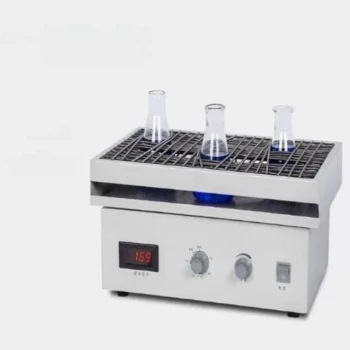
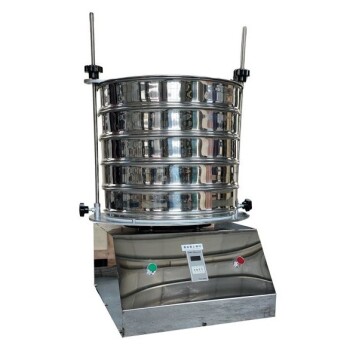
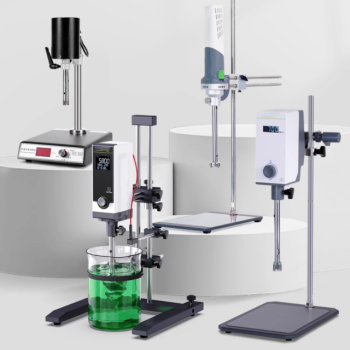
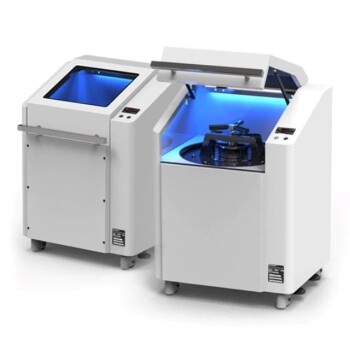
A laboratory shaker is the fundamental engine behind reaction uniformity in this degradation process. By providing continuous mechanical agitation, the shaker ensures that solid zero-valent iron (ZVI) nanoparticles remain uniformly suspended throughout the nitrobenzene wastewater solution. This prevents the heavy iron particles from settling, allowing them to interact continuously and effectively with the contaminants.
The shaker optimizes the degradation process by eliminating mass transfer resistance at the liquid-solid interface. It converts a potentially static mixture into a dynamic system where every nanoparticle remains active, ensuring a consistent and high degradation rate.
The Mechanics of Reaction Efficiency
Eliminating Mass Transfer Resistance
In a static system, a "boundary layer" forms around the iron particles, slowing down the reaction. The shaker disrupts this layer.
By continuously moving the fluid, the shaker ensures that fresh nitrobenzene molecules constantly contact the iron surface. This removal of resistance at the liquid-solid interface is the primary driver of a high degradation rate.
Preventing Sedimentation
ZVI nanoparticles are denser than water and naturally prone to settling. If they settle, they pile up at the bottom of the reactor, rendering the majority of their surface area useless.
Continuous mechanical agitation fights gravity. It keeps the particles buoyant and distributed throughout the entire volume of the liquid, maximizing the available reactive surface area.
Ensuring Uniform Reduction
For the degradation to be reliable, the chemical conditions must be consistent throughout the beaker.
The shaker ensures the reduction reaction occurs uniformly across the entire solution. This prevents localized "dead zones" where nitrobenzene remains untreated due to a lack of contact with the iron.
Managing Nanoparticle Behavior
Counteracting Agglomeration
Iron nanoparticles face a challenge beyond gravity: they are often magnetic. This causes them to attract one another and form larger clumps (agglomerates).
Clumping drastically reduces the total surface area available for the reaction. High-speed mixing provides the shear force necessary to break these magnetic bonds and keep the particles dispersed as individual units.
Stabilizing Slurry Concentration
When preparing nZVI slurries, maintaining a specific concentration is vital for experimental accuracy.
Agitation ensures the dispersion is homogeneous. This uniformity allows for precise dosage control when adding the iron to wastewater, ensuring the reduction potential (Eh) within the reactor remains stable and predictable.
Common Pitfalls to Avoid
The Risk of Inadequate Speed
If the shaker speed is too low, it fails to overcome the gravitational force acting on the iron. This leads to a gradient where the bottom of the vessel is over-treated and the top remains contaminated.
Inconsistent Dispersion
Without vigorous agitation, magnetic attraction can overcome the mixing force. This leads to inconsistent data, as the effective dosage of iron drops whenever particles clump together.
How to Apply This to Your Project
## Making the Right Choice for Your Goal
Selecting the right agitation strategy depends on the specific requirements of your experimental or treatment phase.
- If your primary focus is Maximum Degradation Rate: Prioritize higher agitation speeds to fully eliminate mass transfer resistance and maximize the contact frequency between nitrobenzene and the iron surface.
- If your primary focus is Dosage Precision: Focus on consistent, continuous stirring during slurry preparation to prevent magnetic agglomeration and ensure the exact concentration of iron is delivered to the reactor.
Proper agitation transforms the laboratory shaker from a simple accessory into a critical control parameter for chemical efficiency.
Summary Table:
| Feature | Impact on Degradation Process | Key Benefit |
|---|---|---|
| Mechanical Agitation | Prevents ZVI nanoparticle sedimentation | Maximizes reactive surface area |
| Mass Transfer | Disrupts the liquid-solid boundary layer | Accelerates reaction kinetics |
| Shear Force | Counteracts magnetic agglomeration | Maintains particle dispersion |
| Homogenization | Eliminates localized "dead zones" | Ensures uniform reduction across solution |
Elevate Your Chemical Research with KINTEK Precision
Unlock the full potential of your degradation studies with KINTEK’s high-performance laboratory shakers and agitation systems. Whether you are optimizing nitrobenzene treatment or developing advanced nanomaterials, our equipment ensures the uniform dispersion and mass transfer efficiency critical for reliable results.
Beyond shakers, KINTEK specializes in a comprehensive range of laboratory solutions, including:
- High-Temperature Reactors & Autoclaves for advanced chemical synthesis.
- Crushing, Milling, & Sieving Systems for precise particle size control.
- Battery Research Tools & Electrolytic Cells for energy innovation.
- Essential Consumables like PTFE products, ceramics, and high-purity crucibles.
Ready to eliminate variables and achieve superior reaction consistency? Contact our technical experts today to find the perfect equipment tailored to your laboratory's needs.
References
- Heon Lee, Sang‐Chul Jung. Application of Recycled Zero‐Valent Iron Nanoparticle to the Treatment of Wastewater Containing Nitrobenzene. DOI: 10.1155/2015/392537
This article is also based on technical information from Kintek Solution Knowledge Base .
Related Products
- Laboratory Multifunctional Small Speed-Adjustable Horizontal Mechanical Shaker for Lab
- Laboratory Vibratory Sieve Shaker Machine for Dry and Wet Three-Dimensional Sieving
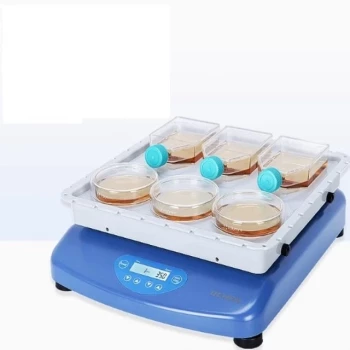
- Laboratory Oscillating Orbital Shaker
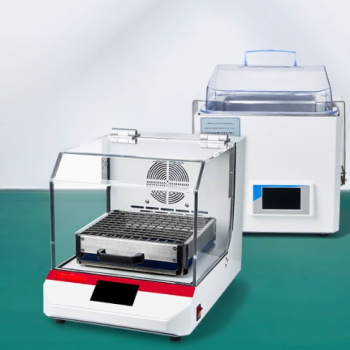
- Shaking Incubators for Diverse Laboratory Applications
- Laboratory Vibratory Sieve Shaker Machine Slap Vibrating Sieve
People Also Ask
- How do static culture and shaking culture affect the morphology of BC? Optimize Lab Shaker Results
- What is the role of a laboratory shaker in silane sol preparation? Master Uniform Aramid Fabric Coating
- Why is a laboratory shaker required for continuous 24-hour catalyst treatment? Achieve Deep Uniform Impregnation
- What is the function of a laboratory shaker in evaluating Fe-C@C nanoparticles? Optimize Methylene Blue Adsorption
- How do laboratory shakers or stirrers influence the efficiency of hydrogen production during dark fermentation?