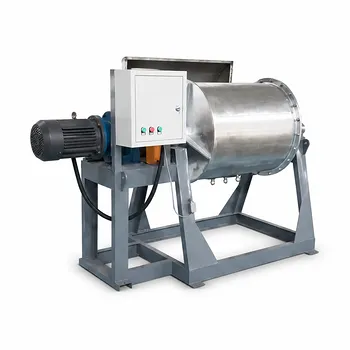
A planetary ball mill facilitates amorphization by utilizing high-speed rotation to generate intense mechanical impacts and shear forces that drive a solid-state reaction. This mechanical energy physically disrupts the crystalline structures of Lithium Sulfide (Li2S) and Phosphorus Pentasulfide (P2S5) at room temperature, forcing them to merge into an amorphous glass powder without the need for external heating.
The core advantage of this process is mechanochemical alloying: converting kinetic energy into chemical potential. By inducing reactions through impact rather than heat, the ball mill achieves atomic-level mixing and amorphization while completely avoiding the sulfur volatilization issues inherent in traditional high-temperature melting.
The Mechanics of Amorphization
High-Energy Kinetic Impact
The process relies on the generation of significant kinetic energy through high-speed rotation, such as 520 RPM.
As the milling jar rotates, the grinding balls are subjected to strong centrifugal forces.
This results in high-energy collisions between the balls and the powder mixture, delivering the energy required to break chemical bonds.
Destruction of Crystal Lattices
The primary barrier to forming a glass electrolyte is the stable crystalline structure of the raw materials.
The intense impact and shear forces generated by the mill mechanically fracture these crystalline lattices.
This continuous bombardment destroys long-range order in the material, effectively inducing an amorphous state directly from solid precursors.
Solid-State Mechanochemical Reaction
Unlike traditional synthesis, which melts materials to mix them, this process drives a chemical reaction at room temperature.
The mechanical pressure forces the Li2S and P2S5 particles into such close contact that they react chemically (mechanochemistry).
This results in atomic-level uniform mixing, creating a new glass phase that serves as a highly conductive precursor.
The Critical Role of Temperature Control
Bypassing Thermal Melting
Traditional glass synthesis requires melting materials at high temperatures and then rapidly quenching them.
Planetary ball milling bypasses this thermal cycle entirely by relying on mechanical energy to drive the phase change.
This allows for the direct synthesis of amorphous powders without complex heating equipment.
Preventing Sulfur Loss
A major challenge in synthesizing sulfide electrolytes is that sulfur compounds are volatile and easily evaporate at high heat.
By operating at a macroscopic room temperature, the ball mill prevents the vaporization of sulfur.
This ensures that the final stoichiometry of the electrolyte remains precise, preserving the intended ratio of Li, P, and S.
Understanding the Trade-offs
Localized vs. Bulk Temperature
While the process is described as "room temperature," it is important to understand the microscopic environment.
References suggest that the collision energy creates local high temperatures at the impact sites, followed by rapid quenching.
This means that while the bulk powder remains cool, the reaction sites experience extreme, momentary thermal spikes necessary for fusion.
Atmosphere Requirements
Because sulfide materials are sensitive to moisture and oxygen, this high-energy milling cannot be performed in open air.
The process typically requires an inert atmosphere (such as Argon) within the milling jar to prevent degradation.
Failure to maintain this sealed environment during the high-energy collisions will lead to contamination rather than amorphization.
Making the Right Choice for Your Goal
To maximize the effectiveness of the planetary ball mill for your specific electrolyte synthesis, consider the following:
- If your primary focus is Stoichiometric Precision: Rely on the ball mill's room-temperature operation to prevent sulfur loss, ensuring the chemical composition remains exact.
- If your primary focus is Ionic Conductivity: Optimize the RPM and milling time to ensure complete destruction of the crystal lattice, as residual crystallinity lowers conductivity.
Summary: The planetary ball mill is not just a grinder; it is a kinetic reactor that substitutes mechanical force for thermal energy to create pure, amorphous sulfide electrolytes.
Summary Table:
| Feature | Mechanochemical Amorphization (Ball Mill) | Traditional Thermal Melting |
|---|---|---|
| Energy Source | High-speed kinetic impact/shear forces | External heat (furnace) |
| Temperature | Macroscopic room temperature | High-temperature melting/quenching |
| Material State | Solid-state reaction | Liquid-to-solid phase change |
| Sulfur Retention | Excellent (no vaporization) | Poor (high volatility risk) |
| Product Form | Fine amorphous powder | Bulk glass/quenched ingot |
| Mixing Level | Atomic-level uniform mixing | Convection-based mixing |
Accelerate your solid-state battery research with KINTEK’s precision engineering. Whether you require high-energy planetary ball mills, inert atmosphere milling jars, or battery research tools, our equipment ensures stoichiometric precision and maximum ionic conductivity for your Li2S-P2S5 electrolytes. From advanced crushing and milling systems to isostatic presses and vacuum furnaces, KINTEK provides the comprehensive laboratory solutions needed for next-generation material synthesis. Contact us today to optimize your lab's performance!
Related Products
- High Energy Planetary Ball Mill for Laboratory Horizontal Tank Type Milling Machine
- Laboratory Planetary Ball Mill Rotating Ball Milling Machine
- High-Energy Omnidirectional Planetary Ball Mill Milling Machine for Laboratory
- High Energy Planetary Ball Mill Milling Machine for Laboratory
- Laboratory Horizontal Planetary Ball Mill Milling Machine
People Also Ask
- What is the role of a planetary ball mill in sulfide-based solid-state batteries? Engineer High-Performance Cathodes
- What are the parameters of a planetary ball mill? Master Speed, Time, and Media for Perfect Grinding
- What is the function of a planetary ball mill for nanostructured eutectic steel? Essential Prep for High-Strength Alloys
- What role does a planetary ball mill play in the preparation of NASICON-type solid electrolytes like LATP and LAGP?
- What is the function of a planetary ball mill in solid-state electrolyte prep? Milling vs. SDS Methods Explained