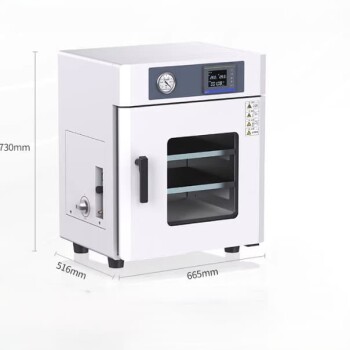
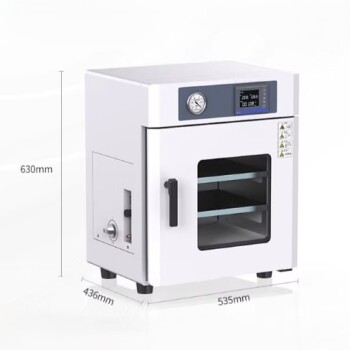
A vacuum drying oven plays a pivotal role in the preparation of Na3V2(PO4)3 cathode electrodes by acting as the final purification stage before battery assembly. Its primary function is to subject the coated electrode to a controlled thermal environment under negative pressure, which efficiently drives off organic solvents like N-methyl-2-pyrrolidone (NMP) and eliminates residual trace moisture. Because solid-state sodium metal batteries are chemically sensitive, this process is strictly required to prevent internal side reactions that would otherwise compromise the battery's long-term cycling stability.
Core Takeaway The vacuum drying oven is not merely for "drying" in the traditional sense; it is a critical stabilization step. By leveraging vacuum to lower solvent boiling points, it removes contaminants from deep within the electrode micropores without oxidizing the active material, ensuring the chemical purity necessary for high-performance sodium-ion batteries.
The Dual Purification Mechanism
The preparation of Na3V2(PO4)3 electrodes involves a wet slurry that must be solidified and purified. The vacuum drying oven addresses two distinct chemical contaminants.
Removal of Organic Solvents
After the electrode slurry is coated onto the current collector, it retains significant amounts of solvents, typically NMP. The oven heats the electrodes—often around 120°C for extended periods (e.g., 12 hours)—to evaporate these solvents.
The vacuum environment lowers the boiling point of these solvents. This allows for the thorough removal of volatile organic compounds (VOCs) from the deep micropores of the electrode structure without requiring dangerously high temperatures that could damage the binder or active material.
Elimination of Trace Moisture
Sodium-based battery systems are extremely sensitive to moisture. Even microscopic amounts of water remaining in the cathode can trigger severe degradation mechanisms.
The vacuum drying process ensures that moisture is desorbed from the porous electrode surface. If left untreated, this moisture would later react with the electrolyte or the sodium anode, leading to increased interface impedance and rapid failure of the battery's cycling capabilities.
Protecting Material Integrity
Beyond removing contaminants, the vacuum drying oven provides a protective environment that preserves the structural and chemical quality of the Na3V2(PO4)3 material.
Prevention of High-Temperature Oxidation
Heating electrode materials in the presence of air can lead to oxidation, altering the valence state of the active components.
By operating under a vacuum, the oven removes atmospheric oxygen. This ensures that the electrode can be heated to the necessary drying temperatures without chemically altering the Na3V2(PO4)3 or corroding the current collector.
Enhancing Film Stability
The drying process solidifies the composite electrode film, consisting of the active material, conductive agents, and binders.
Controlled heating creates a uniform, strongly adherent film on the current collector. This mechanical integrity is vital for maintaining electrical contact during the repetitive volume expansion and contraction that occurs during battery cycling.
Understanding the Trade-offs
While vacuum drying is essential, it introduces specific processing constraints that must be managed.
Throughput vs. Thoroughness
Vacuum drying is a batch process that creates a bottleneck in manufacturing. Thorough drying often requires 12 hours or more to extract solvents from deep micropores.
Rushing this process or reducing the vacuum duration to increase throughput introduces a high risk of residual solvent, which effectively poisons the battery from the inside out.
Thermal Sensitivity
While vacuum lowers boiling points, precise temperature control is still required.
Excessive heat, even under vacuum, can degrade polymer binders (like PVDF or PTFE) used in the electrode. This can cause the electrode coating to crack or delaminate from the current collector, rendering the electrode useless before it is ever installed.
Making the Right Choice for Your Goal
When configuring your vacuum drying process for Na3V2(PO4)3 electrodes, your approach should depend on your specific optimization targets.
- If your primary focus is Cycle Life: Prioritize longer drying durations (12+ hours) and high vacuum levels to ensure absolute minimum moisture content, as this is the primary driver of long-term stability.
- If your primary focus is Throughput: Optimize the temperature ramp rate to reach the safe maximum (e.g., 120°C) quickly, leveraging the vacuum to accelerate evaporation without exceeding the binder's thermal limit.
- If your primary focus is Electrode Adhesion: Ensure the drying temperature is strictly controlled to avoid thermal shock to the binder, which guarantees a robust mechanical bond between the coating and the collector.
The vacuum drying oven converts a raw chemical coating into a stable, electrochemical-grade component ready for high-performance energy storage.
Summary Table:
| Feature | Impact on Na3V2(PO4)3 Preparation | Benefit to Battery Performance |
|---|---|---|
| Negative Pressure | Lowers solvent boiling points (e.g., NMP) | Deep removal of VOCs without thermal damage |
| Thermal Control | Regulated heating (typ. 120°C for 12h) | Ensures strong binder adhesion and film integrity |
| Oxygen-Free Env. | Prevents oxidation of active materials | Maintains chemical purity and valence state |
| Moisture Removal | Desorbs trace water from micropores | Reduces interface impedance and side reactions |
Elevate Your Battery Research with KINTEK Precision
Achieving the perfect cathode structure requires uncompromising thermal control and vacuum integrity. KINTEK specializes in advanced laboratory equipment designed for the rigorous demands of sodium-ion battery fabrication. From high-performance vacuum drying ovens and high-temperature furnaces (muffle, tube, atmosphere) to precision crushing and milling systems and hydraulic pellet presses, we provide the tools you need for superior material synthesis.
Ensure your Na3V2(PO4)3 electrodes meet the highest standards of purity and stability. Contact KINTEK today to discover how our comprehensive range of equipment and consumables can optimize your laboratory workflow and accelerate your energy storage innovations.
Related Products
- 56L Vertical Laboratory Vacuum Drying Oven
- 23L Laboratory Vacuum Drying Oven
- Laboratory Scientific Electric Heating Blast Drying Oven
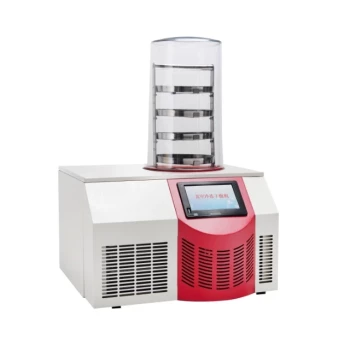
- Benchtop Laboratory Vacuum Freeze Dryer
- Dental Porcelain Zirconia Sintering Ceramic Vacuum Press Furnace
People Also Ask
- Why is a laboratory vacuum drying oven recommended for rice straw residues? Protect Your Biomass Integrity
- What role does a laboratory vacuum drying oven play in the preparation of modified multi-walled carbon nanotubes?
- What is the importance of using a laboratory vacuum drying oven? Preserving Slow-Release Microcapsule Integrity
- Why is a Laboratory Vacuum Drying Oven recommended for PBAT microspheres? Protect Sensitive Polymer Integrity
- What role does a laboratory vacuum drying oven play in processing nanoparticle powder samples? Protect Sample Integrity