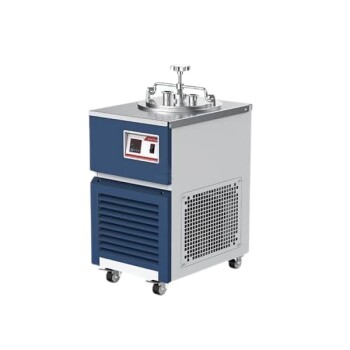
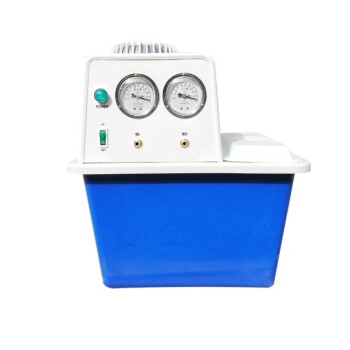
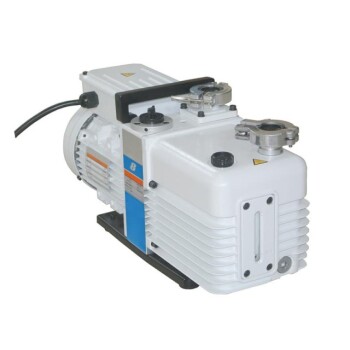
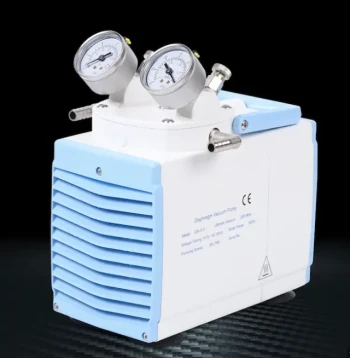
The vacuum unit system acts as the foundational control mechanism for the stainless steel nitriding process. It is responsible for reducing background pressure to extremely low levels to remove contaminants and subsequently maintaining a precise operating pressure (often around 500 Pa) to enable stable processing.
Core Takeaway: The vacuum system is not merely for removing air; it is the dynamic regulator of plasma physics. By controlling the pressure environment, it dictates the "mean free path" of active particles, ensuring they possess the correct energy and trajectory to react efficiently with the stainless steel surface without oxidation.
Creating the Prerequisite Environment
deep-cleaning the Reaction Chamber
Before the process begins, the vacuum unit evacuates the chamber to a base pressure (e.g., 0.1 Pa).
This step removes atmospheric oxygen and moisture, which are detrimental to stainless steel.
Eliminating these contaminants prevents surface oxidation, ensuring the steel is chemically active and ready to accept nitrogen atoms.
Precision Pressure Regulation
Once the initial evacuation is complete, the system introduces process gases while maintaining a constant operating pressure.
Working in coordination with flow controllers, the vacuum unit stabilizes the environment at specific levels, such as 500 Pa.
This balance is critical; fluctuations in pressure can destabilize the process and lead to inconsistent results.
Enabling Plasma Physics
Stabilizing Plasma Discharge
The primary function of the low-pressure environment is to facilitate a stable glow discharge.
Without the vacuum unit maintaining this specific pressure window, the plasma necessary for ion nitriding cannot be sustained.
This stability is particularly crucial when using techniques like the cathodic cage method, where uniform discharge is required for even treatment.
Optimizing Particle Dynamics
The vacuum level directly dictates the mean free path of active particles.
This term refers to the average distance a particle travels before colliding with another.
By optimizing this distance, the system ensures that nitrogen ions impact the surface of the cathodic cage or workpiece with high efficiency, maximizing the reaction rate.
Controlling Material Properties
Formation of Expanded Austenite
The controlled vacuum environment allows for the precise diffusion of nitrogen into the steel lattice.
This creates a layer of "expanded austenite" (S-phase), which significantly increases surface hardness.
Because the process occurs in a vacuum without quenching, distortion of the part is minimized while wear resistance is maximized.
The "Pulse" Cycle
In some advanced nitriding cycles, the vacuum system performs a rhythmic "inflation-extraction" process.
Pressure is raised (e.g., to 70 Pa) with nitrogen and then lowered (e.g., to 10 Pa) repeatedly.
This pulsing aids in refreshing the atmosphere around the workpiece, ensuring a consistent supply of active nitrogen for deep, uniform infiltration.
Understanding the Trade-offs
Leak Rate Sensitivity
The vacuum system's greatest vulnerability is the integrity of the seal.
Even a microscopic leak allows oxygen to enter, which immediately forms an oxide barrier on stainless steel, halting the nitriding process.
Rigorous leak testing is mandatory, as the system cannot compensate for atmospheric contamination through pumping alone.
Balancing Flow and Pressure
There is a delicate trade-off between gas flow rates and vacuum pump capacity.
If the pump is too aggressive, it may strip away active process gases before they react.
If the pump is too weak, reaction byproducts build up, destabilizing the plasma and contaminating the surface.
Making the Right Choice for Your Goal
To maximize the effectiveness of your nitriding setup, align the vacuum capabilities with your specific material requirements:
- If your primary focus is Surface Hardness: Prioritize a system with high-precision pressure stability (e.g., ±5 Pa) to maintain the optimal mean free path for maximum ion energy.
- If your primary focus is Part Geometry/Low Distortion: Ensure the system supports gradual "pulsing" cycles to control diffusion rates without thermal shock or quenching.
The vacuum unit is not just a pump; it is the active governor of the particle energy that defines your final material quality.
Summary Table:
| Feature | Role in Nitriding Process | Benefit to Material |
|---|---|---|
| Deep Evacuation | Removes O2 and moisture | Prevents surface oxidation; keeps surface active |
| Pressure Regulation | Maintains stable operating levels (~500 Pa) | Ensures consistent plasma discharge and uniform results |
| Mean Free Path Control | Optimizes particle trajectory and energy | Maximizes nitrogen ion reaction efficiency |
| Pulsing Cycles | Rhythmic nitrogen refresh (e.g., 10-70 Pa) | Deep, uniform infiltration with minimal distortion |
Elevate Your Surface Engineering with KINTEK Precision
Unlock the full potential of your stainless steel treatments with KINTEK’s advanced thermal and vacuum solutions. Whether you require high-stability vacuum furnaces, precision-controlled high-temperature reactors, or specialized crushing and milling systems, our equipment is engineered to provide the exact environmental control needed for superior material properties.
Why choose KINTEK?
- Unmatched Stability: Achieve the perfect mean free path for plasma nitriding.
- Comprehensive Range: From muffle and vacuum furnaces to hydraulic presses and essential ceramic consumables.
- Expert Support: Our technical team helps you select the right tools for your specific lab or industrial goals.
Ready to eliminate oxidation and maximize surface hardness? Contact KINTEK today to discuss your laboratory equipment needs!
References
- Rômulo Ríbeiro Magalhães de Sousa, Clodomiro Alves. Cathodic cage nitriding of AISI 409 ferritic stainless steel with the addition of CH4. DOI: 10.1590/s1516-14392012005000016
This article is also based on technical information from Kintek Solution Knowledge Base .
Related Products
- Vacuum Bellows for Efficient Connection and Stable Vacuum in High-Performance Systems
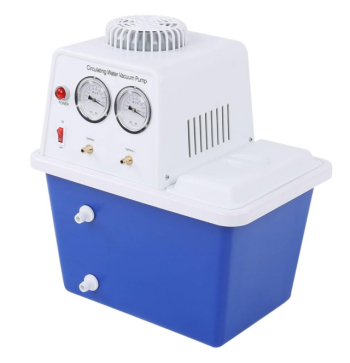
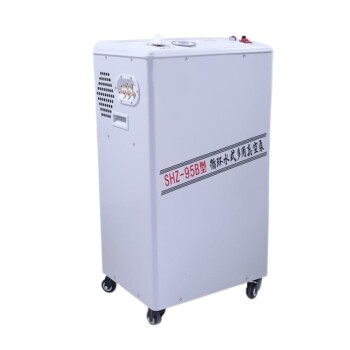
- Circulating Water Vacuum Pump for Laboratory and Industrial Use
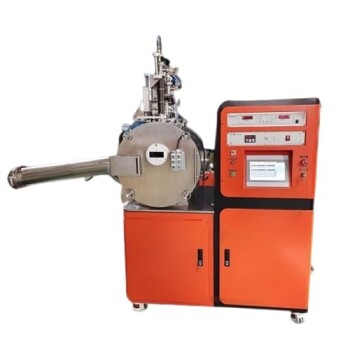
- Vacuum Induction Melting Spinning System Arc Melting Furnace
- CF KF Flange Vacuum Electrode Feedthrough Lead Sealing Assembly for Vacuum Systems
- 304 316 Stainless Steel Vacuum Ball Valve Stop Valve for High Vacuum Systems
People Also Ask
- Why are Viton O-rings utilized for sealing in carbochlorination experimental setups? Ensure Safety and Seal Integrity
- Why are Viton O-rings considered essential consumables for the high-temperature sealing interfaces of microreactors?
- What is the importance of leakage in a vacuum system? Prevent Contamination and Process Failure
- What is the relationship between temperature and pressure in a vacuum? Mastering Thermal Control for Optimal Vacuum Performance
- What should my vacuum pressure be? Find the Right Range for Your Application