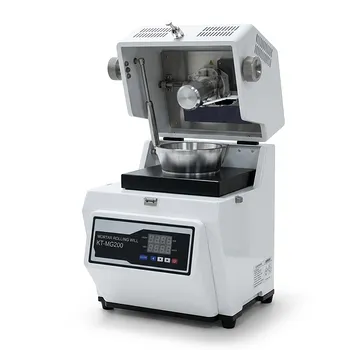
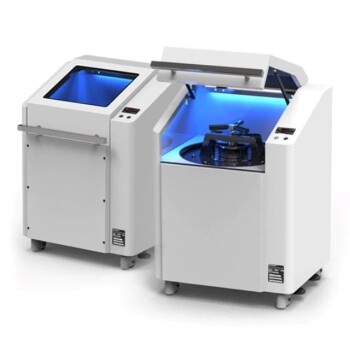
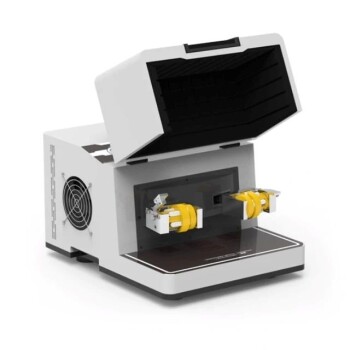
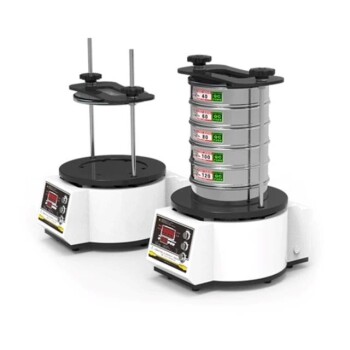
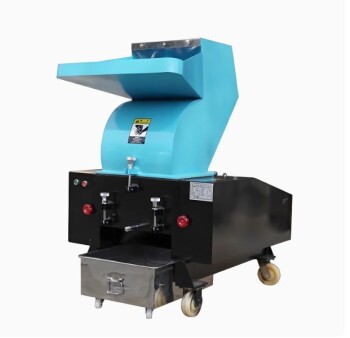
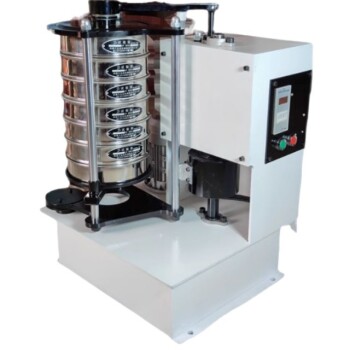
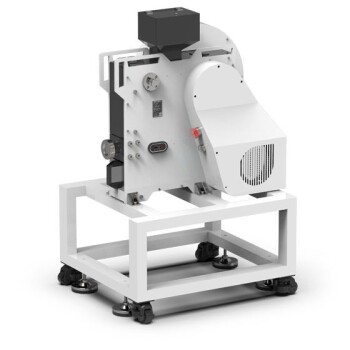
Grinding and Sieving Equipment acts as the definitive quality control stage between raw chemical synthesis and final material consolidation. Specifically, it processes the cathode products resulting from electrolytic deoxygenation by crushing and filtering them into precise particle sizes, typically smaller than 300 mesh. This mechanical refinement is essential to convert raw, uneven reduction products into a consistent powder feedstock ready for manufacturing.
Core Takeaway Electrolytic reduction establishes the chemical identity of the alloy, but grinding and sieving establish its physical viability. By eliminating agglomeration and enforcing size uniformity, this equipment creates the necessary conditions for achieving high density and a homogeneous microstructure during the critical hot pressing sintering phase.
The Mechanics of Powder Preparation
Breaking Down Agglomeration
The raw cathode products obtained from electrolytic deoxygenation rarely emerge as free-flowing powders. They often suffer from agglomeration, where particles clump together.
Grinding equipment mechanically forces these clusters apart. This ensures that the material consists of individual particles rather than irregular masses, which is the first step toward process stability.
Enforcing Precise Particle Sizing
Once the material is crushed, it must be standardized. Sieving equipment filters the output to specific thresholds, such as particles smaller than 300 mesh.
This step acts as a physical gatekeeper. It prevents oversized or irregular particles from contaminating the batch, ensuring that the entire volume of material meets the specific geometric requirements for the next stage of processing.
Impact on Final Material Properties
Enabling High Density
The primary goal of post-processing is to prepare the material for hot pressing sintering. To achieve a dense final product, the starting powder must pack together efficiently.
Uniformly sized particles fill space more effectively than irregular clumps. By ensuring the powder is fine (<300 mesh) and uniform, the equipment allows for maximum densification during the sintering process.
Ensuring Microstructural Homogeneity
A high-quality high-entropy alloy requires a consistent internal structure. If the starting powder is uneven, the final bulk material will have weak spots or inconsistent grain structures.
Grinding and sieving ensure a uniform distribution of particle sizes throughout the batch. This physical uniformity translates directly into a homogeneous microstructure in the final sintered product, ensuring reliable mechanical properties.
The Consequences of Process Inconsistency
The Pitfall of Poor Filtration
If the sieving process is bypassed or inefficient, oversized particles remain in the feedstock.
During sintering, these large particles resist compaction. This leads to reduced overall density and can introduce stress points within the alloy, compromising its structural integrity.
The Cost of Agglomeration
Failing to thoroughly grind the material leaves agglomerates intact. These clumps often contain void spaces that are difficult to close during hot pressing.
The result is a final product with porosity issues. No amount of heat or pressure during sintering can fully correct the defects introduced by poorly prepared, agglomerated powder.
Making the Right Choice for Your Goal
To maximize the quality of your high-entropy alloy, consider your specific end-goals when configuring your grinding and sieving protocols:
- If your primary focus is Maximum Density: Prioritize sieving protocols that strictly enforce fine particle limits (e.g., <300 mesh) to optimize packing efficiency during hot pressing.
- If your primary focus is Structural Reliability: Focus on the grinding intensity to ensure the complete elimination of agglomerates, guaranteeing a homogeneous microstructure.
Ultimately, the quality of your final bulk material is capped by the uniformity of the powder you produce.
Summary Table:
| Process Stage | Function | Impact on High-Entropy Alloy |
|---|---|---|
| Grinding | Breaking down agglomerates | Eliminates clumps; ensures individual particle separation. |
| Sieving | Filtering to <300 mesh | Standardizes particle size; ensures geometric uniformity. |
| Consolidation | Hot pressing preparation | Enables maximum density and efficient packing. |
| Final Quality | Microstructural Control | Guarantees homogeneity and structural reliability. |
Elevate Your Alloy Research with KINTEK Precision Solutions
The integrity of your high-entropy alloys starts with the quality of your powder preparation. KINTEK specializes in high-performance laboratory equipment designed to meet the rigorous demands of advanced material science. From our precision crushing and milling systems to high-accuracy sieving equipment and robust hydraulic pellet/hot presses, we provide the end-to-end solutions needed to achieve high-density, homogeneous microstructures.
Whether you are refining electrolytically reduced products or scaling battery research, our comprehensive portfolio—including high-temperature furnaces, isostatic presses, and PTFE consumables—is engineered for reliability and precision.
Ready to optimize your material consolidation process? Contact our experts at KINTEK today to find the perfect equipment for your laboratory needs.
Related Products
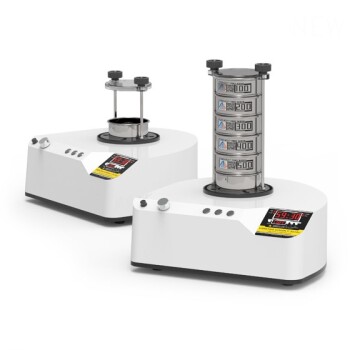
- Three-dimensional electromagnetic sieving instrument
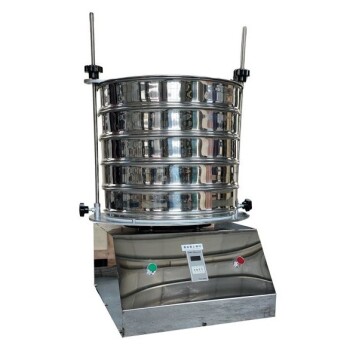
- Laboratory Test Sieves and Sieving Machines
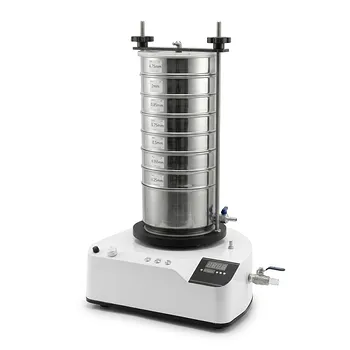
- Laboratory Vibratory Sieve Shaker Machine for Dry and Wet Three-Dimensional Sieving
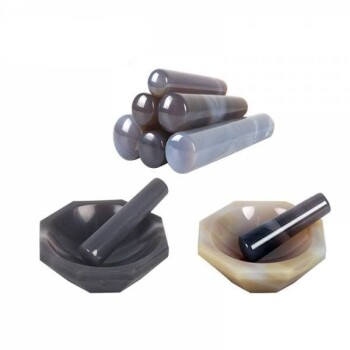
- Nature Agate Mortar and Pestle for Grinding and Mixing
- Laboratory High Throughput Tissue Grinding Mill Grinder
People Also Ask
- Why is sieving equipment essential for the classification of processed bio-activated carbon? Optimize Performance
- What are the limitations of sieving? Understanding the Constraints of Particle Size Analysis
- What are advantages and disadvantages of sieving method? A Guide to Reliable & Cost-Effective Particle Sizing
- How is sieving important? The Critical Role of Particle Size Analysis in Quality Control
- What is sieving and how does it work? A Guide to Accurate Particle Size Analysis