The choice of crucible material determines whether you are testing a pure chemical mechanism or a complex system interaction. Using graphite crucibles often introduces carbon into the molten salt, leading to the carburization of metal samples which fundamentally alters their diffusion kinetics and mechanical properties. Conversely, metal-lined crucibles isolate the sample from carbon, enabling the accurate assessment of specific phenomena like radiation corrosion or pure oxidation without chemical interference.
Core Takeaway: Graphite is not a passive container; it acts as a carbon source that induces carburization, thereby skewing data regarding pure corrosion mechanisms. To study fundamental degradation—such as radiation-induced corrosion—you must use metal-lined crucibles to ensure the environment remains chemically isolated.
The Impact of Carbon Contamination
Graphite as an Active Participant
In many molten salt experiments, graphite is chosen for its high-temperature stability. However, it acts as a carbon source within the salt melt.
This introduction of carbon leads to the carburization of the metal specimens being tested.
When a sample undergoes carburization, its surface chemistry changes. This alters the material's diffusion kinetics, meaning the rate at which atoms move through the metal lattice is modified.
Consequences for Mechanical Data
The physical properties of the metal sample do not remain constant under these conditions. Carburization significantly affects the mechanical properties of the alloy.
If your research aims to measure the inherent strength or ductility of a material post-exposure, a graphite crucible may introduce hardening variables that confuse your results.
Achieving Chemical Isolation
The Necessity of Metal-Lined Crucibles
To obtain accurate data on specific corrosion mechanisms, such as radiation corrosion, you must eliminate the carbon variable.
Metal-lined crucibles, particularly those using nickel-based alloy linings, are essential for this purpose.
They physically isolate the carbon source from the salt environment.
Preserving "Pure" Mechanisms
By preventing carburization, these crucibles allow for the observation of pure oxidation or dissolution mechanisms.
This ensures that the degradation observed is caused strictly by the salt and radiation environment, rather than a secondary chemical reaction with the container.
Understanding the Trade-offs
When Graphite is Beneficial
Despite the carburization issue, graphite crucibles have specific use cases. They possess a more positive corrosion potential than many metals.
This allows them to form an electrochemical circuit with submerged metal specimens.
This setup is ideal for simulating galvanic corrosion effects that would occur in actual molten salt reactors, where graphite structural components interact with metal parts.
Material Compatibility and Inertness
While graphite creates carbon issues, it offers exceptional resistance to fluoride salt erosion and provides uniform temperature distribution.
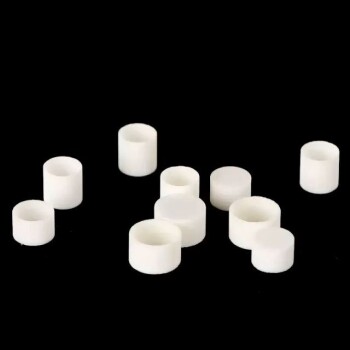
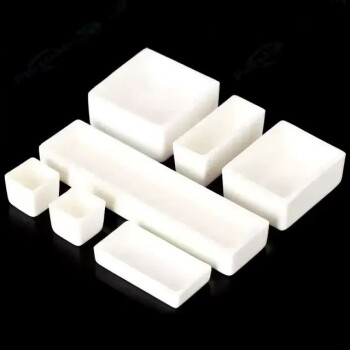
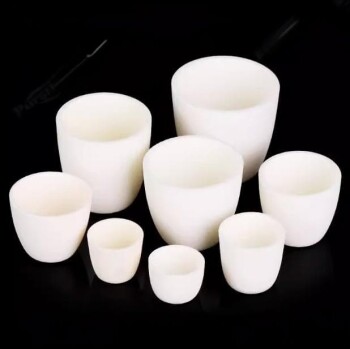
However, for other aggressive environments like molten chlorides or nitrates, materials like Glassy Carbon, Alumina, or MgO are often preferred.
These alternatives are selected specifically to prevent leaching and ensure that corrosion data reflects only the interaction between the alloy and the specific salt.
Making the Right Choice for Your Goal
To select the correct crucible, you must define the primary variable you wish to isolate.
- If your primary focus is fundamental mechanism study: Use metal-lined crucibles (e.g., Nickel-lined) to prevent carburization and isolate pure oxidation or radiation effects.
- If your primary focus is reactor system simulation: Use graphite crucibles to replicate the galvanic corrosion and electrochemical coupling found between structural graphite and metal components.
- If your primary focus is extreme chemical inertness: Consider Glassy Carbon or Alumina (for chlorides/nitrates) to ensure absolutely no impurities act as variables in the corrosion process.
Select your crucible not just for its ability to hold the salt, but for its chemical neutrality relative to your specific data requirements.
Summary Table:
| Crucible Type | Primary Interaction | Key Advantage | Best Research Use Case |
|---|---|---|---|
| Graphite | Active carbon source | High-temp stability; creates galvanic circuits | Reactor system simulation & galvanic studies |
| Metal-Lined (Nickel) | Chemically isolated | Prevents carburization & diffusion changes | Fundamental mechanism study (e.g., radiation) |
| Ceramic (Alumina/MgO) | Inert / Non-metallic | Prevents leaching in chlorides/nitrates | Extreme chemical inertness & purity testing |
Precision in molten salt research begins with the right container. At KINTEK, we understand that whether you are studying radiation-induced corrosion or simulating reactor environments, the integrity of your results depends on high-quality materials. Beyond our specialized ceramics and crucibles, we provide a comprehensive range of high-temperature furnaces, high-pressure reactors, and battery research tools designed for the most demanding laboratory environments. Ensure your data remains accurate and reproducible—Contact KINTEK today to find the perfect crucible and thermal solutions for your research goals.
References
- Franziska Schmidt, Blas P. Uberuaga. Effects of Radiation-Induced Defects on Corrosion. DOI: 10.1146/annurev-matsci-080819-123403
This article is also based on technical information from Kintek Solution Knowledge Base .
Related Products
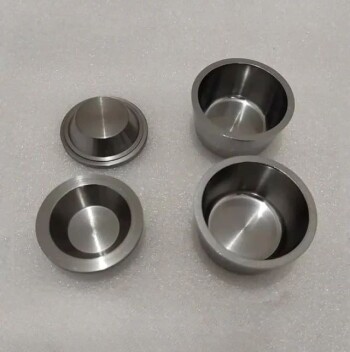
- Electron Beam Evaporation Coating Tungsten Crucible and Molybdenum Crucible for High Temperature Applications
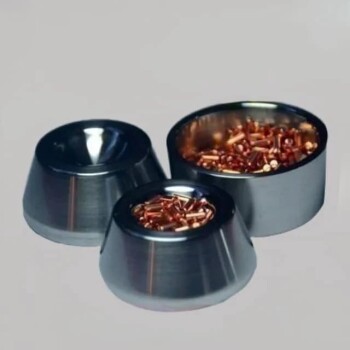
- Electron Beam Evaporation Coating Gold Plating Tungsten Molybdenum Crucible for Evaporation
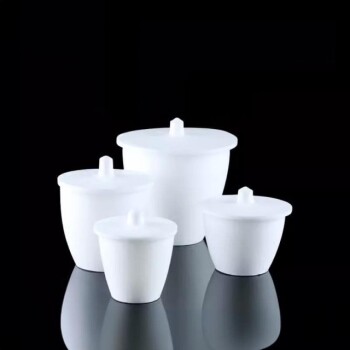
- Custom Machined and Molded PTFE Teflon Parts Manufacturer with PTFE Crucible and Lid
- Engineering Advanced Fine Ceramics Alumina Al2O3 Crucible With Lid Cylindrical Laboratory Crucible
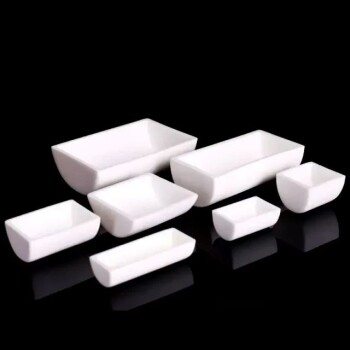
- Alumina Al2O3 Ceramic Crucible Semicircle Boat with Lid for Engineering Advanced Fine Ceramics
People Also Ask
- What is the container that holds the metal source material called in e-beam evaporation? Ensure Purity and Quality in Your Thin-Film Deposition
- What materials are used in electron beam evaporation? Master High-Purity Thin Film Deposition
- What is the voltage of e-beam evaporation? Achieve Precise Thin-Film Deposition
- What are the applications of e-beam evaporation? Achieve High-Purity Coatings for Optics & Electronics
- What is e-beam evaporation? Achieve High-Purity Thin Film Deposition for Your Lab