Hot Isostatic Pressing (HIP) is a thermal treatment process that subjects a component to both elevated temperatures and high isostatic gas pressure simultaneously. Inside a high-pressure containment vessel, an inert gas (typically argon) applies force evenly from all directions to eliminate internal defects. This combination of heat and pressure densifies the material, enhancing its structural integrity without significantly altering its external shape.
By creating an environment where materials become plastic under uniform pressure, HIP collapses internal voids and bonds them shut at a microscopic level. This allows components to achieve near-theoretical density, significantly improving fatigue life and mechanical properties.
The Core Mechanics of HIP
The Role of Isostatic Pressure
The defining feature of this process is the application of isostatic pressure, meaning force is applied equally from all directions.
Unlike traditional pressing which might apply force from a single axis, isostatic pressure ensures uniformity. This allows complex geometries to be treated without the distortion often caused by unidirectional force.
The Function of Inert Gas
The process typically utilizes argon as the pressurizing medium.
Argon is chosen because it is an inert gas, which prevents unwanted chemical reactions or oxidation on the surface of the component during the high-temperature cycle.
Material Densification Mechanisms
When heat and pressure are applied together, the material reaches a plastic state.
Internal voids and microporosity collapse under the pressure differential. The surfaces of these collapsed voids then fuse together through diffusion bonding, creep, and plastic deformation, effectively healing the material from the inside out.
The Operational Cycle
Loading and Preparation
The operational cycle begins by loading the components into a specialized furnace.
This furnace is then enclosed within a robust pressure vessel. The system is sealed to create a dry, controlled environment necessary for the process.
Pressurization and Heating
Once sealed, argon gas is pumped into the vessel to raise the internal pressure.
Simultaneously, the furnace heats the chamber. Many systems use a combination of gas pumping and thermal expansion to reach the precise target pressure and temperature levels required for the specific material.
The Holding Phase
The components are held at these elevated conditions for a specific duration, known as the dwell time.
This holding period allows the diffusion bonding and creep mechanisms to take full effect, ensuring all internal voids are eliminated.
Cooling and Unloading
After the dwell time, the vessel undergoes a controlled cooling phase.
The gas is released, often recycled for future use, and the pressure returns to ambient levels. The furnace is removed from the pressure vessel, and the treated, densified components are unloaded.
Understanding Process Considerations
Cycle Duration
The complete HIP cycle is not instantaneous; it is a batch process that typically takes between 2 to 6 hours.
This duration includes loading, ramping up temperature and pressure, holding, and the cooling down phase. Project planning must account for this processing time.
Equipment Complexity
The process requires a unit that integrates a high-temperature furnace inside a high-pressure vessel.
Because the system must manage extreme thermal and pneumatic forces simultaneously, the machinery is complex and requires precise control over the process environment.
Making the Right Choice for Your Project
The HIP process is specifically designed for applications where material integrity is non-negotiable.
- If your primary focus is maximizing material density: HIP is the ideal solution to achieve near-theoretical density by eliminating internal porosity that casting or additive manufacturing might leave behind.
- If your primary focus is mechanical reliability: The process effectively "heals" internal defects through diffusion bonding, ensuring the component performs reliably under stress.
Hot Isostatic Pressing turns a porous or inconsistent internal structure into a solid, high-performance material through the precise application of heat and uniform pressure.
Summary Table:
| Feature | Description |
|---|---|
| Medium | Inert Gas (typically Argon) |
| Pressure Type | Isostatic (equal from all directions) |
| Key Mechanisms | Diffusion bonding, creep, and plastic deformation |
| Process Duration | 2 to 6 hours per cycle |
| Primary Goal | Elimination of internal porosity and defects |
| Result | Enhanced fatigue life and structural integrity |
Elevate Your Material Performance with KINTEK
Is internal porosity compromising your high-performance components? KINTEK specializes in advanced laboratory and industrial solutions, including high-end isostatic presses designed to eliminate defects and ensure your materials achieve near-theoretical density. Whether you are in aerospace, medical, or advanced manufacturing, our experts are ready to help you optimize your process with our comprehensive range of crushing, milling, and high-temperature furnace systems.
Unlock superior mechanical reliability today.
Related Products
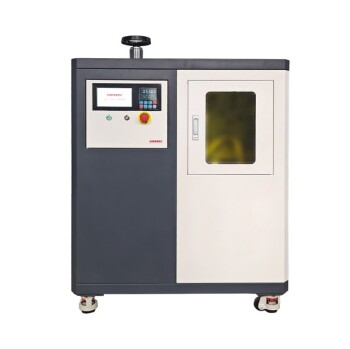
- Warm Isostatic Press for Solid State Battery Research
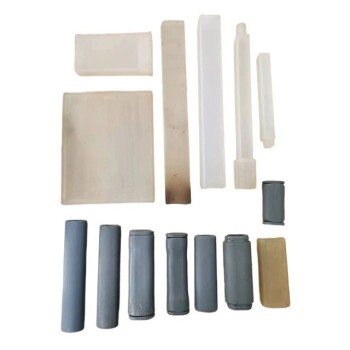
- Isostatic Molding Pressing Molds for Lab
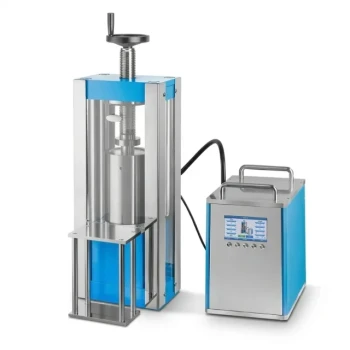
- Electric Split Lab Cold Isostatic Press CIP Machine for Cold Isostatic Pressing
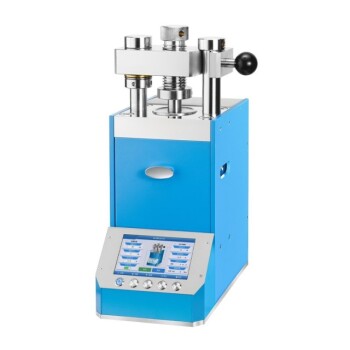
- Automatic Lab Cold Isostatic Press CIP Machine Cold Isostatic Pressing
- Manual Cold Isostatic Pressing Machine CIP Pellet Press
People Also Ask
- What is the temperature of a warm isostatic press? Achieve Optimal Densification for Your Materials
- What is the function of a Warm Isostatic Press (WIP) in all-solid-state pouch cells? Optimize Battery Density
- Why are Warm Isostatic Presses (WIP) necessary for solid-state batteries? Achieve Atomic-Level Contact
- What advantages does a warm isostatic press offer over a traditional uniaxial press for Li6PS5Cl electrolyte sheets?
- How do warm isostatic presses improve dry electrode performance? Enhance ASSB Conductivity with Heat & Pressure