Knowledge How long does a sieve analysis shaker take? A Realistic Breakdown of the Full Process
Author avatar

Tech Team · Kintek Solution

Updated 1 week ago

How long does a sieve analysis shaker take? A Realistic Breakdown of the Full Process


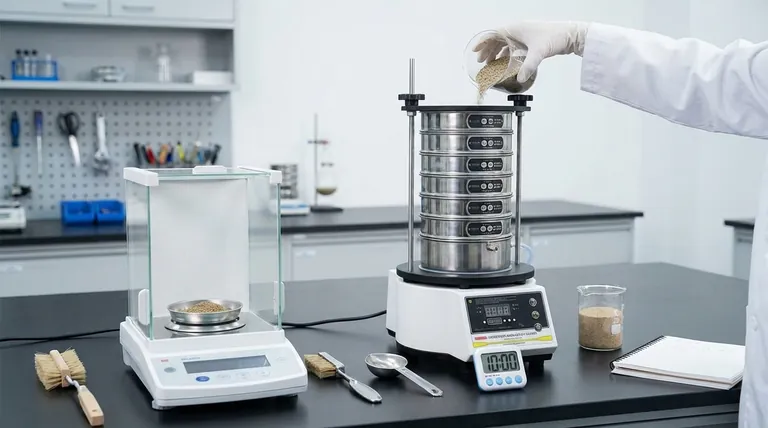
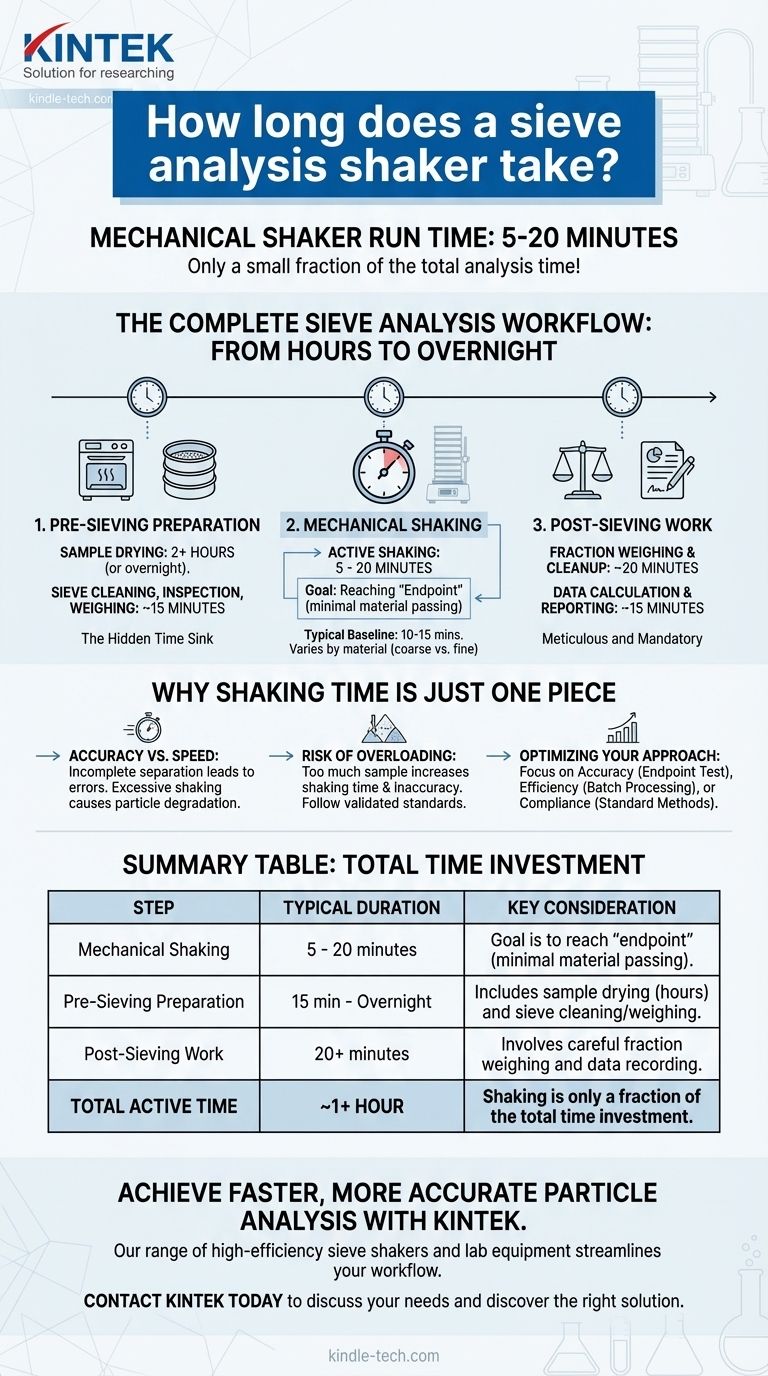
For a typical sieve analysis, the mechanical shaker itself usually runs for a period of 5 to 20 minutes. This duration, however, is only a small fraction of the total time required for a complete sieve analysis. The actual shaking is a relatively quick step bracketed by much more time-consuming preparation and evaluation procedures.

The most common mistake is focusing on the shaker's run time. The true duration of a sieve analysis is dictated by the mandatory preparation and post-analysis steps, which can easily extend the entire process from under an hour to several hours.
How long does a sieve analysis shaker take? A Realistic Breakdown of the Full Process

The Shaking Process Itself: A Matter of Minutes

While the shaker is the active part of the analysis, its duration is determined by the material and the goal of the test, not a fixed universal standard.

Establishing a Typical Baseline

For most common materials like sand, aggregates, or free-flowing powders, a run time of 10 to 15 minutes is a standard starting point. This is often sufficient to achieve adequate particle separation.

Factors Influencing Shaker Time

The optimal time varies based on several factors. Coarse materials may separate quickly in as little as 5 minutes, while very fine or slightly cohesive powders may require 20 minutes or more to properly pass through the mesh.

The Technical Goal: Reaching "Endpoint"

The goal of shaking is to reach the "endpoint," the point at which continued sieving no longer results in a significant amount of material passing through any given sieve. A common industry rule is that the endpoint is reached when less than 1% of the material on a sieve passes through it during one minute of additional shaking.

Why Shaker Time is Just One Piece of the Puzzle

The overall workflow, as outlined in standard testing methods, shows that the mechanical shaking step is just one component among many. The other steps are what truly consume the bulk of the time and labor.

Pre-Sieving Preparation: The Hidden Time Sink

Before the shaker is even turned on, significant time is invested. This includes sample preparation, which may involve drying a sample in an oven for several hours or overnight to remove moisture. It also includes the meticulous task of cleaning, inspecting, and weighing each individual empty sieve.

Post-Sieving Work: Meticulous and Mandatory

After the shaking stops, the work is far from over. Each sieve must be carefully removed from the stack, and the material fraction retained on it must be weighed precisely. This process, known as back-weighing, requires care to avoid losing any sample material.

A Realistic Timeline Example

Consider a single sample:

  • Sample Drying: 2+ hours (if required)
  • Sieve Prep & Weighing: 15 minutes
  • Sample Weighing & Loading: 5 minutes
  • Mechanical Shaking: 10 minutes
  • Fraction Weighing & Cleanup: 20 minutes
  • Data Calculation & Reporting: 15 minutes

In this realistic scenario, the 10-minute shaking accounts for only a small portion of the 1 hour and 5 minutes of active work, not including the lengthy drying time.

Understanding the Trade-offs

Optimizing sieve analysis requires balancing speed with the fundamental need for accurate and repeatable results.

Accuracy vs. Speed

Shaking for too little time is the most critical error. It results in incomplete separation, where finer particles are incorrectly counted as part of a coarser fraction, invalidating the entire test. Conversely, excessive shaking offers no benefit and can, in some cases, cause particle degradation (attrition), which also skews results.

The Risk of Overloading

Placing too much sample material onto the top sieve is a common mistake made to save time. This overloads the mesh, preventing particles from having a fair chance to pass through. It dramatically increases the required shaking time and produces an inaccurate result. Following a validated standard method is the only way to know the correct sample size.

How to Apply This to Your Project

Your approach to sieve analysis timing should be guided by your ultimate goal.

  • If your primary focus is accuracy and reproducibility: Perform an endpoint determination test for each new material type to establish a standardized, validated shaking time.
  • If your primary focus is high-throughput and efficiency: Streamline your workflow by preparing and weighing sieves in batches and creating an efficient station for post-shaking weighing and data entry.
  • If you are performing a test for compliance or certification: Disregard any "typical" times and follow the specified standard method (e.g., from ASTM or ISO) precisely, as it will dictate sample size, shaker settings, and duration.

Ultimately, a reliable particle size analysis is built on a consistent process, where the shaker's run time is a validated constant, not a variable to be adjusted.

Summary Table:

Step Typical Duration Key Consideration
Mechanical Shaking 5 - 20 minutes Goal is to reach 'endpoint' (minimal material passing).
Pre-Sieving Preparation 15 min - Overnight Includes sample drying (hours) and sieve cleaning/weighing.
Post-Sieving Work 20+ minutes Involves careful fraction weighing and data recording.
Total Active Time ~1+ hour Shaking is only a fraction of the total time investment.

Achieve faster, more accurate particle analysis with KINTEK.

Our range of high-efficiency sieve shakers and lab equipment is designed to streamline your workflow, from sample preparation to data reporting. Let our experts help you optimize your process for maximum throughput and reliability.

Contact KINTEK today to discuss your specific laboratory needs and discover the right solution for you.

Visual Guide
How long does a sieve analysis shaker take? A Realistic Breakdown of the Full Process Visual Guide

Related Products

People Also Ask

Related Products

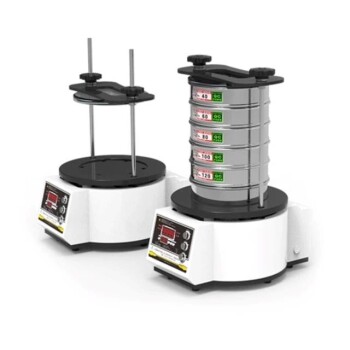
Laboratory Test Sieves and Vibratory Sieve Shaker Machine

Laboratory Test Sieves and Vibratory Sieve Shaker Machine

Efficiently process powders, granules, and small blocks with a high-frequency vibration sieve. Control vibration frequency, screen continuously or intermittently, and achieve accurate particle size determination, separation, and classification.

Vibratory Sieve Shaker Machine Dry Three-Dimensional Vibrating Sieve

Vibratory Sieve Shaker Machine Dry Three-Dimensional Vibrating Sieve

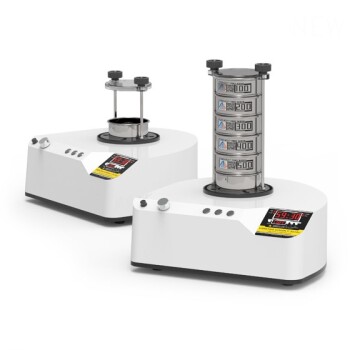
The KT-V200 product focuses on solving common sieving tasks in the laboratory. It is suitable for sieving 20g-3kg dry samples.

Three-dimensional electromagnetic sieving instrument

Three-dimensional electromagnetic sieving instrument

KT-VT150 is a desktop sample processing instrument for both sieving and grinding. Grinding and sieving can be used both dry and wet. The vibration amplitude is 5mm and the vibration frequency is 3000-3600 times/min.

Laboratory Vibratory Sieve Shaker Machine Slap Vibrating Sieve

Laboratory Vibratory Sieve Shaker Machine Slap Vibrating Sieve

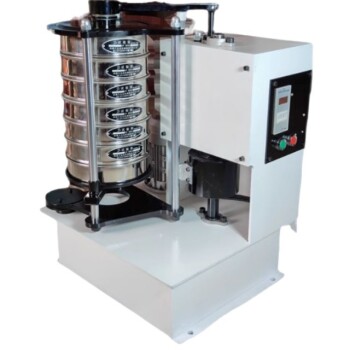
KT-T200TAP is a slapping and oscillating sieving instrument for laboratory desktop use, with 300 rpm horizontal circular motion and 300 vertical slapping motions to simulate manual sieving to help sample particles pass through better.

Shaking Incubators for Diverse Laboratory Applications

Shaking Incubators for Diverse Laboratory Applications

Precision lab shaking incubators for cell culture & research. Quiet, reliable, customizable. Get expert advice today!

Laboratory Vortex Mixer Orbital Shaker Multifunctional Rotation Oscillation Mixer

Laboratory Vortex Mixer Orbital Shaker Multifunctional Rotation Oscillation Mixer

The inching mixer is small in size, mixes quickly and thoroughly, and the liquid is in a vortex shape, which can mix all the test solutions attached to the tube wall.

Laboratory Oscillating Orbital Shaker

Laboratory Oscillating Orbital Shaker

Mixer-OT orbital shaker uses brushless motor, which can run for a long time. It is suitable for vibration tasks of culture dishes, flasks and beakers.

Laboratory Multifunctional Small Speed-Adjustable Horizontal Mechanical Shaker for Lab

Laboratory Multifunctional Small Speed-Adjustable Horizontal Mechanical Shaker for Lab

The laboratory multifunctional speed-regulating oscillator is a constant-speed experimental equipment specially developed for modern bioengineering production units.

Lab Scale Rotary Single Punch Tablet Press Machine TDP Tablet Punching Machine

Lab Scale Rotary Single Punch Tablet Press Machine TDP Tablet Punching Machine

This machine is a single-pressure automatic rotating, continuous tableting machine that compresses granular raw materials into various tablets. It is mainly used for tablet production in the pharmaceutical industry, and is also suitable for chemical, food, electronics and other industrial sectors.

Single Punch Electric Tablet Press Machine Laboratory Powder Tablet Punching TDP Tablet Press

Single Punch Electric Tablet Press Machine Laboratory Powder Tablet Punching TDP Tablet Press

The single-punch electric tablet press is a laboratory-scale tablet press suitable for corporate laboratories in pharmaceutical, chemical, food, metallurgical and other industries.

Metallographic Specimen Mounting Machine for Laboratory Materials and Analysis

Metallographic Specimen Mounting Machine for Laboratory Materials and Analysis

Precision metallographic mounting machines for labs—automated, versatile, and efficient. Ideal for sample prep in research and quality control. Contact KINTEK today!

Automatic Laboratory Heat Press Machine

Automatic Laboratory Heat Press Machine

Precision automatic heat press machines for labs—ideal for material testing, composites, and R&D. Customizable, safe, and efficient. Contact KINTEK today!

Custom PTFE Teflon Parts Manufacturer PTFE Beaker and Lids

Custom PTFE Teflon Parts Manufacturer PTFE Beaker and Lids

The PTFE beaker is a laboratory container that is resistant to acid, alkali, high and low temperatures and is suitable for temperatures ranging from -200ºC to +250ºC. This beaker has excellent chemical stability and is widely used for heat treatment samples and volume analysis.

Automatic Heated Hydraulic Press Machine with Heated Plates for Laboratory Hot Press

Automatic Heated Hydraulic Press Machine with Heated Plates for Laboratory Hot Press

The Automatic High Temperature Heat Press is a sophisticated hydraulic hot press designed for efficient temperature control and product quality processing.

Laboratory High Pressure Horizontal Autoclave Steam Sterilizer for Lab Use

Laboratory High Pressure Horizontal Autoclave Steam Sterilizer for Lab Use

The horizontal autoclave steam sterilizer adopts the gravity displacement method to remove the cold air in the inner chamber, so that the inner steam and cold air content is less, and the sterilization is more reliable.

Single Punch Tablet Press Machine and Mass Production Rotary Tablet Punching Machine for TDP

Single Punch Tablet Press Machine and Mass Production Rotary Tablet Punching Machine for TDP

Rotary tablet punching machine is an automatic rotating and continuous tableting machine. It is mainly used for tablet manufacturing in the pharmaceutical industry, and is also suitable for industrial sectors such as food, chemicals, batteries, electronics, ceramics, etc. to compress granular raw materials into tablets.

Manual Heated Hydraulic Press Machine with Heated Plates for Laboratory Hot Press

Manual Heated Hydraulic Press Machine with Heated Plates for Laboratory Hot Press

The Manual Heat Press is a versatile piece of equipment suitable for a variety of applications, operated by a manual hydraulic system that applies controlled pressure and heat to the material placed on the piston.

Double Plate Heating Press Mold for Lab

Double Plate Heating Press Mold for Lab

Discover precision in heating with our Double Plate Heating Mold, featuring high-quality steel and uniform temperature control for efficient lab processes. Ideal for various thermal applications.

Heated Hydraulic Press Machine with Integrated Manual Heated Plates for Lab Use

Heated Hydraulic Press Machine with Integrated Manual Heated Plates for Lab Use

Efficiently process heat-pressing samples with our Integrated Manual Heated Lab Press. With a heating range up to 500°C, it's perfect for various industries.

Desktop Fast Laboratory Autoclave Sterilizer 35L 50L 90L for Lab Use

Desktop Fast Laboratory Autoclave Sterilizer 35L 50L 90L for Lab Use

The desktop fast steam sterilizer is a compact and reliable device used for rapid sterilization of medical, pharmaceutical, and research items. It efficiently sterilizes surgical instruments, glassware, medicines, and resistant materials, making it suitable for various applications.


Leave Your Message