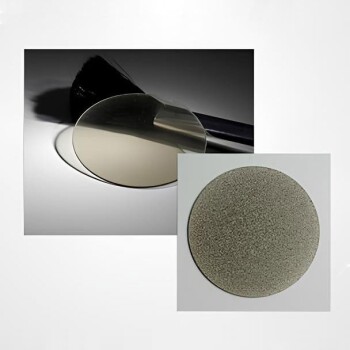
The first gem-quality synthetic diamonds were produced in 1970 by General Electric (GE) using a specific variation of the High Pressure High Temperature (HPHT) method. By placing graphite and a nickel solvent inside a pressurized pyrophyllite tube, scientists successfully grew diamond crystals up to one carat in size over a week-long process.
Core Takeaway: Achieving gem quality required more than just crushing carbon; it required a controlled temperature gradient. The 1970 GE breakthrough relied on dissolving graphite into a molten metal solvent, which then migrated through the chamber to crystallize onto a diamond seed, strictly mimicking the Earth's natural geological forces.
The GE Production Method (1970)
The creation of these specific stones relied on a precise arrangement of materials and extreme physical forces.
The Reaction Vessel
The process utilized a pyrophyllite tube to contain the reaction. This material was chosen for its ability to transmit pressure while serving as an electrical and thermal insulator.
The Component Arrangement
Inside the tube, thin diamond seeds were placed at each end to act as a foundation for growth. The feed material, graphite, was placed in the center of the tube. A nickel solvent was positioned between the graphite source and the seeds to facilitate carbon transport.
The Growth Environment
The container was subjected to immense pressure, reaching approximately 5.5 GPa (gigapascals), while being heated to high temperatures. This created an environment that forced the graphite to dissolve into the molten nickel solvent.
The Crystallization Process
Over a period of one week, the dissolved carbon migrated from the hot center of the tube toward the cooler ends. It then precipitated out of the metal solvent and crystallized onto the seeds. This resulted in gem-quality stones approximately 5 mm in size (1 carat).
Controlling Color and Purity
The initial results of this process were chemically successful but aesthetically limited.
The Nitrogen Challenge
The first batch of diamonds produced by this method ranged from yellow to brown in color. This was caused by nitrogen contamination present during the growth process, a common issue in early HPHT synthesis.
Achieving Colorless Stones
To produce colorless or "white" diamonds, researchers introduced "getters"—specifically aluminum or titanium. These metals chemically bonded with the nitrogen, removing it from the crystal lattice and allowing clear diamond to form.
Creating Blue Diamonds
Researchers also found they could manipulate the process to create fancy colors intentionally. By adding boron to the growth environment, they successfully produced blue diamonds.
Understanding the Trade-offs: HPHT vs. Modern CVD
While the GE method paved the way, it is important to understand how this historical HPHT method compares to modern alternatives like Chemical Vapor Deposition (CVD).
Metallic Inclusions (HPHT)
The GE method relied on a molten metal solvent (nickel). Consequently, these diamonds often contain microscopic metallic inclusions or impurities derived from the catalyst, which can affect clarity and magnetism.
Growth Mechanics vs. Gas Plasma (CVD)
The HPHT method mimics the Earth's crushing force. In contrast, modern CVD mimics diamond formation in interstellar gas clouds. CVD uses plasma to break down gases at moderate pressures, depositing carbon layer-by-layer, which often allows for higher purity without metal solvents.
Making the Right Choice for Your Goal
Understanding the history of diamond synthesis helps in evaluating modern synthetic stones.
- If your primary focus is historical accuracy: Note that early "white" synthetics required aluminum or titanium additives to scrub nitrogen, unlike natural stones.
- If your primary focus is identifying synthesis methods: Look for distinct color zoning or metallic inclusions, which are characteristic signatures of the metal-solvent HPHT process used in 1970.
- If your primary focus is purity: Modern CVD is generally preferred over the legacy solvent-based HPHT method because it avoids metallic contamination and offers precise control over crystal growth.
The 1970 GE breakthrough proved that gem-quality diamonds are not just geological accidents, but reproducible feats of chemical engineering.
Summary Table:
| Feature | 1970 GE HPHT Method Details |
|---|---|
| Core Method | High Pressure High Temperature (HPHT) |
| Pressure | Approx. 5.5 GPa |
| Solvent/Catalyst | Molten Nickel |
| Carbon Source | Graphite |
| Growth Time | One week |
| Size Achieved | ~1 carat (5 mm) |
| Color Control | Aluminum/Titanium (for colorless); Boron (for blue) |
Elevate Your Lab Research with KINTEK Precision
Whether you are replicating the historical success of HPHT diamond synthesis or pioneering modern CVD and PECVD processes, KINTEK provides the advanced technology required for success. We specialize in high-performance laboratory equipment, including:
- High-Temperature & Vacuum Furnaces (Muffle, Tube, Rotary, CVD, PECVD, MPCVD)
- High-Temperature High-Pressure Reactors & Autoclaves
- Hydraulic Presses (Pellet, Hot, Isostatic) for material synthesis
- Crushing, Milling & Sieving Systems for feedstock preparation
- Specialized Consumables (Crucibles, Ceramics, and PTFE products)
Ready to advance your material science or battery research? Contact our technical experts today to find the perfect solution for your laboratory’s unique demands.
Related Products
- CVD Diamond for Thermal Management Applications
- Customizable Laboratory High Temperature High Pressure Reactors for Diverse Scientific Applications
- CVD Diamond Optical Windows for Lab Applications
- Custom CVD Diamond Coating for Lab Applications
- Horizontal High Temperature Graphite Vacuum Graphitization Furnace
People Also Ask
- How long does it take to make a CVD diamond? A Detailed Look at the Growth Timeline
- What are the optical properties of CVD diamond? Unlock Unmatched Performance for Demanding Applications
- What is the hardness of CVD diamond? The Ultimate Guide to Engineered Super-Materials
- What is the chemical vapour deposition method for diamonds? Grow a Diamond from a Gas
- How long does it take to grow a CVD diamond? A 2-4 Week Journey to a Flawless Gem