Knowledge CVD materials Is physical vapor deposition toxic? Understanding the Real Risks of PVD Materials
Author avatar

Tech Team · Kintek Solution

Updated 2 months ago

Is physical vapor deposition toxic? Understanding the Real Risks of PVD Materials


In principle, the Physical Vapor Deposition (PVD) process itself is not toxic. It is a purely physical method that involves vaporizing a solid material in a vacuum and depositing it as a thin film onto a substrate. Unlike chemical processes, it does not inherently rely on toxic precursor gases or generate hazardous chemical byproducts.

The core distinction to understand is that the PVD process is clean and physical, but the materials being deposited can be hazardous. Therefore, the overall toxicity risk is determined almost entirely by the substance being used and the safety protocols for handling it, not by the PVD method itself.
Is physical vapor deposition toxic? Understanding the Real Risks of PVD Materials

How the PVD Process Works

To understand the safety profile of PVD, it is essential to grasp its fundamental mechanics. The process is defined by physical, not chemical, transformations that occur within a highly controlled environment.

A Purely Physical Transformation

PVD transfers a material from a source to a target. This can happen through methods like sputtering, where high-energy ions bombard a source to eject atoms, or evaporation, where a material is heated until it turns into a vapor.

In either case, no chemical reaction occurs. The material being deposited on the final product is the same material that was in the source, just in a different physical state (a thin film).

The Role of the Vacuum Chamber

The entire PVD process takes place inside a sealed, high-vacuum chamber. This is a critical safety feature.

The vacuum ensures the vaporized particles can travel to the substrate without colliding with air molecules. More importantly, it contains the entire process, preventing any materials from escaping into the surrounding environment during operation.

Where the Real Hazards Lie

While the PVD process is inherently clean, potential toxicity risks arise from the materials used and the necessary maintenance procedures.

The Toxicity of the Source Material

This is the single most important factor. Depositing a biocompatible material like titanium or a decorative one like zirconium nitride carries a very low toxicity risk.

However, if the process uses hazardous materials like cadmium, chromium, or lead, then the source material, the resulting coating, and any dust or residue are toxic. The risk is tied to the substance, not the method.

The Danger of Nanoparticles

PVD creates an extremely fine dust or overspray inside the chamber. When dealing with any material, even a normally benign one, inhaling it in nanoparticle form can be a significant respiratory hazard.

This fine particulate matter can bypass the body's natural defenses and penetrate deep into the lungs.

Risks During Maintenance and Cleaning

The moment of highest potential exposure for an operator is not during the coating process, but during chamber maintenance.

When the chamber is opened for cleaning or to replace the source material, the fine dust settled on the interior walls can become airborne. Strict adherence to safety protocols, including the use of proper Personal Protective Equipment (PPE) like respirators and gloves, is non-negotiable at this stage.

Understanding the Trade-offs: PVD vs. Chemical Vapor Deposition (CVD)

It is useful to compare PVD with its chemical counterpart, CVD, to understand their different risk profiles. While the provided references note the advantages of CVD for certain applications, the safety considerations are distinct.

PVD: Risk from Physical Particulates

The primary hazard in PVD is physical exposure to solid particulate dust, which occurs almost exclusively during post-process cleaning and maintenance. The risk is managed through containment and PPE.

CVD: Risk from Chemical Gases

Chemical Vapor Deposition (CVD) uses volatile precursor gases that react to form the coating. These gases can be toxic, flammable, or corrosive. This introduces chemical handling risks and the potential for hazardous gaseous byproducts that must be managed and scrubbed.

Making the Right Choice for Your Goal

Your approach to PVD safety depends on your role and your objective.

  • If you are an operator or engineer: Your focus must be on the Material Safety Data Sheet (MSDS) for the specific source material and strict adherence to cleaning protocols and PPE usage.
  • If you are selecting a coating technology: PVD is generally considered a more environmentally friendly and safer process than alternatives like electroplating or many CVD applications, especially when using non-toxic source materials.
  • If you are a consumer of a PVD-coated product: The final coating is a solid, stable, and fully integrated film that is inert and poses no toxic risk through contact.

Understanding that the hazard lies in the material, not the method, is the key to safely leveraging PVD technology.

Summary Table:

Aspect Risk Level Key Takeaway
PVD Process (Vacuum) Very Low Purely physical, contained within a sealed chamber.
Source Material Variable Risk is tied to the substance (e.g., titanium=low, cadmium=high).
Nanoparticles & Dust High (if inhaled) Fine particulates pose a respiratory hazard during maintenance.
Maintenance/Cleaning High Highest exposure risk; requires strict PPE and protocols.
Final Coated Product Very Low The finished film is stable, inert, and safe for contact.

Ensure the safety and efficiency of your laboratory's PVD operations. At KINTEK, we specialize in providing high-quality lab equipment and consumables tailored to your specific needs. Our experts can help you select the right PVD materials and establish robust safety protocols to mitigate risks. Don't leave safety to chance—contact our team today to discuss how we can support your laboratory's success.

Visual Guide

Is physical vapor deposition toxic? Understanding the Real Risks of PVD Materials Visual Guide

Related Products

People Also Ask

Related Products

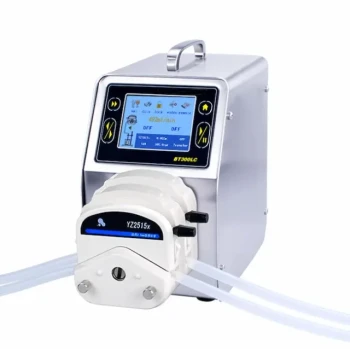
Variable Speed Peristaltic Pump

Variable Speed Peristaltic Pump

KT-VSP Series Smart Variable Speed Peristaltic Pumps offer precise flow control for labs, medical, and industrial applications. Reliable, contamination-free liquid transfer.

Optical Water Bath Electrolytic Electrochemical Cell

Optical Water Bath Electrolytic Electrochemical Cell

Upgrade your electrolytic experiments with our Optical Water Bath. With controllable temperature and excellent corrosion resistance, it's customizable for your specific needs. Discover our complete specifications today.

Chemical Vapor Deposition CVD Equipment System Chamber Slide PECVD Tube Furnace with Liquid Gasifier PECVD Machine

Chemical Vapor Deposition CVD Equipment System Chamber Slide PECVD Tube Furnace with Liquid Gasifier PECVD Machine

KT-PE12 Slide PECVD System: Wide power range, programmable temp control, fast heating/cooling with sliding system, MFC mass flow control & vacuum pump.

Vacuum Cold Mounting Machine for Sample Preparation

Vacuum Cold Mounting Machine for Sample Preparation

Vacuum Cold Mounting Machine for precise sample prep. Handles porous, fragile materials with -0.08MPa vacuum. Ideal for electronics, metallurgy, and failure analysis.

Round Bidirectional Press Mold for Lab

Round Bidirectional Press Mold for Lab

The round bidirectional press mold is a specialized tool used in high-pressure molding processes, particularly for creating intricate shapes from metal powders.

Filter Testing Machine FPV for Dispersion Properties of Polymers and Pigments

Filter Testing Machine FPV for Dispersion Properties of Polymers and Pigments

The filter testing machine (FPV) is suitable for testing the dispersion properties of polymers such as pigments, additives and masterbatches by extrusion and filtration.

Microwave Plasma Chemical Vapor Deposition MPCVD Machine System Reactor for Lab and Diamond Growth

Microwave Plasma Chemical Vapor Deposition MPCVD Machine System Reactor for Lab and Diamond Growth

Get high-quality diamond films with our Bell-jar Resonator MPCVD machine designed for lab and diamond growth. Discover how Microwave Plasma Chemical Vapor Deposition works for growing diamonds using carbon gas and plasma.

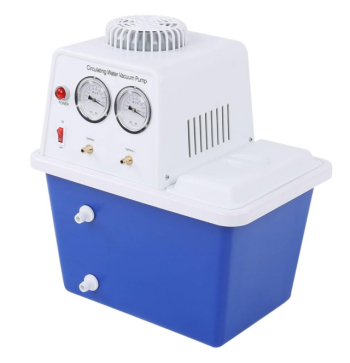
Circulating Water Vacuum Pump for Laboratory and Industrial Use

Circulating Water Vacuum Pump for Laboratory and Industrial Use

Efficient circulating water vacuum pump for labs - oil-free, corrosion-resistant, quiet operation. Multiple models available. Get yours now!

RF PECVD System Radio Frequency Plasma-Enhanced Chemical Vapor Deposition RF PECVD

RF PECVD System Radio Frequency Plasma-Enhanced Chemical Vapor Deposition RF PECVD

RF-PECVD is an acronym for "Radio Frequency Plasma-Enhanced Chemical Vapor Deposition." It deposits DLC (Diamond-like carbon film) on germanium and silicon substrates. It is utilized in the 3-12um infrared wavelength range.

Laboratory Oscillating Orbital Shaker

Laboratory Oscillating Orbital Shaker

Mixer-OT orbital shaker uses brushless motor, which can run for a long time. It is suitable for vibration tasks of culture dishes, flasks and beakers.

915MHz MPCVD Diamond Machine Microwave Plasma Chemical Vapor Deposition System Reactor

915MHz MPCVD Diamond Machine Microwave Plasma Chemical Vapor Deposition System Reactor

915MHz MPCVD Diamond Machine and its multi-crystal effective growth, the maximum area can reach 8 inches, the maximum effective growth area of single crystal can reach 5 inches. This equipment is mainly used for the production of large-size polycrystalline diamond films, the growth of long single crystal diamonds, the low-temperature growth of high-quality graphene, and other materials that require energy provided by microwave plasma for growth.

Inclined Rotary Plasma Enhanced Chemical Vapor Deposition PECVD Equipment Tube Furnace Machine

Inclined Rotary Plasma Enhanced Chemical Vapor Deposition PECVD Equipment Tube Furnace Machine

Upgrade your coating process with PECVD coating equipment. Ideal for LED, power semiconductors, MEMS and more. Deposits high-quality solid films at low temps.

Reference Electrode Calomel Silver Chloride Mercury Sulfate for Laboratory Use

Reference Electrode Calomel Silver Chloride Mercury Sulfate for Laboratory Use

Find high-quality reference electrodes for electrochemical experiments with complete specifications. Our models offer resistance to acid and alkali, durability, and safety, with customization options available to meet your specific needs.

KF Ultra-High Vacuum Observation Window Stainless Steel Flange Sapphire Glass Sight Glass

KF Ultra-High Vacuum Observation Window Stainless Steel Flange Sapphire Glass Sight Glass

Discover the KF Ultra-High Vacuum Observation Window, featuring sapphire glass and stainless steel flange for clear, reliable observation in ultra-high vacuum environments. Ideal for semiconductor, vacuum coating, and scientific research applications

Laboratory CVD Boron Doped Diamond Materials

Laboratory CVD Boron Doped Diamond Materials

CVD boron-doped diamond: A versatile material enabling tailored electrical conductivity, optical transparency, and exceptional thermal properties for applications in electronics, optics, sensing, and quantum technologies.

CVD Diamond Optical Windows for Lab Applications

CVD Diamond Optical Windows for Lab Applications

Diamond optical windows: exceptional broad band infrared transparency, excellent thermal conductivity & low scattering in infrared, for high-power IR laser & microwave windows applications.

Multifunctional Electrolytic Electrochemical Cell Water Bath Single Layer Double Layer

Multifunctional Electrolytic Electrochemical Cell Water Bath Single Layer Double Layer

Discover our high-quality Multifunctional Electrolytic Cell Water Baths. Choose from single or double-layer options with superior corrosion resistance. Available in 30ml to 1000ml sizes.

KF Ultra-High Vacuum Observation Window 304 Stainless Steel Flange High Borosilicate Glass Sight Glass

KF Ultra-High Vacuum Observation Window 304 Stainless Steel Flange High Borosilicate Glass Sight Glass

Discover KF Ultra-High Vacuum Observation Window: 304 Stainless Steel Flange & High Borosilicate Glass Sight Glass, Ideal for precise observation in ultra-high vacuum environments.

Inclined Rotary Plasma Enhanced Chemical Vapor Deposition PECVD Equipment Tube Furnace Machine

Inclined Rotary Plasma Enhanced Chemical Vapor Deposition PECVD Equipment Tube Furnace Machine

Introducing our inclined rotary PECVD furnace for precise thin film deposition. Enjoy automatic matching source, PID programmable temperature control, and high accuracy MFC mass flowmeter control. Built-in safety features for peace of mind.

CF Ultra-High Vacuum Observation Window Stainless Steel Flange Sapphire Glass Sight Glass

CF Ultra-High Vacuum Observation Window Stainless Steel Flange Sapphire Glass Sight Glass

Discover CF ultra-high vacuum observation windows with sapphire glass and stainless steel flanges. Ideal for semiconductor manufacturing, vacuum coating, and more. Clear observation, precise control.


Leave Your Message