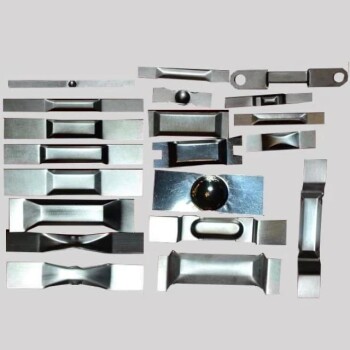
Knowledge thermal elements Is tungsten a good heating element? Unlock Extreme Temperatures in Vacuum Environments
Author avatar

Tech Team · Kintek Solution

Updated 2 months ago

Is tungsten a good heating element? Unlock Extreme Temperatures in Vacuum Environments


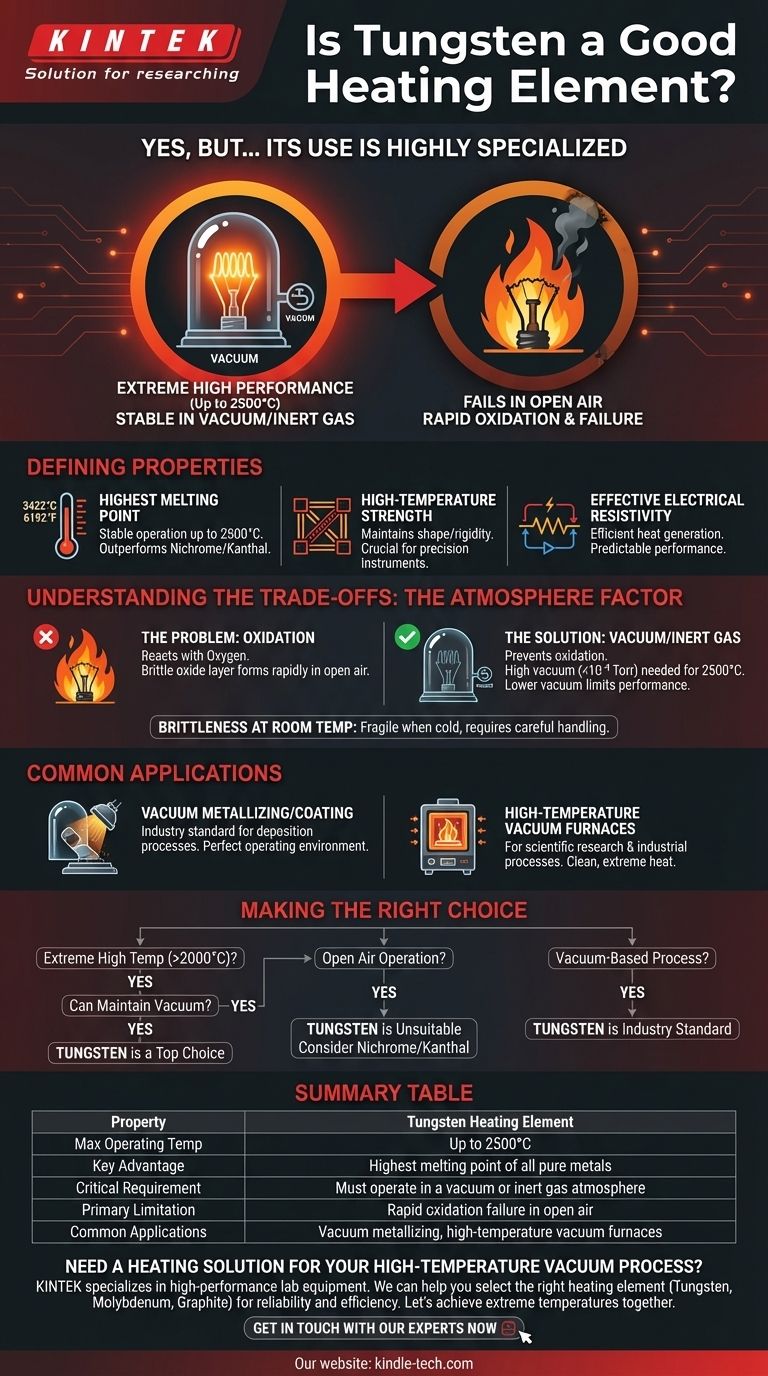
Yes, tungsten is an exceptional heating element, but its use is highly specialized. Its primary advantage is the highest melting point of any pure metal (3422 °C), allowing it to reach extreme operating temperatures that other materials cannot. However, this capability is only unlocked when tungsten is used in a vacuum or an inert gas atmosphere, as it oxidizes and fails very quickly in open air at high temperatures.

The decision to use tungsten is not about its absolute quality, but its suitability for a specific environment. Its unparalleled high-temperature performance is directly tied to its greatest weakness: a vulnerability to oxidation that requires operation in a vacuum.

Is tungsten a good heating element? Unlock Extreme Temperatures in Vacuum Environments

The Defining Properties of Tungsten Heaters

Tungsten's unique physical characteristics make it a powerful but demanding choice for heating applications. Its value comes from a combination of factors that set it apart from more common heating element alloys.

The Highest Melting Point of All Metals

Tungsten's melting point of 3422 °C (6192 °F) is its defining feature. This allows for stable and reliable operation at temperatures up to 2500 °C, far beyond the limits of materials like nichrome or Kanthal.

High-Temperature Strength and Stability

Beyond simply not melting, tungsten remains physically strong and rigid at extreme temperatures. This structural integrity is crucial in applications where the heating element must maintain a precise shape, such as in scientific instruments or vacuum furnaces.

Effective Electrical Resistivity

To function as a heater, a material must resist the flow of electricity, converting electrical energy into heat. Tungsten possesses sufficient electrical resistivity to generate heat efficiently and predictably when a current is applied.

Understanding the Trade-offs: The Critical Role of Atmosphere

The primary limitation of tungsten is not its performance at temperature, but its interaction with its surrounding environment. This is the most important factor to consider when evaluating it for your application.

The Problem: Rapid Oxidation

Despite having good corrosion resistance in certain conditions, tungsten reacts readily with oxygen at high temperatures. When heated in open air, it rapidly forms a brittle tungsten oxide layer and the element fails, making it completely unsuitable for such applications.

The Solution: Vacuum or Inert Gas

To prevent oxidation, tungsten heaters must be operated in a controlled atmosphere. High performance up to 2500 °C requires a high vacuum (less than 10⁻⁴ Torr).

Even in a lower-quality vacuum, its performance is severely limited. At a vacuum level below 10⁻² Torr, its maximum recommended operating temperature drops to just 1200 °C. The classic example of this principle is the incandescent light bulb, which encases a thin tungsten filament in a vacuum or an inert gas to prevent it from instantly burning out.

Brittleness at Room Temperature

While strong at high temperatures, tungsten can become very brittle after being heated and cooled. This makes the elements fragile to handle and susceptible to mechanical shock during maintenance or installation.

Common Applications Driven by Its Properties

Tungsten's specific requirements mean it is the default choice in several advanced industrial and scientific fields where its strengths align perfectly with the process environment.

Vacuum Metallizing and Coating

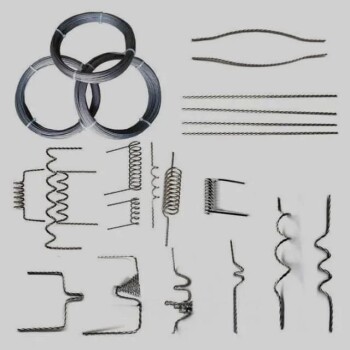
Tungsten filaments are the industry standard for vacuum deposition processes like aluminizing or chrome plating. In these applications, a high vacuum is already a core requirement of the process itself, creating the perfect operating environment for a tungsten heater to thrive.

High-Temperature Vacuum Furnaces

For scientific research or industrial processes that require extremely high temperatures within a vacuum, tungsten mesh or wire heaters are one of the few viable options. They provide the necessary heat without contaminating the vacuum environment.

Making the Right Choice for Your Application

Choosing the correct heating element requires matching the material's properties to your specific operational environment and temperature goals.

  • If your primary focus is extreme high-temperature operation (above 2000 °C): Tungsten is one of the few viable options, provided you can maintain a high-vacuum environment.
  • If your application operates in open air: Tungsten is unsuitable; you should consider alternatives like nichrome (NiCr) or Kanthal (FeCrAl) alloys, which are designed to form a protective oxide layer.
  • If your project involves a vacuum-based process: Tungsten is an industry-standard choice due to its high-temperature capability and perfect compatibility with the required environment.

Ultimately, understanding a material's environmental limitations is just as important as knowing its strengths.

Summary Table:

Property Tungsten Heating Element
Max Operating Temp Up to 2500°C
Key Advantage Highest melting point of all pure metals
Critical Requirement Must operate in a vacuum or inert gas atmosphere
Primary Limitation Rapid oxidation failure in open air
Common Applications Vacuum metallizing, high-temperature vacuum furnaces

Need a heating solution for your high-temperature vacuum process?

Tungsten heating elements are engineered for peak performance in extreme environments. KINTEK specializes in high-performance lab equipment, including vacuum furnace systems that leverage the superior capabilities of tungsten. Our experts can help you select the right heating element material—whether it's tungsten, molybdenum, or graphite—to ensure reliability, efficiency, and longevity for your specific application.

Contact us today to discuss how our heating solutions can enhance your process. Let's achieve extreme temperatures together.

Get in touch with our experts now

Visual Guide
Is tungsten a good heating element? Unlock Extreme Temperatures in Vacuum Environments Visual Guide

Related Products

People Also Ask

Related Products

2200 ℃ Tungsten Vacuum Heat Treat and Sintering Furnace

2200 ℃ Tungsten Vacuum Heat Treat and Sintering Furnace

Experience the ultimate refractory metal furnace with our Tungsten vacuum furnace. Capable of reaching 2200℃, perfect for sintering advanced ceramics and refractory metals. Order now for high-quality results.

Thermally Evaporated Tungsten Wire for High Temperature Applications

Thermally Evaporated Tungsten Wire for High Temperature Applications

It has a high melting point, thermal and electrical conductivity, and corrosion resistance. It is a valuable material for high temperature, vacuum and other industries.

Small Vacuum Heat Treat and Tungsten Wire Sintering Furnace

Small Vacuum Heat Treat and Tungsten Wire Sintering Furnace

The small vacuum tungsten wire sintering furnace is a compact experimental vacuum furnace specially designed for universities and scientific research institutes. The furnace features a CNC welded shell and vacuum piping to ensure leak-free operation. Quick-connect electrical connections facilitate relocation and debugging, and the standard electrical control cabinet is safe and convenient to operate.

Vacuum Heat Treat and Pressure Sintering Furnace for High Temperature Applications

Vacuum Heat Treat and Pressure Sintering Furnace for High Temperature Applications

Vacuum pressure sintering furnaces are designed for high temperature hot pressing applications in metal and ceramic sintering. Its advanced features ensure precise temperature control, reliable pressure maintenance, and a robust design for seamless operation.

2200 ℃ Graphite Vacuum Heat Treat Furnace

2200 ℃ Graphite Vacuum Heat Treat Furnace

Discover the power of the KT-VG Graphite Vacuum Furnace - with a maximum working temperature of 2200℃, it's perfect for vacuum sintering of various materials. Learn more now.

Molybdenum Vacuum Heat Treat Furnace

Molybdenum Vacuum Heat Treat Furnace

Discover the benefits of a high-configuration molybdenum vacuum furnace with heat shield insulation. Ideal for high-purity, vacuum environments like sapphire crystal growth and heat treatment.

Electron Beam Evaporation Coating Tungsten Crucible and Molybdenum Crucible for High Temperature Applications

Electron Beam Evaporation Coating Tungsten Crucible and Molybdenum Crucible for High Temperature Applications

Tungsten and molybdenum crucibles are commonly used in electron beam evaporation processes due to their excellent thermal and mechanical properties.

1400℃ Controlled Atmosphere Furnace with Nitrogen and Inert Atmosphere

1400℃ Controlled Atmosphere Furnace with Nitrogen and Inert Atmosphere

Achieve precise heat treatment with KT-14A controlled atmosphere furnace. Vacuum sealed with a smart controller, it's ideal for lab and industrial use up to 1400℃.

Molybdenum Disilicide (MoSi2) Thermal Elements Electric Furnace Heating Element

Molybdenum Disilicide (MoSi2) Thermal Elements Electric Furnace Heating Element

Discover the power of Molybdenum Disilicide (MoSi2) Heating Element for high-temperature resistance. Unique oxidation resistance with stable resistance value. Learn more about its benefits now!

Ultra-High Temperature Graphite Vacuum Graphitization Furnace

Ultra-High Temperature Graphite Vacuum Graphitization Furnace

The ultra-high temperature graphitization furnace utilizes medium frequency induction heating in a vacuum or inert gas environment. The induction coil generates an alternating magnetic field, inducing eddy currents in the graphite crucible, which heats up and radiates heat to the workpiece, bringing it to the desired temperature. This furnace is primarily used for graphitization and sintering of carbon materials, carbon fiber materials, and other composite materials.

Silicon Carbide SiC Thermal Heating Elements for Electric Furnace

Silicon Carbide SiC Thermal Heating Elements for Electric Furnace

Experience the advantages of Silicon Carbide (SiC) Heating Element: Long service life, high corrosion and oxidation resistance, fast heating speed, and easy maintenance. Learn more now!

1700℃ Controlled Atmosphere Furnace Nitrogen Inert Atmosphere Furnace

1700℃ Controlled Atmosphere Furnace Nitrogen Inert Atmosphere Furnace

KT-17A Controlled atmosphere furnace: 1700℃ heating, vacuum sealing technology, PID temperature control, and versatile TFT smart touch screen controller for laboratory and industrial use.

Horizontal High Temperature Graphite Vacuum Graphitization Furnace

Horizontal High Temperature Graphite Vacuum Graphitization Furnace

Horizontal Graphitization Furnace: This type of furnace is designed with the heating elements placed horizontally, allowing for uniform heating of the sample. It's well-suited for graphitizing large or bulky samples that require precise temperature control and uniformity.

Vertical High Temperature Graphite Vacuum Graphitization Furnace

Vertical High Temperature Graphite Vacuum Graphitization Furnace

Vertical high temperature graphitization furnace for carbonization and graphitization of carbon materials up to 3100℃.Suitable for shaped graphitization of carbon fiber filaments and other materials sintered in a carbon environment.Applications in metallurgy, electronics, and aerospace for producing high-quality graphite products like electrodes and crucibles.

Vacuum Heat Treat Furnace with Ceramic Fiber Liner

Vacuum Heat Treat Furnace with Ceramic Fiber Liner

Vacuum furnace with polycrystalline ceramic fiber insulation liner for excellent heat insulation and uniform temperature field. Choose from 1200℃ or 1700℃ max. working temperature with high vacuum performance and precise temperature control.

Vacuum Heat Treat and Molybdenum Wire Sintering Furnace for Vacuum Sintering

Vacuum Heat Treat and Molybdenum Wire Sintering Furnace for Vacuum Sintering

A vacuum molybdenum wire sintering furnace is a vertical or bedroom structure, which is suitable for withdrawal, brazing, sintering and degassing of metal materials under high vacuum and high temperature conditions. It is also suitable for dehydroxylation treatment of quartz materials.

1700℃ Laboratory High Temperature Tube Furnace with Alumina Tube

1700℃ Laboratory High Temperature Tube Furnace with Alumina Tube

Looking for a high-temperature tube furnace? Check out our 1700℃ Tube Furnace with Alumina Tube. Perfect for research and industrial applications up to 1700C.

1400℃ Laboratory High Temperature Tube Furnace with Alumina Tube

1400℃ Laboratory High Temperature Tube Furnace with Alumina Tube

Looking for a tube furnace for high-temperature applications? Our 1400℃ Tube Furnace with Alumina Tube is perfect for research and industrial use.

Molybdenum Tungsten Tantalum Special Shape Evaporation Boat

Molybdenum Tungsten Tantalum Special Shape Evaporation Boat

Tungsten Evaporation Boat is ideal for vacuum coating industry and sintering furnace or vacuum annealing. we offers tungsten evaporation boats that are designed to be durable and robust, with long operating lifetimes and to ensure consistent smooth and even spreading of the molten metals.

Large Vertical Graphite Vacuum Graphitization Furnace

Large Vertical Graphite Vacuum Graphitization Furnace

A large vertical high-temperature graphitization furnace is a type of industrial furnace used for the graphitization of carbon materials, such as carbon fiber and carbon black. It is a high-temperature furnace that can reach temperatures of up to 3100°C.


Leave Your Message