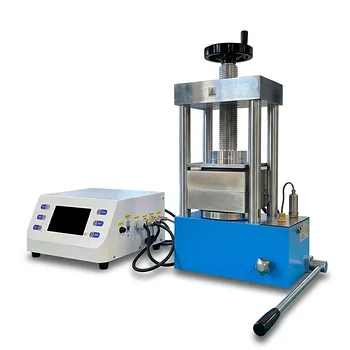
The use of a high-pressure reactor, or autoclave, is superior to an open vessel because it enables the solvent to reach temperatures far exceeding its atmospheric boiling point. This closed-system environment significantly increases the solubility of precursor components and accelerates crystallization kinetics. Consequently, the resulting Zinc Aluminate exhibits more regular morphology, narrower particle size distribution, and higher crystal phase purity than those produced in atmospheric conditions.
High-pressure reactors create a subcritical environment that fundamentally alters solvent properties, allowing for faster reaction kinetics and precise control over the structural characteristics of Zinc Aluminate nanomaterials.
Thermodynamics and Solvent Behavior
Exceeding Atmospheric Boiling Points
In an open vessel, the reaction temperature is limited by the boiling point of the solvent. A high-pressure reactor creates a sealed environment where internal pressure prevents evaporation, allowing liquid solvents to be heated significantly higher.
Enhanced Precursor Solubility
Higher temperatures in the pressurized vessel directly improve the solubility and reactivity of Zinc Aluminate precursors. This ensures that the precursor components are fully integrated into the solution, leading to a more homogeneous reaction mixture.
Altered Solvent Properties
Under high pressure, the dielectric constant of water and other solvents changes, increasing their reaction activity. This unique subcritical state facilitates chemical interactions that are simply impossible to achieve at standard atmospheric pressure.
Kinetic and Morphological Advantages
Accelerated Crystallization Rates
The combination of high temperature and autogenous pressure triggers faster crystallization kinetics. This reduces the overall time required for synthesis and allows for process intensification, meaning smaller reactors can produce higher yields.
Precision in Particle Morphology
The controlled environment of an autoclave enables the production of particles with regular morphology and a narrower size distribution. This precision is critical for applications where the surface area and particle shape of the Zinc Aluminate directly impact performance.
Improved Phase Purity
High-pressure synthesis facilitates higher crystal phase purity and prevents the formation of unwanted secondary phases. For specialized materials like Yttrium-doped Zinc Aluminate, this environment ensures the dopants are correctly incorporated into the lattice.
Understanding the Trade-offs
Equipment Complexity and Safety
Operating high-pressure reactors requires specialized equipment that can withstand extreme internal stresses. Unlike open vessels, these systems require rigorous safety protocols and pressure-relief mechanisms to prevent catastrophic failure.
Batch Processing Limitations
Hydrothermal synthesis in autoclaves is typically a batch process, which can be more difficult to scale than continuous atmospheric processes. Each cycle requires time for the reactor to heat up, stabilize, and safely cool down before the product can be recovered.
Volatilization and Containment
While the sealed nature of the reactor prevents the loss of volatile components, it also means that any gaseous byproducts remain trapped. This can influence the chemical equilibrium of the reaction, requiring careful calculation of the stoichiometry beforehand.
How to Apply This to Your Synthesis
Choosing between a high-pressure reactor and an open vessel depends on your specific material requirements and production scale.
- If your primary focus is phase purity and crystallinity: Use a high-pressure reactor to ensure the solvent reaches the temperatures necessary for complete precursor conversion.
- If your primary focus is morphological control: Opt for an autoclave to leverage the uniform heating and pressure that lead to narrow particle size distributions.
- If your primary focus is rapid screening or low-cost education: An open vessel may be sufficient for basic demonstrations, though it will likely result in lower-quality Zinc Aluminate.
- If your primary focus is preventing component loss: Utilize the sealed environment of a pressure reactor to prevent the volatilization of critical ions during the heating process.
By leveraging the unique thermodynamic environment of a high-pressure reactor, you can synthesize high-performance Zinc Aluminate precursors with properties that are unattainable through traditional atmospheric methods.
Summary Table:
| Feature | High-Pressure Reactor (Autoclave) | Open Vessel (Atmospheric) |
|---|---|---|
| Temperature Range | Exceeds boiling point (subcritical) | Limited by solvent boiling point |
| Solubility | Significantly enhanced | Standard levels |
| Crystallization | Accelerated kinetics | Slower process |
| Particle Control | Uniform morphology & narrow size | Less regular, wider distribution |
| Phase Purity | High purity; prevents secondary phases | Lower purity; inconsistent doping |
| Containment | Prevents volatilization of critical ions | Risk of component loss via evaporation |
Elevate Your Material Synthesis with KINTEK Precision
Are you looking to achieve superior phase purity and precise morphological control in your research? KINTEK specializes in high-performance laboratory equipment, offering a comprehensive range of high-temperature high-pressure reactors and autoclaves specifically designed for advanced hydrothermal synthesis.
Beyond our industry-leading reactors, KINTEK provides a full suite of laboratory solutions, including:
- Thermal Processing: Muffle, tube, vacuum, and atmosphere furnaces.
- Sample Preparation: Crushing, milling, sieving equipment, and hydraulic presses.
- Specialized Tools: Electrolytic cells, battery research tools, and cooling solutions like ULT freezers.
- High-Quality Consumables: PTFE products, ceramics, and crucibles.
Whether you are synthesizing Zinc Aluminate precursors or developing next-generation nanomaterials, our expert team is ready to provide the reliable tools and technical support you need.
Contact KINTEK today to find your perfect reactor solution!
References
- Luis E. Sotelo Martin, Ricardo H. R. Castro. Designed Y<sup>3+</sup> Surface Segregation Increases Stability of Nanocrystalline Zinc Aluminate. DOI: 10.1021/acs.jpcc.2c07353
This article is also based on technical information from Kintek Solution Knowledge Base .
Related Products
- Customizable Laboratory High Temperature High Pressure Reactors for Diverse Scientific Applications
- High Pressure Laboratory Autoclave Reactor for Hydrothermal Synthesis
- Stainless High Pressure Autoclave Reactor Laboratory Pressure Reactor
- Customizable High Pressure Reactors for Advanced Scientific and Industrial Applications
- Mini SS High Pressure Autoclave Reactor for Laboratory Use
People Also Ask
- How do high-pressure and high-temperature reactors ensure the effective treatment of lignocellulosic wastewater in WAO?
- What equipment is required for high-pressure high-temperature reactions? Master Extreme Chemistry Safely
- How do you control high pressure in a reactor? A Guide to Safe & Stable Operation
- Why is argon better than nitrogen for inert atmosphere? Ensure Absolute Reactivity & Stability
- How does initial oxygen pressure affect the wet oxidation of pharmaceutical sludge? Master Your Oxidation Depth