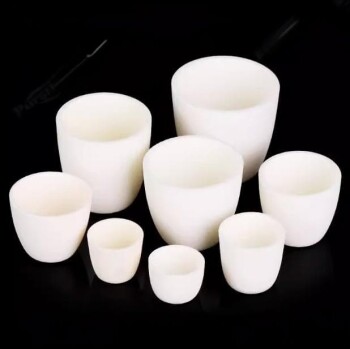
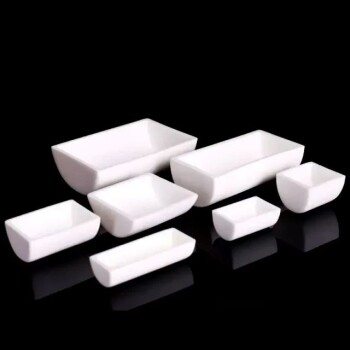
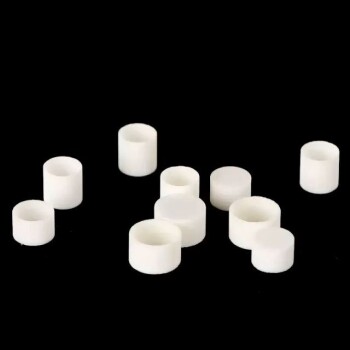
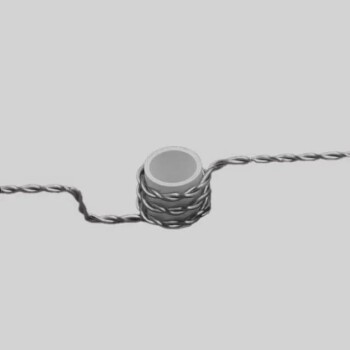
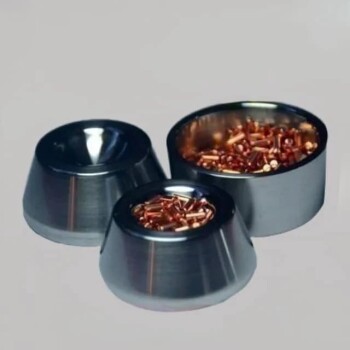
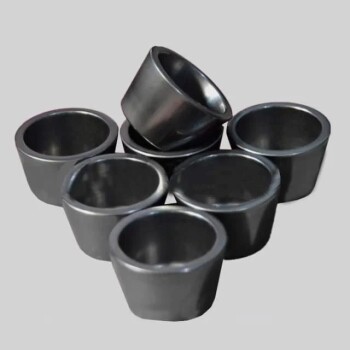
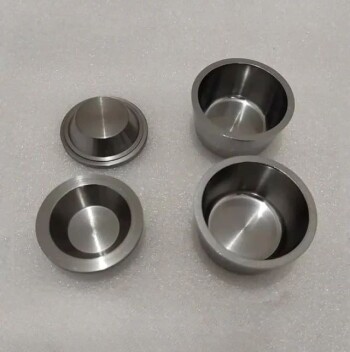
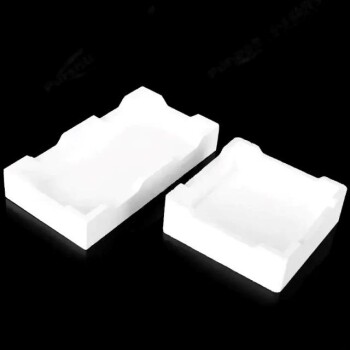
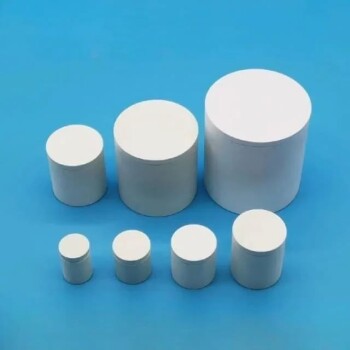
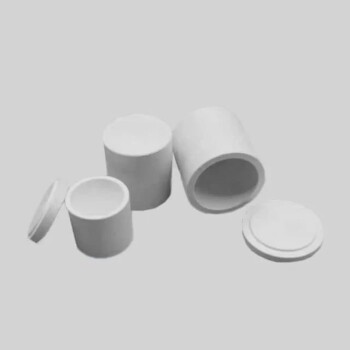
Using an alumina crucible for high-temperature lignite roasting ensures chemical purity and analytical precision. This material provides exceptional resistance to temperatures up to 1200°C and remains chemically inert, preventing the crucible from reacting with the lignite or its combustion byproducts. This stability is critical for obtaining accurate elemental quantitative analysis and maintaining a reliable material balance.
Core Takeaway: Alumina crucibles serve as the definitive containment solution for lignite roasting because they eliminate the risk of sample contamination and structural failure under extreme heat, ensuring that experimental data reflects the true properties of the coal rather than interference from the vessel.
Preserving Analytical Integrity
Prevention of Sample Contamination
Alumina is highly chemically stable and does not react with the mineral components of lignite, such as silicon dioxide or magnesium oxide, during the roasting process. This ensures that the enriched ash and residues remain pure, which is essential for accurate gravimetric calculations.
Ensuring Accurate Elemental Analysis
Because high-purity alumina does not introduce foreign impurities into the sample, researchers can trust that any measured weight changes are derived solely from the lignite's reaction. This level of precision is vital for calculating exact material balances and determining the true composition of combustion products.
Mass Stability at High Temperatures
Unlike other materials that might gain or lose weight through oxidation or volatilization, alumina maintains constant mass at conventional roasting temperatures. In applications like thermogravimetric analysis (TGA), this mass stability ensures that the kinetic data captured is entirely representative of the biomass sample.
Optimizing Thermal Performance
Rapid and Uniform Heat Transfer
Alumina exhibits high thermal conductivity, which allows heat to be transferred quickly and evenly to the interior of the lignite sample. This uniform heating is critical for achieving consistent roasting results and ensuring the accuracy of pyrolysis reaction kinetics.
Resistance to Thermal Cycling
High-quality alumina ceramics are designed to withstand repeated heating and cooling cycles without cracking or degrading. This structural integrity is necessary for laboratory environments where high-temperature performance tests are performed frequently at 1200°C or higher.
High Refractoriness
Lignite roasting often requires sustained heat that would cause lesser materials to soften or deform. Alumina maintains its shape and structural strength even when exposed to temperatures exceeding 1600°C, providing a reliable containment space for the sample.
Resisting Chemical and Physical Stress
Corrosion Resistance Against Gaseous Byproducts
The decomposition of minerals in lignite can release corrosive gases and molten salts. Alumina crucibles resist corrosion from these aggressive substances, preventing chemical erosion that could otherwise damage sensitive equipment or sensors.
Physical Durability and Hardness
Alumina is significantly harder than materials like graphite or iron, allowing it to withstand higher internal pressures and physical wear. Its structural strength ensures it can support the weight of heavy mineral mixtures without warping or collapsing during prolonged heat treatments.
Understanding the Trade-offs
Sensitivity to Thermal Shock
While alumina is thermally stable, it can be susceptible to thermal shock if subjected to sudden, extreme temperature changes. To avoid cracking, users must implement controlled heating and cooling rates rather than removing a red-hot crucible directly into a cold environment.
Cost and Fragility
High-purity alumina crucibles are more expensive than basic ceramic or metallic alternatives. Additionally, while they are physically hard, they are brittle; a single drop or a localized impact can lead to a catastrophic fracture, necessitating careful handling.
How to Apply This to Your Project
When selecting a containment vessel for lignite roasting, your choice should align with the specific goals of your thermal analysis.
- If your primary focus is elemental accuracy: Use high-purity alumina (99% or higher) to ensure zero contamination from the vessel during roasting.
- If your primary focus is kinetic data and TGA: Prioritize alumina crucibles with thin walls to maximize the speed and uniformity of heat transfer to the sample.
- If your primary focus is cost-efficiency for low-temp tests: Consider standard ceramic vessels if temperatures remain below 800°C and chemical purity is not a critical requirement.
By leveraging the chemical inertness and thermal resilience of alumina, you ensure that your roasting data is both reproducible and scientifically sound.
Summary Table:
| Feature | Advantage for Lignite Roasting | Impact on Research |
|---|---|---|
| Chemical Inertness | No reaction with mineral ash or byproduct gases | Ensures sample purity and accurate elemental analysis |
| Thermal Stability | Maintains integrity at 1200°C to 1600°C+ | Reliable containment for high-temperature pyrolysis |
| Mass Stability | Constant crucible weight during heating | Essential for precise TGA and gravimetric data |
| Heat Conductivity | Rapid and uniform heat transfer | Consistent roasting kinetics and efficient processing |
| Corrosion Resistance | Resists erosion from molten salts and volatiles | Prolongs vessel life and protects sensitive sensors |
Elevate Your Thermal Analysis with KINTEK Precision
Maximize the accuracy of your lignite research with KINTEK’s high-purity alumina crucibles and ceramic consumables. Engineered for extreme thermal stability and chemical inertness, our vessels ensure your data reflects the true properties of your sample, free from contamination.
As a leader in laboratory solutions, KINTEK provides a comprehensive range of equipment tailored for high-temperature applications, including:
- High-Temperature Furnaces: Muffle, tube, and atmosphere furnaces for controlled roasting.
- Advanced Ceramics: Specialized alumina, PTFE, and zirconia crucibles.
- Sample Processing: Crushing, milling, and hydraulic pellet presses for consistent sample preparation.
Ready to optimize your laboratory workflow? Contact our experts today to discuss your specific requirements and discover how KINTEK can enhance your research precision and efficiency.
References
- Rengao Yang, Zhiqiang Liu. Extraction of Germanium from Low-Grade Germanium-Bearing Lignite by Reductive Volatilization. DOI: 10.3390/ma16155374
This article is also based on technical information from Kintek Solution Knowledge Base .
Related Products
- Arc-Shaped Alumina Ceramic Crucible High Temperature Resistant for Engineering Advanced Fine Ceramics
- Alumina Al2O3 Ceramic Crucible Semicircle Boat with Lid for Engineering Advanced Fine Ceramics
- Engineering Advanced Fine Ceramics Alumina Crucibles (Al2O3) for Thermal Analysis TGA DTA
- Engineering Advanced Fine Ceramics Alumina Al2O3 Crucible With Lid Cylindrical Laboratory Crucible
- Engineering Advanced Fine Alumina Al2O3 Ceramic Crucible for Laboratory Muffle Furnace
People Also Ask
- Why Use Alumina Crucibles & Powder Burial for NaSICON? Ensure Phase Purity and Prevent Elemental Volatilization
- What is the primary purpose of using alumina crucibles for LLTO ceramics? Optimize Your High-Temperature Sintering
- Why are alumina crucibles and mother powder essential for LATP sintering? Optimize Your Solid Electrolyte Performance
- Why are high-purity alumina crucibles used for liquid lead corrosion experiments? Ensure Data Accuracy at 550°C
- Primary considerations for choosing alumina crucibles and quartz tubes in indium intercalation: Ensure Material Purity