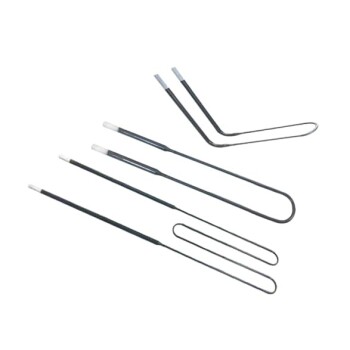
The primary advantage of Extremely fast Joule Heating (EJH) lies in its ability to drastically reduce the thermal budget through ultra-fast heating and cooling cycles. Unlike traditional tube furnaces that involve long-duration thermal exposure and high energy consumption, EJH operates on a millisecond timescale to prepare noble metal alloy thin films with superior structural integrity.
Traditional thermal processing often forces a compromise between necessary heating and unwanted structural degradation. EJH solves this by delivering precise thermal energy only when needed, effectively decoupling the heating process from the detrimental effects of prolonged exposure.
Controlling the Thermal Budget
Rapid Heating and Cooling
Traditional tube furnaces rely on long heating cycles. The entire chamber must ramp up to temperature and cool down slowly, subjecting the material to heat for extended periods.
EJH equipment utilizes ultra-fast heating and cooling characteristics. This allows the system to reach target temperatures almost instantly and cool down just as quickly, drastically shrinking the processing window.
Energy Efficiency
Because the heating cycle in a tube furnace is prolonged, it results in high energy consumption.
EJH significantly reduces this requirement. By condensing the thermal process into a much shorter timeframe, the overall energy required to achieve the desired material state is minimized.
Preserving Thin Film Integrity
Preventing Substrate Diffusion
A major challenge in thin film preparation is the migration of atoms from the base material into the film. Prolonged exposure to high temperatures in a tube furnace often leads to unwanted substrate element diffusion, which contaminates the alloy.
The reduced thermal budget of EJH prevents this. Because the heat is applied for such a short duration, there is insufficient time for significant diffusion to occur, preserving the chemical purity of the noble metal alloy.
Inhibiting Grain Coarsening
Extended time at high temperatures naturally allows crystal grains within a metal to merge and grow larger. This excessive grain coarsening can degrade the mechanical and electrical properties of the film.
EJH effectively freezes the microstructure in place. The rapid cooling capability ensures the fine grain structure is maintained, which is critical for the performance of high-quality thin films.
Precision in Process Parameters
Millisecond Response Time
Tube furnaces are generally slow to react to control changes due to their high thermal mass.
EJH offers a millisecond response time. This allows for highly sensitive and immediate adjustments to process parameters during the heating cycle.
Suitability for Ultra-Thin Layers
Developing ultra-thin alloy layers requires precise control over how far atoms move (diffusion distances).
The responsiveness of EJH makes it the ideal tool for this application. It provides the exact control needed to form an alloy without destroying the ultra-thin geometry of the layer.
Understanding the Trade-offs
Sensitivity Requires Precision
While the millisecond response time is a distinct advantage, it also implies a need for rigorous control.
Because the system reacts so quickly, process parameters must be tuned with extreme accuracy. Unlike the "forgiving" thermal inertia of a large tube furnace, EJH does not buffer against errors in parameter settings; the impact of a setting change is immediate and direct.
Making the Right Choice for Your Goal
To determine if EJH is the correct solution for your specific application, consider your primary technical constraints:
- If your primary focus is Film Purity: EJH is superior because it minimizes the window for substrate elements to diffuse into your noble metal alloy.
- If your primary focus is Microstructure Control: EJH provides the rapid cooling necessary to prevent grain coarsening and maintain a fine, high-performance structure.
- If your primary focus is Ultra-Thin Geometries: EJH offers the millisecond-level control required to manage diffusion distances in layers where every nanometer counts.
EJH transforms the preparation of noble metal alloys by substituting brute-force thermal mass with precise, time-domain energy control.
Summary Table:
| Feature | Traditional Tube Furnace | Extremely fast Joule Heating (EJH) |
|---|---|---|
| Heating/Cooling Speed | Slow (minutes to hours) | Ultra-fast (milliseconds) |
| Thermal Budget | High (energy intensive) | Extremely Low (energy efficient) |
| Substrate Diffusion | Significant (risk of contamination) | Minimized (preserves purity) |
| Grain Structure | Coarsened (due to long heat exposure) | Fine/Controlled (rapid cooling) |
| Response Time | Slow (high thermal mass) | Instantaneous (millisecond level) |
| Process Precision | Lower (thermal inertia) | High (precise energy control) |
Elevate Your Material Research with KINTEK Precision
Unlock the full potential of your thin film synthesis and alloy development. KINTEK specializes in advanced laboratory solutions, from high-temperature furnaces and high-pressure reactors to cutting-edge thermal processing tools. Whether you are managing complex diffusion distances in ultra-thin layers or requiring precise microstructure control, our equipment is designed to meet the rigorous demands of modern research.
Our expertise includes:
- High-Temperature Systems: Muffle, tube, and vacuum furnaces.
- Material Processing: Crushing, milling, and hydraulic presses for pellet preparation.
- Specialized Lab Gear: Electrolytic cells, cooling solutions, and premium ceramics.
Ready to minimize your thermal budget and maximize film integrity? Contact KINTEK today to discuss your specific laboratory needs!
References
- Yuanyuan Guo, Alfred Iing Yoong Tok. Noble metal alloy thin films by atomic layer deposition and rapid Joule heating. DOI: 10.1038/s41598-022-06595-9
This article is also based on technical information from Kintek Solution Knowledge Base .
Related Products
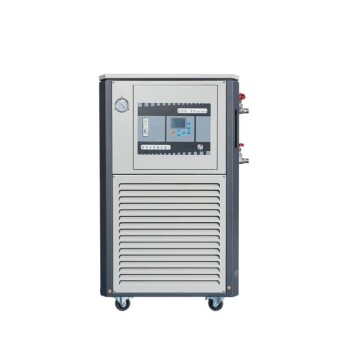
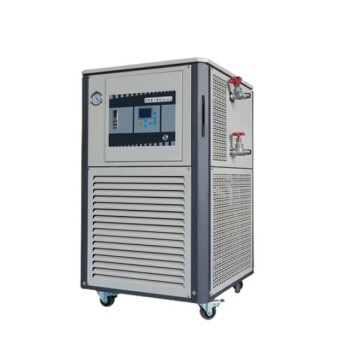
- 10L Heating Chilling Circulator Cooling Water Bath Circulator for High and Low Temperature Constant Temperature Reaction
- 5L Heating Chilling Circulator Cooling Water Bath Circulator for High and Low Temperature Constant Temperature Reaction
- 100L Heating Chilling Circulator Cooling Water Bath Circulator for High and Low Temperature Constant Temperature Reaction
- 30L Heating Chilling Circulator Cooling Water Bath Circulator for High and Low Temperature Constant Temperature Reaction
- 20L Heating Chilling Circulator Cooling Water Bath Circulator for High and Low Temperature Constant Temperature Reaction
People Also Ask
- What is the necessity of a circulating water bath in chlorate production? Optimize Yield & Purity with Precision
- Why is a circulating water chiller required for Prussian Blue nanoparticles? Ensure Stability & Batch Reproducibility
- What is the purpose of a cooling circulation water bath system in electrochemical experiments? Enhance Lab Precision
- What function does a circulating cooling chiller perform during the gas adsorption isotherm testing of nanoporous carbon?
- How does a constant temperature circulator support the leaching reaction of gold scrap? Optimize Gold Recovery Results