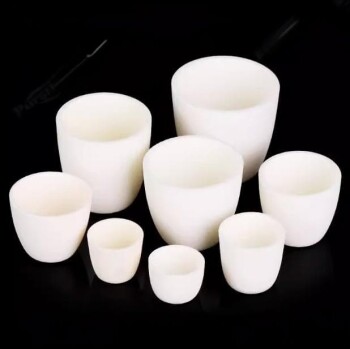
High-purity alumina crucibles provide the essential thermochemical stability required for the precise synthesis of Yttria-stabilized Ceria (YSC) powders. They allow for calcination at temperatures exceeding 700°C without reacting with precursors, ensuring the final material is free from container-induced contaminants.
Core Insight: The success of YSC synthesis depends on isolating the chemical reaction. High-purity alumina serves as a neutral vessel that prevents impurity diffusion, guaranteeing that the final powder maintains its intended stoichiometry and microstructural uniformity.
Preserving Chemical Purity
Eliminating Elemental Diffusion
During prolonged heat treatment, standard containers can leach impurities into the sample. High-purity alumina ensures that no impurity elements diffuse into the YSC powder. This isolation is critical for maintaining the strict chemical purity required for advanced ceramic applications.
Inertness to Reactive Precursors
YSC synthesis involves precursors that can be chemically active during heating. Alumina crucibles offer exceptional chemical inertness, meaning they do not react with these precursors. This prevents the crucible from becoming a variable in your chemical equation.
Thermal and Structural Stability
Withstanding High Calcination Temperatures
Preparing YSC powders requires significant thermal energy to achieve the correct phase formation. High-purity alumina withstands temperatures of 700°C or higher without degrading. This allows for rigorous heat treatment cycles necessary for full calcination.
Ensuring Microstructural Uniformity
Contamination often disrupts crystal growth, leading to inconsistent particle structures. By preventing chemical reactions and contamination, high-purity alumina promotes microstructural uniformity. This ensures the physical properties of the powder are consistent throughout the entire batch.
Operational Considerations
The Necessity of "High Purity"
It is vital to distinguish between standard and high-purity alumina. Only high-purity variants offer the wear resistance and chemical resistance necessary to prevent contamination in sensitive applications like YSC synthesis. Using lower-grade alumina may compromise the inert environment required for these specific precursors.
Making the Right Choice for Your Goal
To ensure your YSC powder synthesis is successful, align your equipment choice with your specific technical requirements:
- If your primary focus is Chemical Stoichiometry: Rely on high-purity alumina to prevent the diffusion of impurity elements that could alter the material's composition.
- If your primary focus is Microstructural Consistency: Use these crucibles to eliminate container reactions that cause irregularities in particle formation and crystal structure.
By eliminating the container as a source of error, you secure the integrity of your final material.
Summary Table:
| Feature | Advantage for YSC Synthesis | Benefit to Research |
|---|---|---|
| Chemical Inertness | Prevents reactions with active precursors | Maintains intended material stoichiometry |
| Thermal Resistance | Withstands calcination temperatures >700°C | Enables full phase formation without degradation |
| High Purity (Al2O3) | Eliminates elemental diffusion/leaching | Guarantees powder purity for advanced ceramics |
| Structural Integrity | Exceptional wear and chemical resistance | Promotes microstructural uniformity across batches |
Elevate Your Materials Synthesis with KINTEK
Precision in Yttria-stabilized Ceria (YSC) production starts with the right environment. At KINTEK, we specialize in high-performance laboratory solutions, providing the high-purity alumina crucibles and ceramics necessary to eliminate contamination and ensure microstructural consistency.
Beyond specialized consumables, KINTEK offers a comprehensive range of equipment to support your advanced material research, including:
- High-Temperature Furnaces: Muffle, tube, and vacuum systems for precise calcination.
- Crushing & Milling: Systems to achieve perfect particle size post-synthesis.
- Thermal Processing: High-pressure reactors, autoclaves, and cooling solutions.
Ready to secure the integrity of your final materials? Contact our laboratory experts today to find the perfect tools for your specific technical requirements.
References
- Laurent Brissonneau, Martin-Garin Anna. Microstructure of Yttria-Doped Ceria as a Function of Oxalate Co-Precipitation Synthesis Conditions. DOI: 10.1007/s40553-016-0087-8
This article is also based on technical information from Kintek Solution Knowledge Base .
Related Products
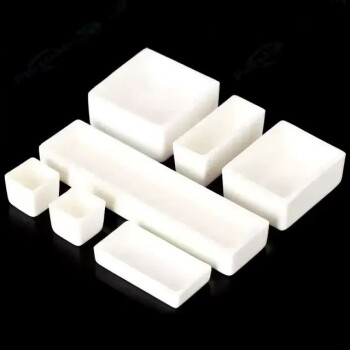
- Arc-Shaped Alumina Ceramic Crucible High Temperature Resistant for Engineering Advanced Fine Ceramics
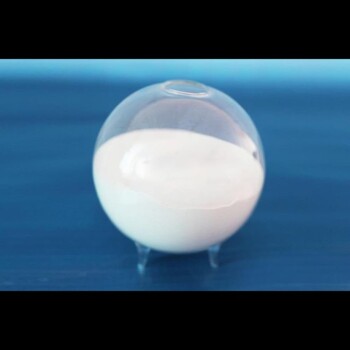
- High Purity Alumina Granulated Powder for Engineering Advanced Fine Ceramics
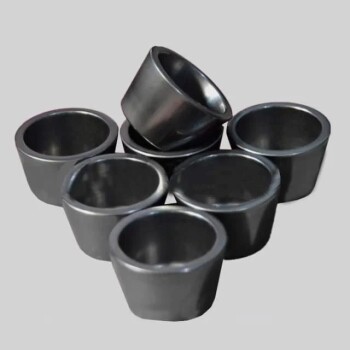
- High Purity Pure Graphite Crucible for Evaporation
- Engineering Advanced Fine Alumina Al2O3 Ceramic Crucible for Laboratory Muffle Furnace
- High Purity Pure Graphite Crucible for Electron Beam Evaporation
People Also Ask
- Why Use Alumina Crucibles & Powder Burial for NaSICON? Ensure Phase Purity and Prevent Elemental Volatilization
- What is the primary purpose of using alumina crucibles for LLTO ceramics? Optimize Your High-Temperature Sintering
- Why are alumina crucibles and mother powder essential for LATP sintering? Optimize Your Solid Electrolyte Performance
- Why are high-purity alumina crucibles used for liquid lead corrosion experiments? Ensure Data Accuracy at 550°C
- Primary considerations for choosing alumina crucibles and quartz tubes in indium intercalation: Ensure Material Purity