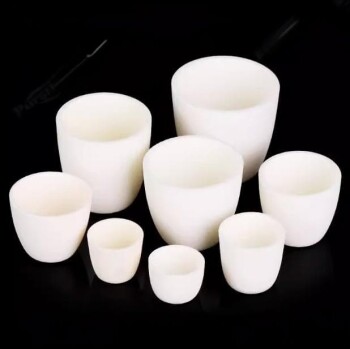
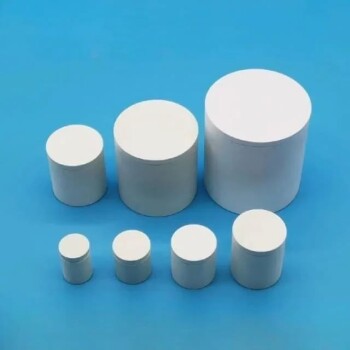
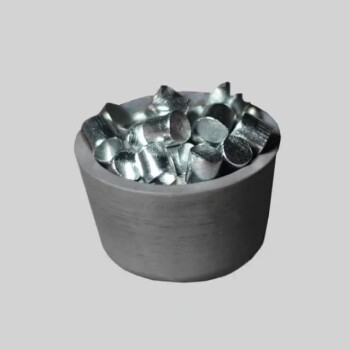
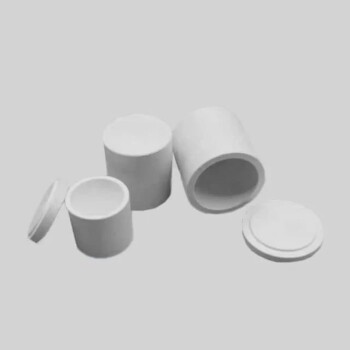
High-purity corundum crucibles provide the thermal stability and chemical neutrality required for high-precision slag analysis. These specialized containers withstand temperatures exceeding 1500°C while remaining inert, ensuring that the molten coal slag does not react with the crucible walls. By utilizing a matching lid, researchers can prevent the loss of volatile elements and maintain a uniform thermal environment, which is essential for capturing accurate crystallization data during Differential Scanning Calorimetry (DSC).
Core Takeaway: Using high-purity corundum crucibles with lids ensures the chemical integrity of coal slag samples by preventing cross-contamination and volatile evaporation, ultimately delivering the high-fidelity thermal data necessary for modeling crystallization kinetics.
Maintaining Sample Purity at High Temperatures
Exceptional Temperature Resistance
High-purity corundum, or alumina, is selected for its ability to operate at temperatures above 1500°C without deformation. This allows researchers to reach the fully liquid state of various coal slag compositions safely.
Chemical Inertness Against Molten Slag
Molten coal slag is chemically aggressive, yet high-purity corundum maintains superior chemical stability. This prevents the crucible from leaching aluminum or other oxides into the melt, which would otherwise alter the slag’s chemistry and invalidate the crystallization results.
Physical Structural Integrity
Unlike lower-grade ceramics, high-purity corundum resists the structural degradation that occurs during prolonged heating cycles. This ensures that the crucible does not crack or become porous, keeping the internal sample isolated from the furnace environment.
Optimizing Experimental Accuracy with Crucible Lids
Minimizing Volatile Loss
Coal slag often contains volatile components that can evaporate at high temperatures, changing the sample's composition. A lid acts as a physical barrier, trapping these vapors and ensuring the slag's chemical profile remains constant throughout the experiment.
Ensuring Uniform Temperature Distribution
A lid helps create a closed thermal system, promoting uniform heat distribution across the entire sample. This eliminates cold spots that could trigger premature or uneven crystallization, leading to more reliable heat flow measurements.
Protecting Sensitive DSC Sensors
In Differential Scanning Calorimetry (DSC), volatile outgassing can contaminate or damage the sensitive heat flux sensors. The use of a lid sequesters these gases, protecting the expensive instrumentation and reducing maintenance downtime.
Understanding the Trade-offs
Sensitivity to Thermal Shock
While corundum is highly heat-resistant, it can be sensitive to rapid temperature changes. Heating or cooling the crucible too quickly can lead to stress fractures, potentially compromising the experiment or the furnace.
Limitations with Highly Corrosive Fluxes
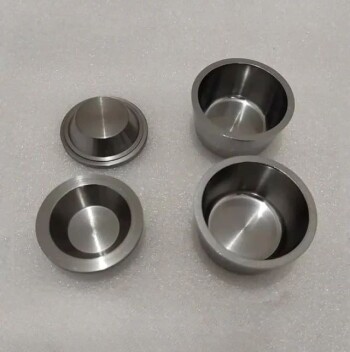
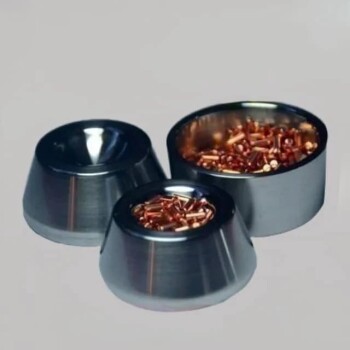
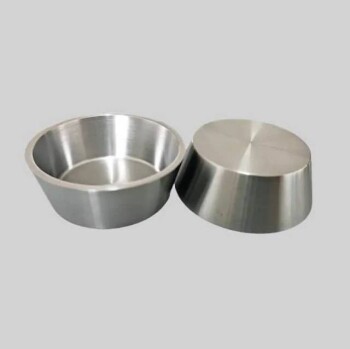
For certain extreme slag compositions—such as those high in iron or magnesium—even high-purity alumina may experience minor erosion. In these niche cases, specialized materials like molybdenum or platinum may be required to maintain absolute purity, though they are significantly more expensive.
Influence of Atmosphere
Corundum is excellent in oxidizing or inert atmospheres, but its performance can vary in highly reducing environments. Researchers must ensure the furnace atmosphere is compatible with both the crucible material and the specific coal slag oxidation state being studied.
Selecting the Right Approach for Your Goal
How to Apply This to Your Project
- If your primary focus is precise crystallization kinetics: Always use a high-purity corundum crucible with a tight-fitting lid to ensure uniform temperature and prevent the loss of volatile components that shift crystallization peaks.
- If your primary focus is routine slag melting at moderate temperatures: Standard alumina crucibles may suffice, but high-purity options (99%+) are still recommended to prevent unintended chemical interactions.
- If your primary focus is highly corrosive, iron-rich siderite slag: Consider evaluating molybdenum crucibles if working in a reducing atmosphere to avoid the minor aluminum leaching that can occur with corundum.
Empowering your laboratory with the right material choice ensures that your data reflects the true behavior of the slag rather than the limitations of your equipment.
Summary Table:
| Feature | Advantage | Scientific Impact |
|---|---|---|
| 99%+ Alumina Purity | Superior chemical inertness | Prevents sample contamination & maintains slag chemistry. |
| 1500°C+ Resistance | Exceptional thermal stability | Allows safe analysis of fully liquid slag phases. |
| Integrated Lid | Volatile retention | Prevents composition shifts and protects DSC sensors. |
| Thermal Uniformity | Even heat distribution | Ensures reliable heat flow data for crystallization kinetics. |
Elevate Your Thermal Analysis with KINTEK Precision
Precision in coal slag crystallization starts with the right environment. KINTEK provides high-performance laboratory solutions, ranging from high-purity corundum and ceramic crucibles to advanced high-temperature furnaces (muffle, vacuum, and tube) and high-pressure reactors.
Our specialized consumables and equipment are designed to withstand aggressive chemical environments and extreme temperatures, ensuring your research data remains untainted and reproducible. Whether you are conducting DSC analysis or complex material synthesis, our team is ready to equip your lab with the best-in-class tools, including cooling solutions, hydraulic presses, and specialized electrodes.
Ready to optimize your experimental accuracy? Contact KINTEK today to discuss your specific requirements and discover how our expertise can drive your scientific breakthroughs.
References
- Jing Guo, Jingchong Yan. Solid Precipitation Behaviors in Coal Slag from Different Primary Phases and Their Effects on Slag Viscosity from Thermochemistry and Experimental. DOI: 10.3390/pr11051522
This article is also based on technical information from Kintek Solution Knowledge Base .
Related Products
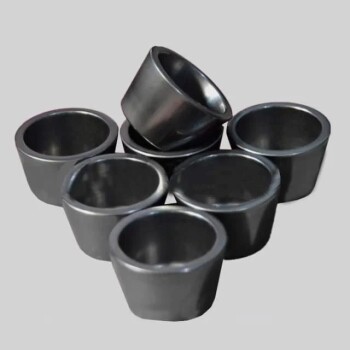
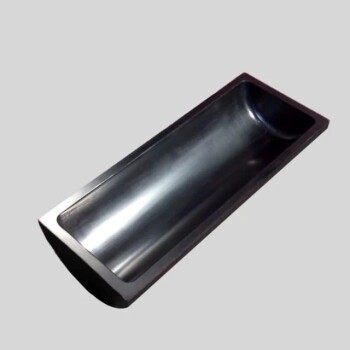
- High Purity Pure Graphite Crucible for Evaporation
- High Purity Pure Graphite Crucible for Electron Beam Evaporation
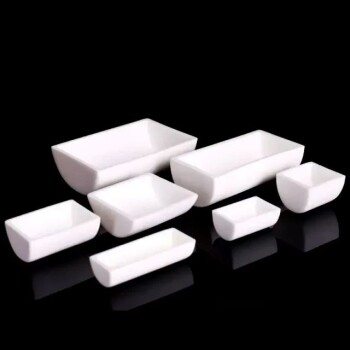
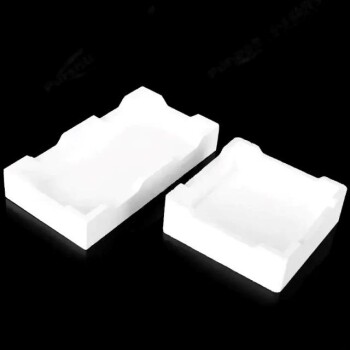
- Alumina Al2O3 Ceramic Crucible Semicircle Boat with Lid for Engineering Advanced Fine Ceramics
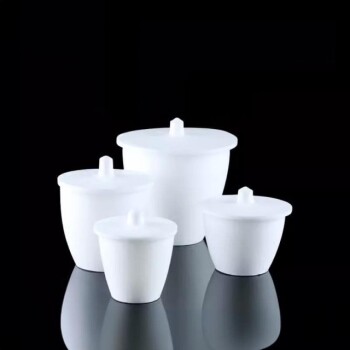
- Engineering Advanced Fine Ceramics Alumina Al2O3 Crucible With Lid Cylindrical Laboratory Crucible
- Custom Machined and Molded PTFE Teflon Parts Manufacturer with PTFE Crucible and Lid
People Also Ask
- Why are high-purity graphite crucibles preferred for sulfide solid electrolytes? Achieve Superior Material Purity
- Why is a high-purity graphite crucible required for Chromel-TaC composites? Ensure Peak Purity at 1400°C
- What role do high-purity graphite crucibles play in molten salt corrosion research? Ensure Reactor-Grade Precision
- Why are high-purity graphite crucibles used for magnesium distillation? Ensure 3N8 Purity & Thermal Stability
- Why is a high-purity graphite crucible ideal for nitrogen-doped graphene at 1500 °C? Maximize Purity and Stability