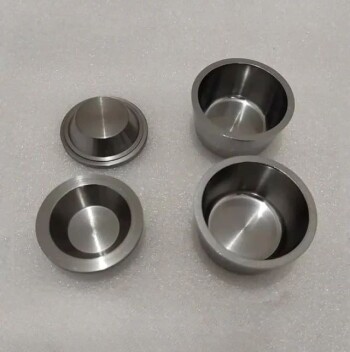
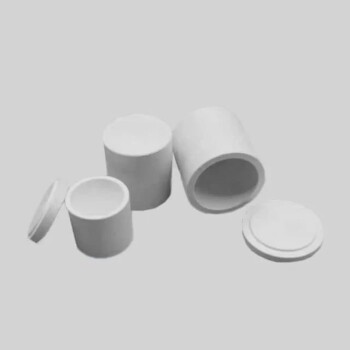
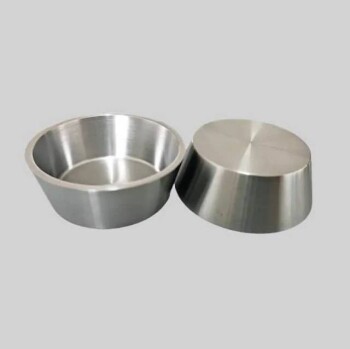
High-purity platinum crucibles are the definitive choice for ZIF-62 glass processing because they offer absolute chemical inertness and thermal stability at temperatures exceeding 450°C. By providing a non-reactive surface, these crucibles ensure that corrosive organic ligands and zinc ions do not leach impurities into the melt. This preservation of purity is essential for maintaining the glass's unique optical transparency and its complex microporous architecture.
Using high-purity platinum crucibles is the primary safeguard against chemical contamination during the melting and annealing of ZIF-62 glass. Their unique resistance to organic ligands and metal ions ensures that the material's structural integrity and optical properties remain uncompromised throughout repeated thermal cycles.
Chemical Resilience in MOF Glass Synthesis
Preventing Reaction with Imidazole Ligands
ZIF-62 glass contains corrosive imidazole ligands that can react with many standard crucible materials at high temperatures. High-purity platinum remains completely inert in the presence of these organic components. This prevents the degradation of the crucible and the subsequent contamination of the glass melt.
Inhibiting Zinc Ion Interaction
The synthesis of ZIF-62 involves zinc ions, which are highly sensitive to their chemical environment during heat treatment. Platinum does not interact with these ions, ensuring that the metal-organic framework (MOF) maintains its intended chemical ratios. Without this inertness, leaching from the crucible could alter the fundamental properties of the glass.
Maintaining Optical Transparency
One of the primary advantages of ZIF-62 is its optical clarity, which is easily ruined by trace metallic impurities. Platinum crucibles ensure that no foreign elements are introduced that could cause discoloration or light scattering. This makes them indispensable for applications where the glass must remain transparent.
Structural Preservation at Elevated Temperatures
Performance Above 450°C
The melting and annealing of ZIF-62 glass typically occur at temperatures exceeding 450°C. Platinum crucibles are designed to withstand these temperatures—and much higher—without losing their structural form or chemical stability. This provides a reliable and consistent thermal environment for the material.
Protection of Microporous Architecture
ZIF-62 is valued for its microporous structure, which is critical for gas separation and storage applications. Even minor impurities introduced during heat treatment can clog or collapse these microscopic pores. Platinum ensures the purity required to keep these pores open and functional.
Superior Thermal Shock Resistance
Processing glass often involves rapid heating and cooling cycles that can cause ceramic crucibles to crack. Platinum offers exceptional thermal shock resistance, allowing it to endure repeated cycles without failure. This durability ensures a long service life and prevents the loss of expensive experimental materials.
Understanding the Trade-offs
High Initial Investment
The most significant drawback of platinum crucibles is their extreme cost compared to quartz or ceramic alternatives. While they are a long-term investment, the initial capital required can be a barrier for some laboratories. However, the ability to recycle and refine platinum often mitigates this cost over time.
Risk of Physical Damage
Platinum is a relatively soft metal at high temperatures and can be easily deformed if mishandled with heavy tongs. Users must exercise caution to avoid scratching or denting the interior surfaces, as surface defects can trap material and lead to cross-contamination.
Specific Metal Incompatibility
While platinum is generally inert, it can form low-melting-point alloys if it comes into contact with certain metals like lead, bismuth, or antimony under reducing conditions. While these are not typically present in pure ZIF-62, researchers must ensure no such contaminants are introduced to avoid destroying the crucible.
Best Practices for Material Selection
How to Apply This to Your Project
Choosing the right vessel depends on your specific research requirements and budget constraints.
- If your primary focus is maximum structural purity: Utilize high-purity platinum to ensure the microporous framework of the ZIF-62 glass remains free of leached contaminants.
- If your primary focus is optical performance: Stick exclusively to platinum to prevent the introduction of transition metal impurities that cause unwanted absorption and discoloration.
- If your primary focus is cost-effective initial testing: Consider high-purity quartz for low-temperature trials, but transition to platinum for definitive, high-temperature heat treatments to ensure reliability.
By prioritizing the use of platinum crucibles, you ensure that the specialized properties of ZIF-62 glass are fully realized and accurately measured.
Summary Table:
| Feature | Benefit for ZIF-62 Glass | Impact on Research |
|---|---|---|
| Chemical Inertness | Prevents reactions with corrosive imidazole ligands | Ensures high material purity |
| Metal Non-reactivity | Inhibits zinc ion leaching or interaction | Maintains intended chemical ratios |
| Thermal Stability | Performs reliably at temperatures >450°C | Consistent melting and annealing |
| Structural Protection | Safeguards the glass's microporous architecture | Preserves gas separation capabilities |
| Optical Integrity | Prevents discoloration from trace impurities | Maintains superior optical transparency |
Elevate Your Material Research with KINTEK Solutions
Achieve uncompromising results in your ZIF-62 glass synthesis and advanced MOF research. KINTEK specializes in providing high-performance laboratory equipment designed for the most demanding thermal processes. From high-purity platinum and ceramic crucibles to precision high-temperature furnaces (muffle, vacuum, and tube), we offer the tools you need to maintain structural integrity and optical clarity.
Why choose KINTEK?
- Superior Material Purity: Our platinum and ceramic consumables prevent contamination in sensitive chemical environments.
- Comprehensive Range: We supply everything from hydraulic pellet presses and milling systems to cooling solutions and high-pressure reactors.
- Expert Reliability: Our equipment is built to withstand repeated thermal cycles, ensuring long-term durability for your lab.
Ready to optimize your heat treatment process? Contact our technical experts today to find the perfect crucible and furnace configuration for your specific application!
References
- Oksana Smirnova, Alexander Knebel. Precise control over gas-transporting channels in zeolitic imidazolate framework glasses. DOI: 10.1038/s41563-023-01738-3
This article is also based on technical information from Kintek Solution Knowledge Base .
Related Products
- High Purity Pure Graphite Crucible for Evaporation
- High Purity Pure Graphite Crucible for Electron Beam Evaporation
- High Purity Gold Platinum Copper Iron Metal Sheets
- Arc-Shaped Alumina Ceramic Crucible High Temperature Resistant for Engineering Advanced Fine Ceramics
- Engineering Advanced Fine Alumina Al2O3 Ceramic Crucible for Laboratory Muffle Furnace
People Also Ask
- Why are high-purity graphite crucibles preferred for sulfide solid electrolytes? Achieve Superior Material Purity
- Why is a high-purity graphite crucible required for Chromel-TaC composites? Ensure Peak Purity at 1400°C
- What role do high-purity graphite crucibles play in molten salt corrosion research? Ensure Reactor-Grade Precision
- Why are high-purity graphite crucibles used for magnesium distillation? Ensure 3N8 Purity & Thermal Stability
- Why is a high-purity graphite crucible ideal for nitrogen-doped graphene at 1500 °C? Maximize Purity and Stability