Plasma Enhanced Chemical Vapor Deposition (PECVD) serves as a critical enabling technology for neural probe fabrication by decoupling the chemical reaction energy from thermal heat. By utilizing plasma to excite reaction gases, PECVD allows for the deposition of high-quality inorganic insulation layers—specifically silicon dioxide (SiO2) and silicon nitride (Si3N4)—at much lower substrate temperatures (typically around 300°C) compared to traditional processes that can exceed 800°C.
Core Takeaway The primary advantage of PECVD for neural probes is the preservation of delicate metal microstructures through low-temperature processing. It achieves dense, hermetic sealing against ionic penetration without subjecting the device to the destructive thermal stress and warping associated with traditional high-temperature Chemical Vapor Deposition (CVD).
Preserving Device Integrity via Thermal Management
Low-Temperature Deposition
Traditional CVD relies on high temperatures to drive chemical reactions, often damaging sensitive substrates. PECVD replaces this thermal requirement with plasma energy, enabling deposition at significantly lower temperatures, typically ranging from room temperature to 350°C.
Reduction of Internal Stress
When layers are deposited at high heat and then cooled, the mismatch in thermal expansion coefficients between the substrate and the film creates immense internal stress. Because PECVD operates at lower temperatures (around 300°C), it drastically minimizes this thermal mismatch.
Preventing Film Cracking
The reduction in internal stress is vital for the mechanical stability of the insulation. Lower stress levels mean the SiO2 or Si3N4 layers are far less likely to crack or delaminate, ensuring the neural probe remains insulated during operation.
Protection of Metal Microstructures
Neural probes rely on intricate metal patterns to function. The lower thermal budget of PECVD prevents these sensitive metal structures from warping, melting, or degrading, which is a common risk in high-temperature environments.
Enhancing Insulation Quality for Biological Environments
Dense Film Growth
To function in the brain, a probe must be impervious to biological fluids. PECVD facilitates the growth of dense films that effectively block ionic penetration, protecting the underlying electronics from shorting or corrosion.
Superior Uniformity and Coverage
Neural probes often possess complex, three-dimensional geometries. The reactive species in the plasma possess high kinetic energy, allowing them to cover vertical, tilted, and irregular surfaces with high uniformity, ensuring no part of the probe is left exposed.
Tunable Material Properties
PECVD offers precise control over film characteristics beyond just thickness. By adjusting process parameters such as Radio Frequency (RF) power and gas ratios, engineers can fine-tune properties like refractive index, hardness, and stress to meet specific design requirements.
Understanding the Trade-offs
Equipment Complexity vs. Capability
While PECVD enables deposition on thermally sensitive devices, the equipment is generally more complex than basic thermal systems due to the need for vacuum and RF power generation. However, this complexity is a necessary trade-off to achieve high-quality insulation without thermal damage.
Process Optimization
Achieving the perfect balance of film density and low stress requires careful tuning of gas flow, pressure, and power. Unlike standard thermal CVD which is often "set and bake," PECVD requires active management of plasma parameters to ensure the film quality rivals that of high-temperature counterparts.
Making the Right Choice for Your Project
When selecting a deposition method for neural probes, evaluate your constraints regarding substrate sensitivity and required film density.
- If your primary focus is protecting delicate electronics: Choose PECVD to maintain process temperatures around 300°C, preventing thermal damage to metal microstructures.
- If your primary focus is long-term implant reliability: Rely on PECVD to produce dense, low-stress Si3N4 or SiO2 films that resist cracking and prevent ionic penetration in the body.
- If your primary focus is covering complex 3D shapes: Utilize PECVD for its ability to provide uniform step coverage on vertical and tilted surfaces.
By leveraging the kinetic energy of plasma rather than thermal heat, you ensure your neural probes are insulated securely without compromising their structural integrity.
Summary Table:
| Feature | Traditional High-Temp CVD | Plasma Enhanced CVD (PECVD) |
|---|---|---|
| Deposition Temp | High (>800°C) | Low (RT to 350°C) |
| Substrate Impact | Risk of warping/melting | Preserves delicate structures |
| Thermal Stress | High (mismatched expansion) | Minimal (reduced cracking) |
| Film Density | High | High & Dense (ionic barrier) |
| Step Coverage | Limited on 3D shapes | Excellent for complex geometries |
| Control | Temperature dependent | Highly tunable RF/Gas parameters |
Elevate Your Neural Research with KINTEK Precision
Protect your delicate microstructures and ensure long-term implant reliability with KINTEK’s advanced PECVD and CVD systems. Whether you are depositing dense SiO2/Si3N4 insulation or developing complex 3D sensors, our laboratory solutions provide the thermal management and material integrity your research demands.
Our laboratory portfolio includes:
- Vapor Deposition: High-performance PECVD, CVD, and MPCVD systems.
- Thermal Processing: Muffle, tube, vacuum, and atmosphere furnaces.
- Lab Essentials: High-pressure reactors, crushing systems, and precision hydraulic presses.
Don't compromise on device integrity. Contact KINTEK today to discover how our high-performance equipment can optimize your fabrication workflow and deliver superior results for your most sensitive applications.
References
- Yan Gong, Wen Li. Stability Performance Analysis of Various Packaging Materials and Coating Strategies for Chronic Neural Implants under Accelerated, Reactive Aging Tests. DOI: 10.3390/mi11090810
This article is also based on technical information from Kintek Solution Knowledge Base .
Related Products
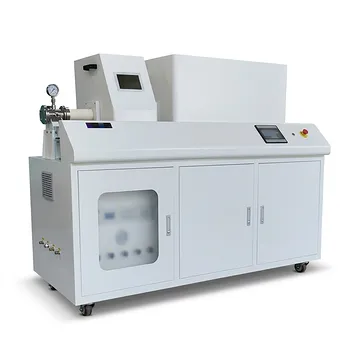
- Chemical Vapor Deposition CVD Equipment System Chamber Slide PECVD Tube Furnace with Liquid Gasifier PECVD Machine
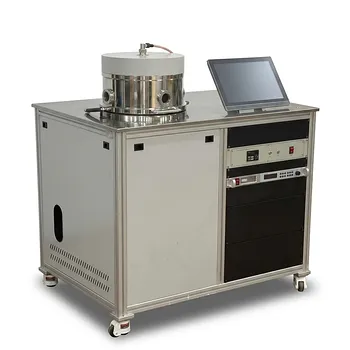
- RF PECVD System Radio Frequency Plasma-Enhanced Chemical Vapor Deposition RF PECVD
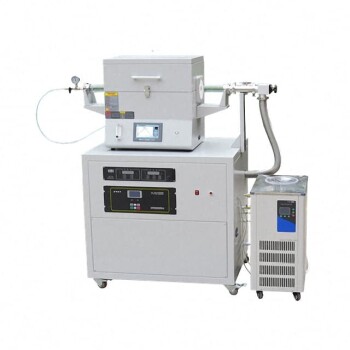
- Inclined Rotary Plasma Enhanced Chemical Vapor Deposition PECVD Equipment Tube Furnace Machine
- Inclined Rotary Plasma Enhanced Chemical Vapor Deposition PECVD Equipment Tube Furnace Machine
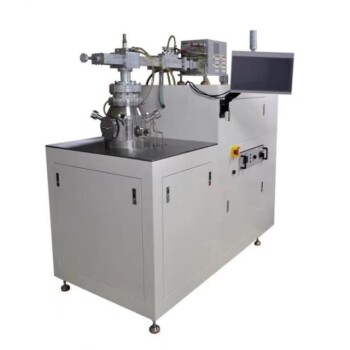
- 915MHz MPCVD Diamond Machine Microwave Plasma Chemical Vapor Deposition System Reactor
People Also Ask
- What are the advantages of chemical vapor deposition? Achieve Superior Thin Films for Your Lab
- What types of substrates are used in CVD to facilitate graphene films? Optimize Graphene Growth with the Right Catalyst
- What is the chemical vapor deposition growth process? Build Superior Thin Films from the Atom Up
- How expensive is chemical vapor deposition? Understanding the True Cost of High-Performance Coating
- Why is Chemical Vapor Deposition (CVD) equipment uniquely suited for constructing hierarchical superhydrophobic structures?