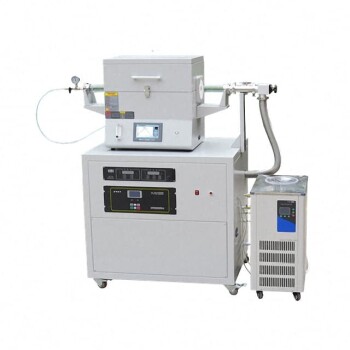
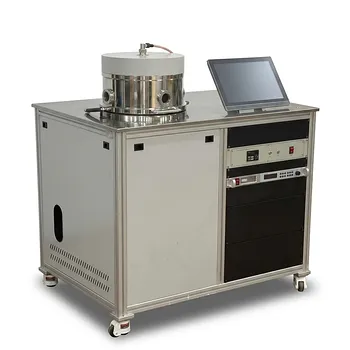
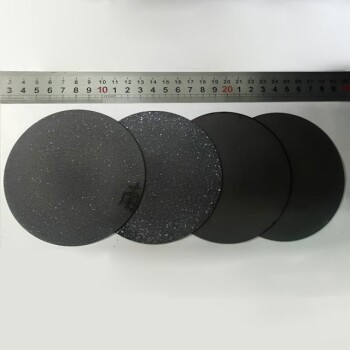
The primary advantage of using an externally heated tubular fluidized bed reactor for nickel Chemical Vapor Deposition (CVD) is the creation of a highly uniform thermal environment. This specific configuration ensures that gaseous precursors, such as nickel acetylacetonate, are evenly distributed and reduced in a hydrogen atmosphere, resulting in the consistent deposition of metallic nickel on the substrate.
The fluidized bed reactor design solves the challenge of inconsistent coating by maintaining a stable thermal profile, enabling the production of high-purity nickel thin films and nanoparticles with superior adhesion properties.
Achieving Deposition Uniformity
The Role of External Heating
The "externally heated" aspect of this reactor design is critical for thermal stability. By applying heat from outside the tubular chamber, you create a radiant thermal zone that eliminates internal cold spots.
This ensures that the nickel acetylacetonate precursor remains in a gaseous state until it interacts with the substrate. Consistent temperature control prevents premature condensation or incomplete reaction of the precursor chemicals.
Benefits of the Fluidized Environment
Fluidized beds facilitate excellent mixing between the solid substrate and the gas phase. This dynamic movement ensures that every surface of the substrate is exposed to the reactive gases.
In a hydrogen reduction atmosphere, this exposure guarantees that the reduction process occurs evenly across the entire surface area. The result is a homogeneous nickel layer free from the thickness variations often found in static deposition methods.
Enhancing Material Properties
Ensuring High Purity
One of the distinct advantages of this setup is its ability to produce high-purity nickel. The reactor facilitates a clean hydrogen reduction process, which effectively strips away organic ligands from the precursor.
This leaves behind pure metallic nickel. By controlling the vacuum environment and gas flow, operators can minimize contamination and oxidation, which is vital for high-performance electronic or catalytic applications.
Creating Strong Adhesion
Adhesion is often the failure point for thin films. The uniform deposition provided by this reactor architecture ensures that the nickel layer bonds physically and chemically to the substrate.
Because the deposition is even and controlled, the film develops strong adhesion properties. This makes the resulting nanoparticles or thin films durable enough to withstand mechanical stress or further processing steps.
Operational Advantages of CVD
Precision and Control
Beyond the specific reactor type, the CVD process itself offers significant control advantages. Operators can precisely manage the timing of the reaction within the vacuumed environment.
This allows for the creation of ultra-thin layers, giving you the ability to fine-tune the thickness of the nickel film down to the nanometer scale.
Conformal Coverage
CVD is a dry chemical fabrication process that excels at coating complex geometries. Unlike line-of-sight physical deposition, the gas permeates the reactor volume.
This results in a conformal coating, meaning the nickel layer is applied with equal thickness to all surfaces of the substrate, including recesses and vertical sidewalls.
Understanding the Trade-offs
Precursor Sensitivity
While nickel acetylacetonate is effective, it requires precise thermal management. If the external heating is too aggressive near the inlet, the precursor may decompose before reaching the deposition zone, leading to reactor fouling.
System Complexity
Utilizing a fluidized bed within a vacuum environment adds mechanical complexity compared to static reactors. Balancing gas flow rates to maintain fluidization without blowing the substrate out of the heating zone requires careful calibration.
Making the Right Choice for Your Goal
If you are considering this reactor type for your nickel deposition project, align your choice with your specific technical requirements:
- If your primary focus is Film Consistency: Rely on this reactor to eliminate thickness gradients and ensure a uniform coating across the entire substrate surface.
- If your primary focus is Material Purity: Leverage the hydrogen reduction atmosphere to strip impurities and achieve high-grade metallic nickel.
- If your primary focus is Mechanical Durability: Use this method to maximize the adhesion strength between the nickel film and the underlying substrate.
By leveraging the thermal uniformity of an externally heated tubular reactor, you transform the volatile process of nickel deposition into a controlled, repeatable manufacturing capability.
Summary Table:
| Feature | Advantage in Nickel CVD | Benefit to Material |
|---|---|---|
| External Heating | Eliminates cold spots & prevents precursor condensation | Uniform thermal profile |
| Fluidized Bed | High gas-solid mixing & constant substrate movement | Conformal, homogeneous coating |
| H2 Reduction | Efficient removal of organic ligands from precursors | High-purity metallic nickel |
| Vacuum Control | Precise management of reaction timing and gas flow | Nano-scale thickness control |
Elevate Your Material Research with KINTEK Precision
Unlock superior film consistency and high-purity results for your next project. KINTEK specializes in advanced laboratory equipment, offering high-performance high-temperature tube and vacuum furnaces, CVD/PECVD systems, and specialized high-pressure reactors tailored for precision nickel deposition.
Whether you are developing next-generation catalysts or high-performance electronic thin films, our comprehensive range of crushing, milling, and thermal solutions ensures your research is backed by industrial-grade reliability.
Ready to optimize your CVD process? Contact our experts today to find the perfect reactor or consumable for your lab's unique requirements!
References
- Md. RAKIB HASSAN, SNAHASISH BHOWMIK. Synthesis and Applications of Nickel Nanoparticles (NiNPs)- Comprehensive Review. DOI: 10.22147/juc/190102
This article is also based on technical information from Kintek Solution Knowledge Base .
Related Products
- Customer Made Versatile CVD Tube Furnace Chemical Vapor Deposition Chamber System Equipment
- Split Chamber CVD Tube Furnace with Vacuum Station Chemical Vapor Deposition System Equipment Machine
- HFCVD Machine System Equipment for Drawing Die Nano-Diamond Coating
- Multi Heating Zones CVD Tube Furnace Machine Chemical Vapor Deposition Chamber System Equipment
- Microwave Plasma Chemical Vapor Deposition MPCVD Machine System Reactor for Lab and Diamond Growth
People Also Ask
- What is a CVD tube furnace? A Complete Guide to Thin-Film Deposition
- What is the function of a high-temperature CVD tube furnace in 3D graphene foam prep? Master 3D Nanomaterial Growth
- What are the technical advantages of using a CVD tube furnace? Optimize Silicon-Carbon Battery Anodes
- How does a CVD tube furnace inhibit the sintering of silver supports? Boost Membrane Durability and Performance
- What is the function of a tube furnace in CVD SiC synthesis? Achieving Ultra-Pure Silicon Carbide Powders