In Chemical Vapor Deposition (CVD), reactants—referred to as precursors—are introduced into the reaction chamber primarily in a gaseous state. These precursors are delivered either directly as a pure vapor or, more frequently, transported alongside an inert carrier gas such as nitrogen or argon. This delivery usually occurs at ambient temperatures, with the gases flowing over a heated substrate to initiate the deposition reaction.
Core Takeaway The goal of the delivery system is not just introduction, but regulation. By using carrier gases and precise flow controls, engineers regulate the precursor concentration within the chamber, ensuring the gas reacts correctly only when it contacts the heated substrate.
The Mechanics of Precursor Delivery
Utilizing Carrier Gases
In many CVD systems, the precursor gas is not introduced alone. Instead, it is diluted in a carrier gas, typically an inert substance like nitrogen or argon.
This method assists in the stable transport of the precursor through the system. It ensures a steady stream of reactants reaches the chamber without reacting prematurely.
Direct Gas and Vapor Delivery
Alternatively, precursors can be introduced directly as a gas or vapor without a carrier.
This approach relies on the vapor pressure of the precursor itself to drive movement into the chamber.
Temperature Conditions at Inlet
The precursor gases are generally introduced into the chamber at approximately ambient temperatures.
The gases remain in this stable, unreacted state until they pass over or come into contact with the substrate.
Controlling the Reaction Environment
Regulating Flow Rates
Precursor delivery systems are engineered to maintain precise control over the flow rate.
This precision is fundamental to the process, as erratic flow can lead to uneven deposition or incomplete reactions.
Managing Concentration
By controlling the flow rate, operators directly regulate the precursor concentration within the reaction chamber.
Correct concentration levels are vital for maintaining the stoichiometry and quality of the deposited film.
The Role of the Heated Substrate
While gases enter at ambient temperatures, the reaction or decomposition only occurs when they contact the heated substrate.
The solid phase is formed and deposited specifically on this heated surface, preventing deposition on cool chamber walls.
Critical Process Variables
Substrate Temperature Sensitivity
The temperature of the substrate is a critical parameter that dictates the process outcome.
Variations in substrate heat can influence exactly which chemical reactions take place, altering the film's properties.
Precursor Selection (CMOS Context)
In specific applications like CMOS technology, the choice of precursor is dictated by the desired material properties.
Common precursors used include metal-organic compounds, hydrides, and halides.
Optimizing Deposition Results
To ensure a successful CVD process, you must balance the delivery mechanism with thermal control.
- If your primary focus is Film Uniformity: Prioritize precise regulation of the carrier gas flow rate to maintain consistent precursor concentration across the chamber.
- If your primary focus is Reaction Specificity: Strictly monitor the substrate temperature, as this determines which specific decomposition reactions occur upon contact.
By mastering the variable of flow rate alongside substrate temperature, you gain total control over the deposition quality.
Summary Table:
| Delivery Aspect | Mechanism & Role | Key Benefit |
|---|---|---|
| Precursor Form | Gaseous state (Pure vapor or diluted) | Ensures uniform transport to substrate |
| Carrier Gases | Inert gases like Nitrogen or Argon | Regulates concentration and prevents premature reaction |
| Inlet Temperature | Ambient (Room Temperature) | Maintains precursor stability before deposition |
| Flow Control | Mass Flow Controllers (MFCs) | Guarantees precise stoichiometry and film thickness |
| Reaction Trigger | Contact with Heated Substrate | Localizes deposition only on the target surface |
Elevate Your Material Research with KINTEK Precision
Achieving perfect film uniformity in CVD processes requires more than just precursors; it demands high-performance equipment that provides total control over the reaction environment. KINTEK specializes in advanced laboratory solutions designed for the most demanding research applications.
Whether you are scaling CVD or PECVD operations, optimizing high-temperature furnaces, or requiring specialized high-pressure reactors, our expert team is here to support your success. We offer a comprehensive range of equipment, including:
- Advanced CVD & PECVD Systems for precise film growth.
- High-Temperature Furnaces (Muffle, Tube, Vacuum, and Rotary).
- Critical Consumables such as high-purity ceramics, crucibles, and PTFE products.
- Electrolytic Cells & Battery Research Tools for next-gen energy storage.
Ready to optimize your deposition quality? Contact KINTEK today to discover how our high-precision systems and expert technical support can enhance your laboratory's efficiency and results.
Related Products
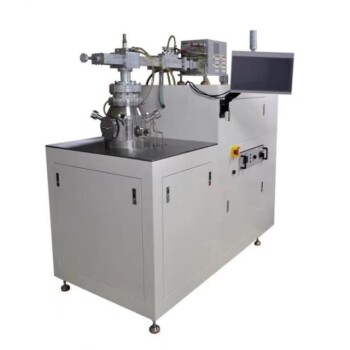
- Microwave Plasma Chemical Vapor Deposition MPCVD Machine System Reactor for Lab and Diamond Growth
- Cylindrical Resonator MPCVD Machine System Reactor for Microwave Plasma Chemical Vapor Deposition and Lab Diamond Growth
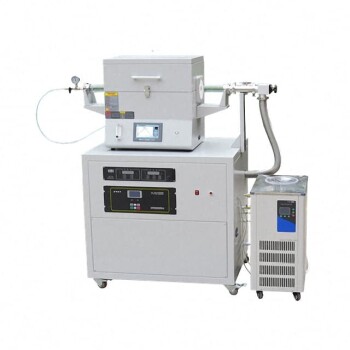
- Customer Made Versatile CVD Tube Furnace Chemical Vapor Deposition Chamber System Equipment
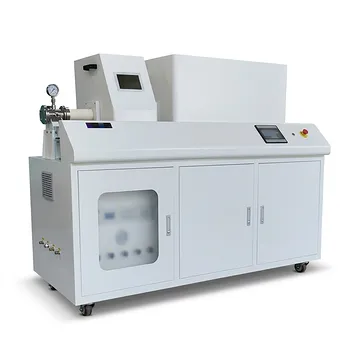
- Split Chamber CVD Tube Furnace with Vacuum Station Chemical Vapor Deposition System Equipment Machine
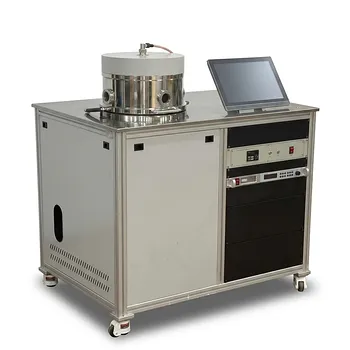
- Chemical Vapor Deposition CVD Equipment System Chamber Slide PECVD Tube Furnace with Liquid Gasifier PECVD Machine
People Also Ask
- How does a microwave plasma reactor facilitate the synthesis of diamond? Master MPCVD with Precision Technology
- What are the advantages of a Microwave Plasma CVD reactor for MCD/NCD coatings? Precision Multilayer Diamond Engineering
- How do vacuum pumps and valves collaborate in MPCVD? Achieve Precise Pressure Control for Superior CNT Synthesis
- How does MPCVD work? A Guide to Low-Temperature, High-Quality Film Deposition
- What is microwave plasma chemical vapor deposition? A Guide to High-Purity Diamond Film Growth