The resistance heating furnace acts as the primary thermal driver in a Chemical Vapor Deposition (CVD) system for tantalum coating. It is responsible for establishing and rigorously maintaining the specific temperature gradients required for the chemical reactions, specifically heating the chlorination chamber to approximately 400°C and the deposition reaction chamber to 1150°C.
By providing consistent wall heating, the furnace supplies the necessary activation energy for both the generation of precursor gases and the final hydrogen reduction reaction. This thermal control is the decisive factor in determining the deposition rate and the microstructural quality of the tantalum coating.
Thermal Management of Reaction Zones
The Role in Precursor Generation
The first critical function of the furnace is to activate the chlorination process.
The furnace must maintain the chlorination chamber at a steady 400°C. This specific temperature provides the energy required to generate tantalum pentachloride (TaCl5) gas, which serves as the precursor for the coating.
The Role in Deposition
Once the precursor gas moves to the reaction chamber, the thermal requirements change drastically.
The furnace must elevate the temperature of this zone to 1150°C. At this elevated temperature, the hydrogen reduction reaction occurs, allowing the tantalum to chemically bond to the substrate.
Activation Energy and Kinetics
Overcoming Energy Barriers
Chemical reactions in CVD are not spontaneous; they require a specific energy threshold to occur.
The resistance furnace provides this "activation energy." Without this external heat source, the reactants would remain inert, and the coating process would never initiate.
Controlling Deposition Rate
The amount of heat supplied directly influences how fast the coating forms.
By regulating the power to the resistance heating elements, operators control the kinetics of the reaction. Precise heating ensures the deposition rate remains efficient without compromising the process stability.
Defining Microstructure
Heat does more than just drive the reaction speed; it organizes the atomic structure of the coating.
The thermal energy supplied by the furnace dictates how tantalum atoms arrange themselves on the surface. This directly impacts the final microstructure, determining the mechanical integrity and density of the coating.
Understanding the Trade-offs
The Challenge of Wall Heating
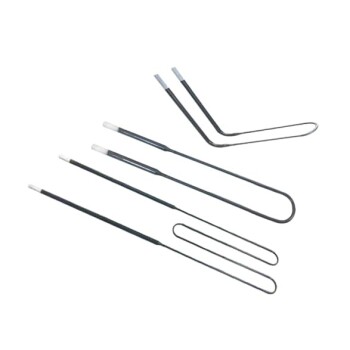
Resistance furnaces in this context typically provide "wall heating," meaning the heat is applied from the outside in.
While effective, this can create thermal gradients where the walls are hotter than the gas center. This requires careful calibration to ensure the actual reaction zone reaches the target 1150°C.
Sensitivity to Temperature Fluctuations
The process relies on specific set points (400°C and 1150°C).
If the furnace fails to maintain these exact temperatures, the reaction kinetics shift. This can lead to incomplete chlorination or poor adhesion in the deposition phase, resulting in a substandard coating.
Making the Right Choice for Your Goal
To maximize the effectiveness of your CVD system, consider how thermal control aligns with your specific objectives:
- If your primary focus is Process Efficiency: Ensure your furnace can rapidly ramp up to and recover the 1150°C set point to maintain a high, consistent deposition rate.
- If your primary focus is Coating Quality: Prioritize furnace stability and uniformity to ensure the microstructure of the tantalum layer remains consistent across the entire substrate.
The resistance furnace is not merely a heater; it is the precision instrument that dictates the success of the chemical reaction and the quality of the final tantalum layer.
Summary Table:
| Process Phase | Target Temperature | Primary Function |
|---|---|---|
| Chlorination Chamber | 400°C | Generates TaCl5 precursor gas from raw materials |
| Deposition Chamber | 1150°C | Provides activation energy for hydrogen reduction |
| Thermal Driver | Variable | Controls deposition rate and coating microstructure |
| Energy Management | 400°C - 1150°C | Overcomes kinetic barriers for chemical bonding |
Elevate Your Thin-Film Research with KINTEK Precision
High-performance tantalum coating requires absolute thermal stability. At KINTEK, we specialize in the advanced laboratory equipment necessary for successful Chemical Vapor Deposition. Whether you are optimizing precursor generation or perfecting the hydrogen reduction phase, our range of tube furnaces, CVD systems, and PECVD solutions provides the rigorous temperature control your research demands.
From high-temperature furnaces and vacuum systems to essential PTFE and ceramic consumables, KINTEK is the partner of choice for material scientists and battery researchers worldwide.
Ready to achieve superior coating uniformity and structural integrity? Contact our technical experts today to find the perfect heating solution for your CVD application.
References
- Junyu Zhu, Haohong Jiang. Fabrication and mechanical properties of porous tantalum carbon composites by chemical vapor deposition. DOI: 10.1038/s41598-025-86680-x
This article is also based on technical information from Kintek Solution Knowledge Base .
Related Products
- Multi Heating Zones CVD Tube Furnace Machine Chemical Vapor Deposition Chamber System Equipment
- Customer Made Versatile CVD Tube Furnace Chemical Vapor Deposition Chamber System Equipment
- HFCVD Machine System Equipment for Drawing Die Nano-Diamond Coating
- Vacuum Heat Treat and Pressure Sintering Furnace for High Temperature Applications
- 2200 ℃ Tungsten Vacuum Heat Treat and Sintering Furnace
People Also Ask
- What are the advantages of a multi-zone tube furnace for Sb2S3? Unlock Superior Semiconductor Thin Film Purity
- What are the advantages of using a Multi-zone Tube Furnace? Enhanced Thermal Uniformity for Diffusion Research
- What is a CVD tube furnace? A Complete Guide to Thin-Film Deposition
- What are the technical advantages of using a CVD tube furnace? Optimize Silicon-Carbon Battery Anodes
- What is the function of a high-temperature CVD tube furnace in 3D graphene foam prep? Master 3D Nanomaterial Growth