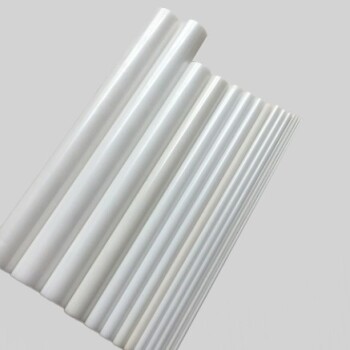
Utilizing a laboratory-grade high-purity graphite rod provides a distinct advantage in photoelectrocatalytic systems by delivering a combination of excellent electrical conductivity, high chemical stability, and a low hydrogen evolution overpotential. Acting as a highly efficient counter electrode, it ensures the seamless transfer of electrons from the anode to facilitate proton reduction.
Core Insight: The value of a high-purity graphite cathode extends beyond simple conductivity; it acts as the stabilizer for the entire apparatus, ensuring the continuity of hydrogen production and maintaining the precise electrochemical balance required for accurate catalysis.
The Mechanics of Efficiency
To understand why this specific component is effective, we must look at how its physical properties directly influence the electrochemical reaction.
Superior Electrical Conductivity
The primary function of the cathode in this system is to receive electrons transferred from the anode.
High-purity graphite offers excellent electrical conductivity, minimizing resistance in the circuit. This ensures that the electrons generated at the photoanode are transferred efficiently to the cathode surface without significant energy loss.
Low Hydrogen Evolution Overpotential
In hydrogen production systems, energy efficiency is defined by how easily the reaction occurs.
This specific graphite rod possesses a low hydrogen evolution overpotential. This means less excess energy is required to drive the proton reduction reaction, allowing the system to produce hydrogen more readily and efficiently.
High Chemical Stability
Photoelectrocatalytic environments can be chemically aggressive.
The high chemical stability of laboratory-grade graphite ensures the electrode does not degrade or react unpredictably with the electrolyte. This durability is essential for long-term experiments where consistent performance is mandatory.
System-Level Impact
Beyond individual material properties, the graphite rod plays a critical role in the holistic function of the system.
Facilitating Proton Reduction
The cathode is the site where the actual fuel production occurs.
By stably receiving electrons, the graphite rod facilitates proton reduction. This is the fundamental chemical step that converts protons into hydrogen gas.
Maintaining Electrochemical Balance
A system is only as effective as its ability to sustain a continuous reaction.
The graphite rod acts as an efficient counter electrode to the photoanode. By effectively managing the electron flow, it ensures the continuity of the hydrogen production process and maintains the overall equilibrium of the electrochemical system.
The Criticality of Material Purity
While graphite is a common material, the distinction of "laboratory-grade high-purity" is not merely a label—it is a functional requirement.
Avoiding Impurity Interference
Lower-grade graphite often contains impurities that can alter the electrochemical properties of the rod.
These impurities can increase electrical resistance or catalyze unwanted side reactions. To achieve the low overpotential and high stability described, one must strictly utilize high-purity grades to prevent introducing variables that could skew experimental data or hamper hydrogen yields.
Making the Right Choice for Your Goal
When designing your photoelectrocatalytic setup, select your cathode based on your specific operational priorities.
- If your primary focus is Hydrogen Yield: Prioritize high-purity graphite to leverage its low overpotential, which facilitates easier and more continuous proton reduction.
- If your primary focus is System Longevity: Rely on the high chemical stability of the rod to maintain electrochemical balance over extended periods without degradation.
By selecting high-purity graphite, you anchor your system with a component that guarantees both durability and efficient electron transfer.
Summary Table:
| Key Feature | Functional Benefit | Impact on System Performance |
|---|---|---|
| High-Purity Graphite | Low Hydrogen Overpotential | Higher energy efficiency and easier hydrogen production. |
| Superior Conductivity | Low Internal Resistance | Efficient electron transfer from anode with minimal energy loss. |
| Chemical Stability | Corrosion Resistance | Long-term durability and consistent performance in aggressive media. |
| Material Purity | Minimizes Interference | Prevents side reactions and ensures accurate experimental data. |
Elevate Your Research Precision with KINTEK
At KINTEK, we understand that the integrity of your electrochemical results depends on the purity of your materials. Our laboratory-grade high-purity graphite rods and advanced electrolytic cells are engineered to provide the low overpotential and chemical stability required for high-yield hydrogen production and precise catalysis.
Whether you are scaling up photoelectrocatalytic systems or conducting fundamental research, KINTEK offers a comprehensive range of laboratory solutions—from high-temperature furnaces and pressure reactors to specialized electrodes and battery research tools.
Ready to optimize your electrochemical balance? Contact KINTEK today to source high-performance electrodes tailored to your laboratory requirements.
References
- Murat Emre Demir, Hüseyin Selçuk. Synergistic effects of advanced oxidization reactions in a combination of TiO2 photocatalysis for hydrogen production and wastewater treatment applications. DOI: 10.1016/j.ijhydene.2019.07.110
This article is also based on technical information from Kintek Solution Knowledge Base .
Related Products
- High Purity Pure Graphite Crucible for Evaporation
- High Purity Pure Graphite Crucible for Electron Beam Evaporation
- Graphite Disc Rod and Sheet Electrode Electrochemical Graphite Electrode
- Horizontal High Temperature Graphite Vacuum Graphitization Furnace
- Ultra-High Temperature Graphite Vacuum Graphitization Furnace
People Also Ask
- Why is a high-purity graphite crucible required for Chromel-TaC composites? Ensure Peak Purity at 1400°C
- Why are high-purity graphite crucibles preferred for sulfide solid electrolytes? Achieve Superior Material Purity
- What role do high-purity graphite crucibles play in molten salt corrosion research? Ensure Reactor-Grade Precision
- Why are high-purity graphite crucibles used for magnesium distillation? Ensure 3N8 Purity & Thermal Stability
- What role does a high-purity graphite crucible play in CaO-MgO-Al2O3-SiO2 system equilibrium experiments? Maximize Accuracy