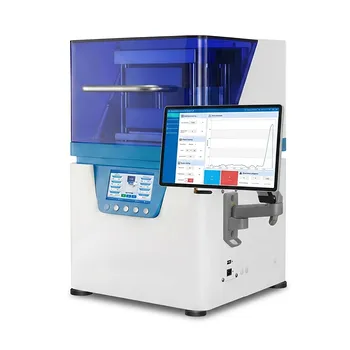
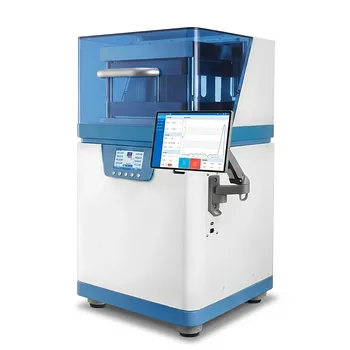
The laboratory hydraulic press is a critical tool for ensuring high-quality electrical contact and structural integrity in electrode preparation. Its primary applications include the uniform compression of active materials onto conductive substrates, the formation of dense catalyst pellets for bulk analysis, and the precise control of electrode thickness. By providing consistent, high-magnitude pressure, the press transforms loose powders into robust, conductive components suitable for rigorous electrochemical testing.
The core value of a laboratory hydraulic press lies in its ability to eliminate internal voids and minimize interfacial resistance. This ensures that the resulting electrochemical data reflects the intrinsic properties of the material rather than artifacts caused by poor mechanical contact or structural instability.
Enhancing Electrical and Mechanical Performance
Reducing Interfacial and Contact Resistance
The primary application of the press is to force active materials and conductive additives, such as carbon black, into intimate contact with the current collector. This process establishes excellent Ohmic contact, which is essential for reducing the voltage drops that occur at high current densities.
By applying precise pressure (often reaching several tons or specific values like 6 MPa), the press minimizes the resistance between individual particles and the substrate. This ensures that an electrochemical workstation can accurately capture data like photocurrent responses and Mott-Schottky band potentials without interference from contact issues.
Improving Mechanical Adhesion and Stability
High-pressure physical molding ensures that the catalyst layer is securely bonded to substrates like nickel foil, steel mesh, or metal foams. This mechanical adhesion is vital for maintaining the structural integrity of the electrode during aggressive testing conditions.
Without this compaction, active materials may peel off during electrolyte flushing or the volume changes associated with repeated charge-discharge cycles. The press effectively "locks" the composite material together, ensuring the electrode remains stable throughout the experiment.
Precision Control and Material Characterization
Achieving Uniform Electrode Thickness
A hydraulic press allows researchers to exert constant pressure to reach a specific, targeted electrode thickness, such as 30 μm. Maintaining a uniform thickness is critical for ensuring even current distribution across the entire surface of the electrode.
Uniformity prevents localized overpotential and ensures that the measured capacitance and rate performance are representative of the whole material. This precision is particularly important when comparing different catalyst formulations under standardized conditions.
Pellet Fabrication for Bulk Property Analysis
Beyond coating substrates, hydraulic presses are used in conjunction with stainless steel molds to compress catalyst powders into dense pellets. This is a standard procedure for measuring the bulk resistivity of a newly synthesized material.
These dense pellets are also necessary for X-ray diffraction (XRD) analysis at specific angles. This allows researchers to obtain experimental data that reflects the overall physical and crystalline properties of the material in a solid, manageable form.
Understanding the Trade-offs
The Balance of Porosity and Conductivity
While high pressure improves electrical conductivity, it can also lead to the compaction of pore structures. In materials like microporous carbon, excessive pressure may collapse the pores, reducing the accessible surface area for the electrolyte and hindering ion transport.
Structural Deformation Risks
Applying extreme pressure can occasionally damage the underlying current collector or the active material's morphology. Researchers must calibrate the pressure to be high enough for mechanical stability but low enough to avoid crushing the internal structure of sensitive catalysts.
How to Apply This to Your Project
Making the Right Choice for Your Goal
To maximize the effectiveness of your laboratory hydraulic press, the applied pressure should be tailored to your specific characterization needs:
- If your primary focus is High-Current Stability: Use the press to apply high, consistent pressure to ensure maximum adhesion between the catalyst and the metal substrate to prevent delamination.
- If your primary focus is Kinetic Studies (OER/HER): Focus on achieving the best Ohmic contact to minimize interfacial resistance, ensuring that the overpotential measured is due to the catalyst's chemistry, not poor contact.
- If your primary focus is Material Property Screening: Utilize stainless steel molds to create uniform pellets for bulk resistivity and XRD analysis to establish a baseline of the material's physical traits.
By precisely controlling the mechanical interface of the electrode, the laboratory hydraulic press serves as the bridge between raw material synthesis and accurate electrochemical characterization.
Summary Table:
| Application | Key Benefit | Impact on Characterization |
|---|---|---|
| Active Material Compaction | Reduces Interfacial Resistance | Ensures accurate Ohmic contact & photocurrent response |
| Substrate Bonding | Improves Mechanical Adhesion | Prevents material peeling during electrolyte flushing |
| Thickness Control | Ensures Uniform Coating | Guarantees even current distribution & consistent data |
| Pellet Fabrication | Creates Dense Catalyst Pellets | Enables bulk resistivity measurement & precise XRD analysis |
Achieve Unmatched Precision in Electrode Preparation with KINTEK
Reliable electrochemical data starts with the structural integrity of your samples. KINTEK provides a comprehensive range of high-performance laboratory hydraulic presses, including manual, electric, and isostatic models, along with precision pellet dies and crushing systems. Our equipment is engineered to help you achieve optimal Ohmic contact, uniform electrode thickness, and superior mechanical stability for battery research and catalytic studies.
From high-temperature furnaces and vacuum systems to essential consumables like PTFE products and ceramics, KINTEK is your partner in advanced material characterization. Maximize your lab’s efficiency and ensure reproducible results—contact our experts today to find the right solution for your project!
References
- Mengyao Li, Jiabao Yi. Thermostable 1T‐MoS<sub>2</sub> Nanosheets Achieved by Spontaneous Intercalation of Cu Single Atoms at Room Temperature and Their Enhanced HER Performance. DOI: 10.1002/sstr.202300010
This article is also based on technical information from Kintek Solution Knowledge Base .
Related Products
- Laboratory Hydraulic Press Split Electric Lab Pellet Press
- Laboratory Hydraulic Press Lab Pellet Press Machine for Glove Box
- Laboratory Hydraulic Press Lab Pellet Press for Button Battery
- Automatic Laboratory Hydraulic Pellet Press Machine for Lab Use
- Fully Automatic Heated Hydraulic Lab Press for Materials Sintering and Sample Preparation
People Also Ask
- What role does a laboratory hydraulic press play in platinum recovery research? Enhancing Sample Precision
- What are the specific applications of a lab hydraulic press in biochar evaluation? Optimize density and data accuracy.
- What are the roles of a laboratory hydraulic press and stainless steel molds in the preparation of graphite samples?
- What is the role of a laboratory hydraulic press in electrode prep? Maximize Energy Density & Sealing Precision
- Why must a laboratory hydraulic press equipped with cylindrical molds be used when preparing BZY green bodies? High Density