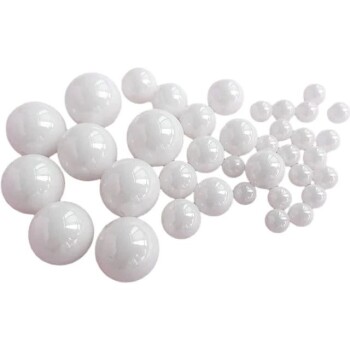
Zirconia (ZrO2) grinding media provides a critical combination of extreme hardness and chemical inertness. Utilizing zirconia jars and balls is the industry standard for processing sulfide-based solid electrolytes because it effectively eliminates the risk of metallic contamination—specifically iron—while enabling the high-energy impact required for synthesis. This ensures the final material retains the high purity and electrochemical stability necessary for solid-state battery performance.
Core Takeaway The primary value of zirconia lies in its ability to facilitate intense mechanochemical reactions without reacting with or contaminating the sample. By using zirconia, you ensure that the ionic conductivity and chemical stability of sensitive sulfide electrolytes are not compromised by metallic impurities or environmental exposure.
Ensuring Chemical Purity and Stability
Preventing Metallic Contamination
The most significant risk in milling sulfide electrolytes is the introduction of metallic impurities, particularly iron from stainless steel media.
Zirconia is chemically inert, meaning it does not shed reactive metallic particles into the mixture. This preserves the strict purity required for high-performance solid-state battery materials.
Inertness Toward Reactive Precursors
Sulfide precursors are highly active chemically.
Unlike other grinding media, zirconia does not react with these sensitive precursors during the milling process. This prevents unwanted side reactions that could alter the chemical composition and degrade the performance of the synthesized electrolyte.
Maximizing Milling Efficiency
Withstanding High-Energy Impacts
Mechanochemical synthesis requires intense mechanical energy to drive reactions.
Zirconia possesses exceptional hardness, allowing it to withstand these high-energy collisions without fracturing. This durability ensures efficient transfer of mechanical energy to the powder, accelerating the reaction process.
Superior Wear Resistance
Long milling durations can degrade softer grinding media.
Zirconia’s superior wear resistance allows for prolonged high-energy ball milling with minimal media degradation. This durability reduces the volume of foreign debris introduced into the sample over time.
Environmental Control for Sensitive Materials
Maintaining an Inert Atmosphere
Sulfide electrolytes are moisture-sensitive and prone to hydrolysis and oxidation.
High-quality zirconia jars are designed to be hermetically sealed to maintain an inert argon gas environment. This sealing capability is essential for preventing atmospheric moisture from reaching the electrolytes and causing degradation.
Common Pitfalls to Avoid
The Risk of Seal Failure
While zirconia material is chemically stable, the effectiveness of the process relies heavily on the quality of the jar's seal.
If the seal on a zirconia jar is compromised, the inert atmosphere is lost. Even with the correct grinding media, the intrusion of moisture or oxygen will cause rapid hydrolysis of the sulfide material, rendering the batch unusable.
Overlooking Media Quality
Not all zirconia is manufactured to the same standard of density and finish.
Using lower-grade zirconia can lead to microscopic wear, which, while not metallic, still introduces particulate contamination. It is vital to ensure the media is high-density and specifically rated for high-energy milling applications to maintain the "zero-contamination" baseline.
Making the Right Choice for Your Goal
When setting up your milling protocol, align your equipment choice with your specific performance metrics:
- If your primary focus is Ionic Conductivity: Prioritize zirconia to eliminate metallic impurities that impede ion flow and degrade electrochemical performance.
- If your primary focus is Process Consistency: Rely on the wear resistance of zirconia to ensure identical energy transfer and particle size distribution across multiple long-duration runs.
- If your primary focus is Material Stability: Ensure your zirconia jars feature high-quality sealing mechanisms to prevent hydrolysis during the milling of moisture-sensitive sulfides.
By selecting zirconia, you secure the structural and chemical integrity required to move from raw precursors to a viable solid-state electrolyte.
Summary Table:
| Feature | Benefit for Sulfide Electrolytes | Impact on Performance |
|---|---|---|
| Extreme Hardness | Withstands high-energy impacts without fracturing | Efficient mechanochemical synthesis |
| Chemical Inertness | Prevents reactions with sensitive precursors | High purity and material stability |
| Wear Resistance | Minimizes particulate shedding during long runs | Consistent particle size distribution |
| Non-Metallic | Eliminates iron/metal contamination | Optimized ionic conductivity |
| Hermetic Sealing | Maintains inert atmosphere (Argon) | Prevents moisture-induced hydrolysis |
Elevate your solid-state battery research with KINTEK’s high-density zirconia grinding solutions. Our specialized crushing and milling systems, alongside precision-engineered zirconia jars and balls, are designed to ensure the zero-contamination environment required for high-performance sulfide electrolytes. From high-temperature furnaces to advanced battery research tools, KINTEK provides the end-to-end laboratory equipment needed to secure your material's chemical integrity. Contact KINTEK today to find the perfect milling setup for your sensitive cathode materials and electrolytes.
Related Products
- Laboratory Jar Ball Mill with Alumina Zirconia Grinding Jar and Balls
- Precision Machined Zirconia Ceramic Ball for Engineering Advanced Fine Ceramics
- Laboratory Jar Mill with Agate Grinding Jar and Balls
- Laboratory Ball Mill Jar Mill with Metal Alloy Grinding Jar and Balls
- Nature Agate Mortar and Pestle for Grinding and Mixing
People Also Ask
- What are the primary functions of using a ball mill for BZCY72 powder? Achieve High Purity and Enhanced Sintering
- In what way does a laboratory ball mill affect material properties when modifying PHBV/pulp fiber composites?
- Why is a laboratory ball mill required for ultra-fine fly ash? Unlock Nano-Scale Adsorption Power
- What is the function of a laboratory ball mill in the preparation of AMMCs? Optimize Dispersion & Grain Refinement
- What is the function of a laboratory ball mill in the pretreatment of waste tire char (WTC)? Optimize Material Reactivity