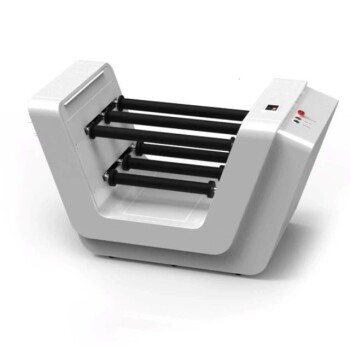
The critical operational consideration when using mixing and grinding equipment is finding the precise balance between achieving uniform dispersion and preserving material integrity. You must apply enough shear force to create a homogenous conductive network between the cathode, solid electrolyte, and conductive agents without generating excessive energy that causes mechanochemical decomposition or structural damage.
The success of composite cathode preparation relies on a "Goldilocks" zone of energy input. While sufficient shear is required to establish ion-conducting pathways, exceeding the energy threshold will degrade sensitive solid electrolytes—particularly sulfide and halide types—rendering the battery ineffective.
The Core Objective: Homogeneity and Contact
Establishing the Network
The primary goal of using equipment like ball mills, agate mortars, or twin-shaft mixers is to create an intimate mixture. You are trying to integrate cathode particles, solid electrolytes, and conductive agents into a single cohesive unit.
The Role of Shear Force
To achieve this integration, the equipment must generate significant shear force. For example, high-speed rotation (such as 2000 rpm in a twin-shaft ball mixer) is often employed to efficiently disperse active materials.
Ensuring Uniform Distribution
Whether you are processing a dry powder or a slurry with solvents like NMP, homogeneity is vital. Uniform distribution ensures that the electrolyte creates a continuous ion-conducting network throughout the cathode composite.
Managing Energy Input and Material Sensitivity
The Risk of Over-Processing
While high energy helps with mixing, it poses a severe risk to solid-state battery components. Equipment capable of high impact, such as standard ball mills, can easily input too much energy into the system.
Vulnerability of Solid Electrolytes
Solid electrolytes, specifically sulfide and halide types, are mechanically and chemically sensitive. They do not possess the same structural resilience as traditional active materials like LiFePO4.
Mechanochemical Decomposition
If the grinding energy is too high, it leads to mechanochemical decomposition. This is not just physical breakage; it is a chemical degradation driven by mechanical force, which destroys the electrolyte's ability to conduct ions.
Understanding the Trade-offs
Dispersion Efficiency vs. Structural Integrity
High-speed mixers (e.g., twin-shaft ball mixers) excel at dispersing complex mixtures like LiFePO4, binders, and lithiated Copper Maleate Hydrate (Li-CuMH). However, this high efficiency can be destructive if applied indiscriminately to more fragile electrolyte chemistries.
Contact vs. Damage
You need tight contact between particles to facilitate ion transfer. However, forcing this contact through excessive grinding can crush the electrolyte structure, negating the benefits of the improved contact.
Making the Right Choice for Your Goal
To optimize your mixing process, align your equipment settings with the specific chemical stability of your materials.
- If your primary focus is robust, slurry-based composites: Utilize high-shear equipment like twin-shaft mixers (around 2000 rpm) to ensure maximum homogeneity of binders and active materials.
- If your primary focus is sensitive sulfide or halide electrolytes: Prioritize lower-energy methods or gentler settings on ball mills to prevent mechanochemical decomposition while still achieving dispersion.
Ultimately, the quality of your solid-state battery depends not just on the materials you choose, but on the precision with which you preserve their structure during the mixing process.
Summary Table:
| Operational Factor | Goal/Benefit | Risk of Excessive Energy |
|---|---|---|
| Shear Force | Creates homogenous conductive networks | Mechanochemical decomposition of electrolytes |
| Energy Input | Establishes intimate particle contact | Structural damage to sensitive sulfide/halide types |
| Mixing Speed | Efficient dispersion of active materials | Loss of ionic conductivity due to material degradation |
| Homogeneity | Ensures continuous ion-conducting pathways | Ineffective battery performance if structural integrity is lost |
Elevate Your Solid-State Battery Research with KINTEK
Precision in material processing is the difference between a high-performance cell and a failed experiment. KINTEK specializes in advanced laboratory equipment designed to help you hit the "Goldilocks" zone of energy input.
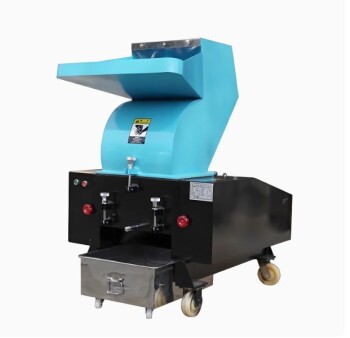
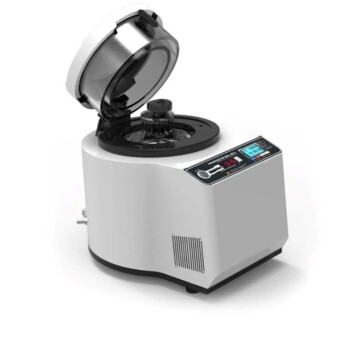
Whether you are working with robust slurry-based composites or sensitive sulfide and halide electrolytes, our range of crushing and milling systems, high-speed mixers, and planetary ball mills provides the exact control you need to ensure homogeneity without compromising material integrity.
Our comprehensive portfolio also includes:
- Sieving equipment and hydraulic presses for precise powder preparation.
- High-temperature furnaces (Muffle, Tube, Vacuum) for material synthesis.
- Electrolytic cells and battery research tools to test your innovations.
Don't let over-processing stall your progress. Contact KINTEK today to discover how our specialized equipment and expertise can optimize your cathode preparation and drive your solid-state battery breakthroughs.
Related Products
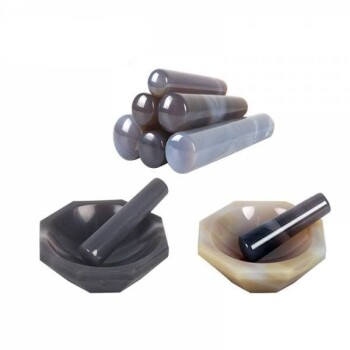
- Nature Agate Mortar and Pestle for Grinding and Mixing
- Three-dimensional electromagnetic sieving instrument
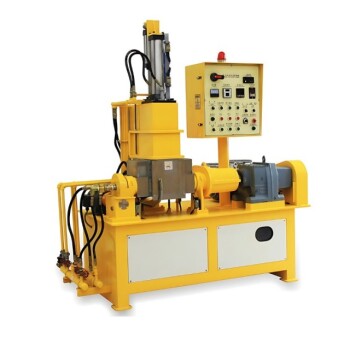
- Lab Internal Rubber Mixer Rubber Kneader Machine for Mixing and Kneading
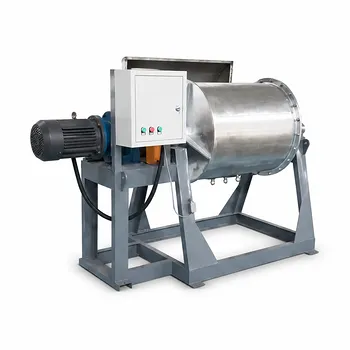
- Stainless Steel Laboratory Ball Mill for Dry Powder and Liquid with Ceramic Polyurethane Lining
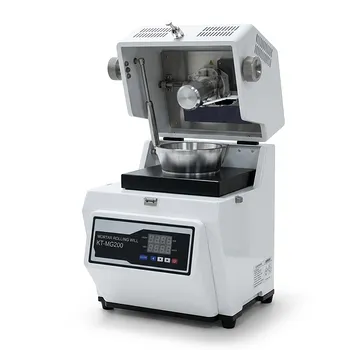
- Laboratory Grinding Mill Mortar Grinder for Sample Preparation
People Also Ask
- Why are agate mortars and pestles used for grinding iron oxide? Ensure Sample Purity for XRD Analysis
- What is the function of an agate mortar and pestle? Ensure Purity in Halide Solid-State Electrolyte Synthesis
- What is the primary function of an agate mortar and pestle? Optimize VO2+ CaZn2(PO4)2 Nanopowder Pre-Treatment
- Why is an agate mortar and pestle required for grinding Zr3(Al1-xSix)C2? Ensure Maximum Sample Purity
- Why is an agate mortar and pestle preferred for grinding MAX phase? Ensure Sample Purity & Zero Contamination