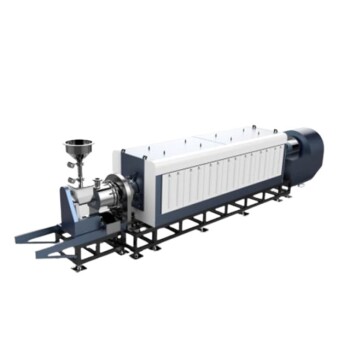
To ensure the integrity of calcium thermal reduction processes, the industrial reactor must be constructed from materials capable of enduring extreme thermal and chemical stress. Specifically, the vessel requires heat-resistant chromium-nickel steel that offers high thermal strength and corrosion resistance to withstand operating temperatures up to 1200°C and aggressive reducing agent vapors.
Core Takeaway The viability of the reduction process hinges on the reactor's ability to maintain a chemically inert, sealed environment under extreme heat. The material choice is not just about structural survival; it is about guaranteeing absolute gas-tightness to preserve the protective argon atmosphere essential for the reaction.
Surviving the Thermal Environment
High Thermal Strength
The primary challenge for the reactor is structural stability. The material selected must possess high thermal strength, ensuring it retains its load-bearing capacity and shape without deformation.
The 1200°C Threshold
The reactor must operate reliably at temperatures reaching 1200°C. Standard metals will soften or fail at these levels, necessitating the use of specialized alloys engineered for high-temperature service.
Resisting Chemical Attack
Corrosion Resistance
Inside the reactor, the environment is chemically aggressive. The construction material must withstand the corrosive effects of reducing agent vapors generated during the process.
Chromium-Nickel Steel
To combat these corrosive elements, heat-resistant chromium-nickel steel is the referenced standard. This alloy composition provides the necessary surface stability to prevent degradation from chemical exposure at high heat.
Maintaining Process Integrity
Absolute Gas-Tightness
Beyond strength and chemical resistance, the reactor must be constructed to ensure high gas-tightness. Even minor leaks can compromise the entire reduction process.
The Argon Atmosphere
The purpose of this gas-tightness is to preserve a protective argon atmosphere. This inert environment is critical for ensuring the reduction reaction occurs under controlled physicochemical conditions, preventing oxidation or contamination.
Critical Considerations and Pitfalls
The Complexity of Simultaneous Requirements
A common engineering pitfall is selecting a material that excels in one area but fails in another. A material might withstand 1200°C but fail to maintain a gas-tight seal due to thermal expansion issues.
The Risk of Atmosphere Breach
If the material cannot maintain gas-tightness under thermal stress, the argon atmosphere will be lost. This results in an uncontrolled reaction environment, rendering the process inefficient or dangerous.
Making the Right Choice for Your Goal
To ensure successful calcium thermal reduction, prioritize materials based on these operational targets:
- If your primary focus is Equipment Longevity: Prioritize high-grade chromium-nickel steel to maximize resistance against corrosion from reducing agent vapors.
- If your primary focus is Process Purity: Ensure the fabrication method and material choice guarantee absolute gas-tightness to maintain the integrity of the argon atmosphere.
The ultimate success of the reactor depends on a material that refuses to compromise on either thermal strength or hermetic sealing.
Summary Table:
| Requirement | Technical Specification | Importance for Process |
|---|---|---|
| Material Base | High-grade Chromium-Nickel Steel | Provides high thermal strength and chemical stability. |
| Temperature Rating | Up to 1200°C | Prevents structural deformation or softening during reduction. |
| Corrosion Resistance | Resistant to reducing agent vapors | Protects the reactor vessel from aggressive chemical degradation. |
| Atmosphere Control | Absolute Gas-Tightness | Preserves the protective argon atmosphere for reaction purity. |
Optimize Your Thermal Processes with KINTEK Materials
Precision in calcium thermal reduction requires equipment that never compromises on integrity. At KINTEK, we specialize in high-performance laboratory and industrial solutions, including high-temperature high-pressure reactors and autoclaves designed to withstand the most demanding 1200°C environments. Whether you need specialized high-temperature furnaces, PTFE products, or custom ceramic crucibles, our engineering team is ready to support your research and production goals.
Ensure absolute gas-tightness and longevity for your operations—Contact KINTEK Today to find the perfect reactor solution.
References
- А. В. Касимцев, Yu. V. Levinsky. Calciothermic powders of rare metals and intermetallic compounds. DOI: 10.17580/nfm.2020.02.05
This article is also based on technical information from Kintek Solution Knowledge Base .
Related Products
- Electric Rotary Kiln Small Rotary Furnace Biomass Pyrolysis Plant
- Customizable Laboratory High Temperature High Pressure Reactors for Diverse Scientific Applications
- Mini SS High Pressure Autoclave Reactor for Laboratory Use
- Laboratory Rapid Thermal Processing (RTP) Quartz Tube Furnace
People Also Ask
- What is the temperature of a rotating kiln? It Depends on Your Material and Process Goal
- What are the different types of calciners? A Guide to Selecting the Right Thermal Processing Equipment
- What are the principles of a rotary kiln? Master the Mechanics of High-Temperature Processing
- How are rotary kilns heated? Direct vs. Indirect Heating Methods Explained
- Is rotary kiln a furnace? Discover the Key Differences for Industrial Processing