Stable and uniform shear force is the primary requirement for stirring equipment used in solvent-free catalytic reduction. Because the viscosity of vegetable oils (such as castor or sesame) changes drastically during the reduction process, the agitator must be capable of maintaining consistent contact between the high-viscosity oil, the silane reducing agent, and the trace Rh(III) catalyst to prevent dead zones.
Success in this process is defined by overcoming mass transfer limitations in a thickening medium. The equipment must prevent localized over-reaction and ensure the trace catalyst is fully distributed to achieve yields exceeding 90 percent.
The Challenge of Dynamic Viscosity
Adapting to Rheological Shifts
In a solvent-free system, you do not have the luxury of a solvent to normalize the texture of the reaction mixture. As the vegetable oil is reduced, the physical properties of the fluid transform significantly.
Requirement for Constant Torque
The stirring equipment must be robust enough to handle these shifts without stalling or varying in speed. It must provide consistent power to move the fluid effectively, regardless of how thick the oil becomes during the reaction.
Optimizing Catalyst Distribution
Managing Trace Ingredients
The Rh(III) catalyst is typically used at a very low concentration of 0.5 mol percent. Distributing such a small amount of material evenly throughout a high-viscosity vegetable oil is mechanically difficult.
Integrating the Silane Reducing Agent
Simultaneously, the equipment must mix the silane reducing agent into the oil. The shear force must be uniform to bring all three components—oil, silane, and catalyst—into full contact.
Common Pitfalls and Operational Risks
The Danger of Dead Zones
Standard stirring often leaves "dead zones" near the walls or baffles of the vessel where fluid remains stagnant. In high-viscosity reduction, this results in unreacted material, making it impossible to reach the target yield of 90 percent.
Localized Over-Reaction
If the shear force is not uniform, certain areas of the mixture may interact too aggressively while others lag behind. This localized over-reaction creates inconsistencies in the final product and degrades the overall quality of the reduction.
Making the Right Choice for Your Goal
To ensure a successful solvent-free reduction, align your equipment selection with your specific processing targets:
- If your primary focus is Maximizing Yield (>90%): Prioritize impeller designs that guarantee full volumetric turnover to eliminate all unreacted dead zones.
- If your primary focus is Catalyst Efficiency: Select equipment capable of generating high, uniform shear to fully disperse the 0.5 mol percent Rh(III) within the viscous oil.
The correct stirring mechanism transforms a difficult, high-viscosity sludge into a highly efficient chemical reactor.
Summary Table:
| Key Challenge | Equipment Requirement | Impact on Process |
|---|---|---|
| Dynamic Viscosity | Constant torque & robust power | Prevents stalling as oil thickens |
| Catalyst Distribution | Uniform high-shear force | Ensures 0.5 mol% Rh(III) contact |
| Mass Transfer | Full volumetric turnover | Eliminates dead zones and unreacted material |
| Reaction Consistency | Stable shear force | Prevents localized over-reaction and degradation |
Maximize Your Reaction Yield with KINTEK Precision Solutions
Overcoming mass transfer limitations in high-viscosity vegetable oil reduction requires more than just a basic stirrer—it demands equipment engineered for consistency and power. KINTEK specializes in advanced laboratory systems designed to handle the toughest rheological shifts. From high-pressure reactors and autoclaves to precision homogenizers and shakers, our solutions ensure uniform catalyst distribution and stable torque for your solvent-free processes.
Whether you are refining oils or conducting complex battery research, KINTEK provides the high-performance tools and consumables needed to exceed 90% yield. Contact our technical experts today to find the perfect stirring or reactor configuration for your specific application.
References
- Unai Prieto-Pascual, Miguel A. Huertos. Direct chemoselective reduction of plant oils using silane catalysed by Rh(<scp>iii</scp>) complexes at ambient temperature. DOI: 10.1039/d3su00481c
This article is also based on technical information from Kintek Solution Knowledge Base .
Related Products
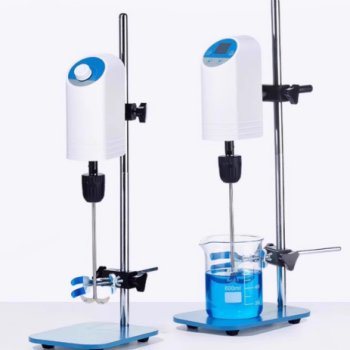
- High Performance Laboratory Stirrers for Diverse Applications
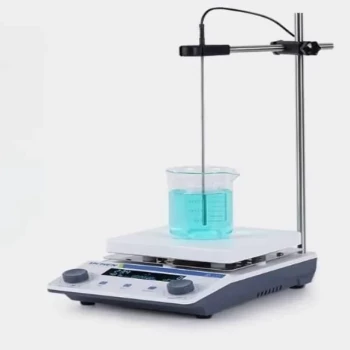
- Laboratory Small Constant Temperature Heated Magnetic Stirrer Heater and Stirrer
- Custom PTFE Teflon Parts Manufacturer for Magnetic Stirring Bar
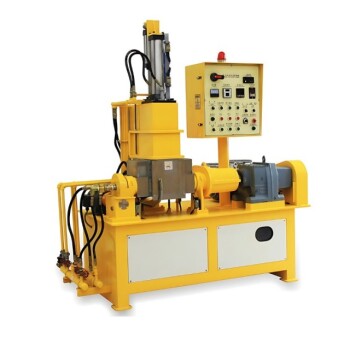
- Lab Internal Rubber Mixer Rubber Kneader Machine for Mixing and Kneading
- Laboratory Four-Body Horizontal Jar Mill
People Also Ask
- How does a laboratory stirrer influence MOF product quality? Master Precision in Non-Solvothermal Synthesis
- What critical role does a Laboratory Stirrer play during leaching? Enhance Titanium-Magnesium Waste Recovery
- What is the primary function of laboratory stirring equipment in the preparation of compost leachate? Optimize Extraction
- What is a laboratory mixer? A Guide to Achieving Perfect Sample Homogeneity
- What is a laboratory mixer used for? Choose the Right Tool for Liquids or Solids