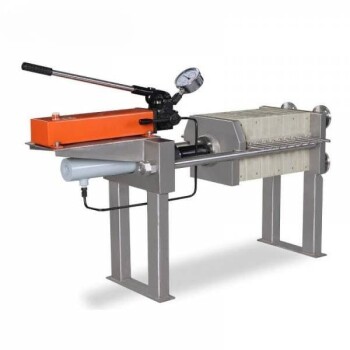
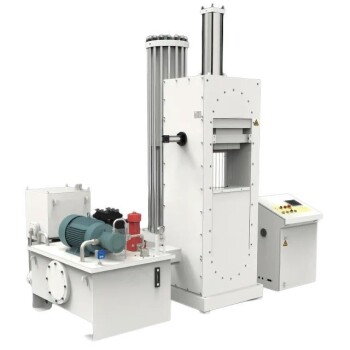
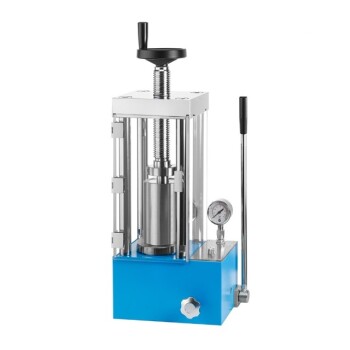
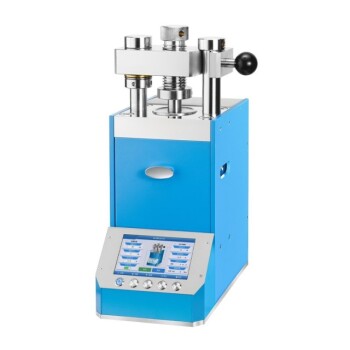
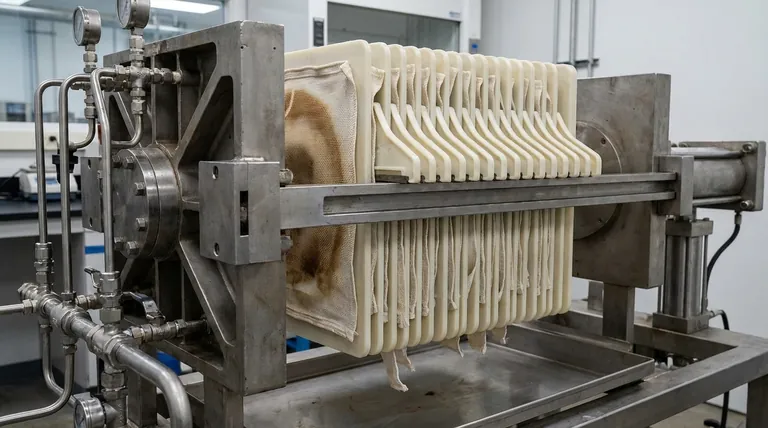
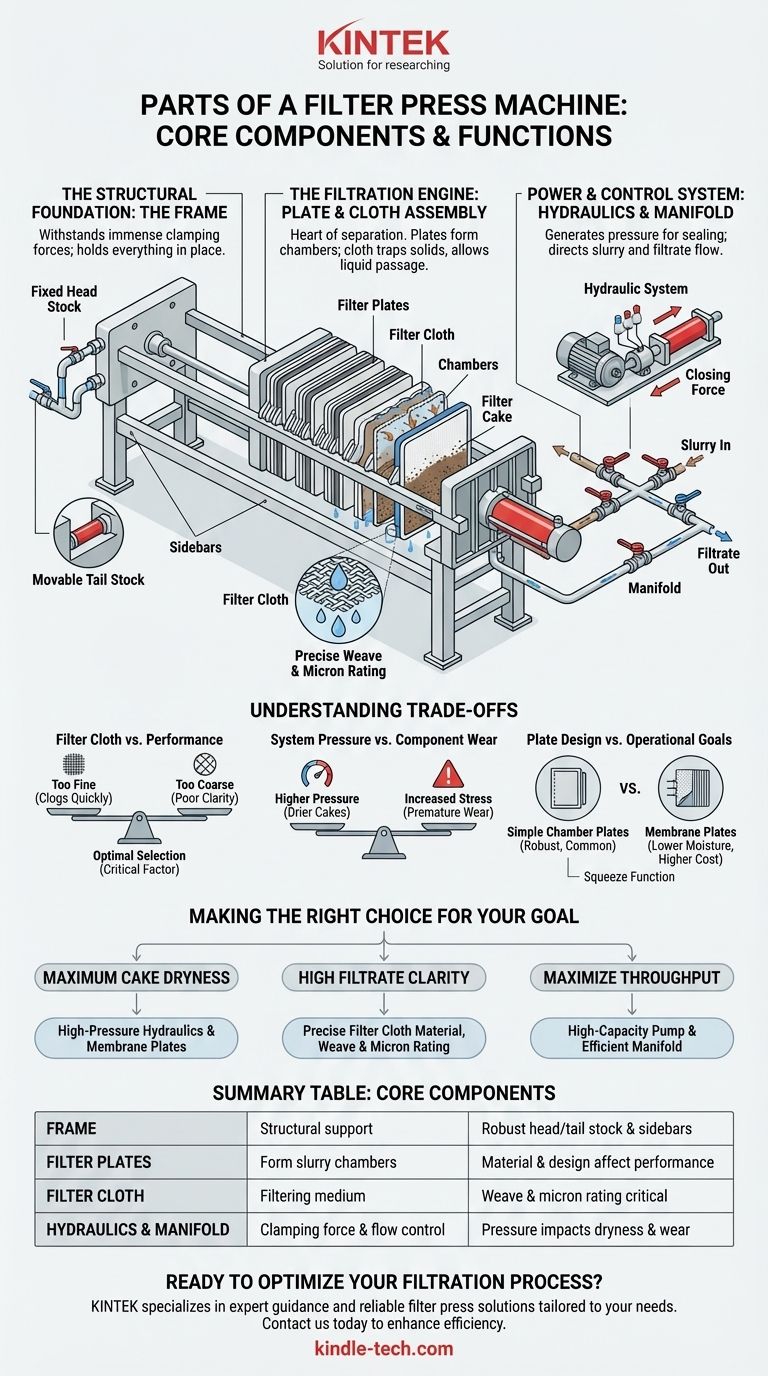
At its core, a filter press machine consists of four primary components: the frame, the filter plates, the manifold, and the filter cloth. These structural and filtering elements are activated by a power system, typically hydraulic, which generates the immense pressure required for effective solid-liquid separation.
A filter press is fundamentally a straightforward mechanical system. It uses a robust frame and immense hydraulic pressure to compress a stack of cloth-covered plates, physically squeezing liquid out of a slurry and leaving solid "cakes" behind. Understanding each component's role is key to optimizing its performance.
The Structural Foundation: The Frame
The frame is the skeleton of the machine, engineered to withstand the massive clamping forces generated during a press cycle. Its sole purpose is to hold everything in place under extreme pressure without flexing or failing.
The Head and Tail Stock
The frame consists of a fixed head stock and a movable tail stock. The head stock is stationary and contains the piping connections for the slurry and filtrate, while the tail stock houses the hydraulic cylinder that provides the closing force.
The Sidebars
Two heavy-duty sidebars connect the head and tail stock. These bars not only provide the structural integrity of the frame but also serve as the rails on which the filter plates hang and slide.
The Filtration Engine: The Plate and Cloth Assembly
This is the heart of the filter press where the actual separation occurs. The combination of plates and cloth creates a series of chambers that contain the slurry and filter the liquid.
The Filter Plates
Filter plates are the core components that form the filter pack. When pressed together, their surfaces create hollow chambers that are filled with the slurry. They are typically made of durable materials like polypropylene.
The Filter Cloth
The filter cloth is the true filtering medium. Each plate is dressed with a sheet of this specially woven fabric. The cloth's weave and material are precisely chosen for a specific application to allow liquid (filtrate) to pass through while retaining the solid particles.
How They Work Together
Slurry is pumped into the chambers between the cloth-covered plates. The hydraulic system clamps the plates together, and the pressure forces the liquid through the filter cloth. The solids are trapped on the cloth's surface, gradually building up to form a dense "filter cake."
The Power and Control System: Hydraulics and Manifold
This system provides the force and the flow control needed to operate the machine efficiently. It dictates how quickly the press can be filled, how much pressure is applied, and how the resulting liquid is discharged.
The Hydraulic System
The hydraulic system is the machine's power source. It consists of an electric motor, a hydraulic pump, a cylinder, and controls. This system is responsible for opening and, more importantly, closing the press with enough force to seal the plates and dewater the slurry.
The Manifold
The manifold is the integrated network of piping and valves. It directs the flow of slurry into the press and channels the clean filtrate out. A well-designed manifold ensures all chambers fill evenly and efficiently.
Understanding the Trade-offs
Choosing and maintaining these components involves balancing competing operational goals. An incorrect choice in one area will negatively impact the entire system's performance.
Filter Cloth vs. Performance
The selection of the filter cloth is the single most critical factor for optimizing performance. A cloth that is too fine can "blind" or clog quickly, while a cloth that is too coarse will allow solids to pass through, resulting in poor filtrate clarity.
System Pressure vs. Component Wear
Higher hydraulic pressure results in drier filter cakes, which is often desirable. However, operating at maximum pressure increases stress on the frame, plates, and cloth, potentially leading to premature wear and higher maintenance costs.
Plate Design vs. Operational Goals
Simple chamber plates are robust and common, but specialized membrane plates offer a secondary "squeeze" function. These inflatable plates can achieve significantly lower moisture content in the final cake but add complexity and cost to the system.
Making the Right Choice for Your Goal
The ideal configuration of a filter press depends entirely on your primary objective.
- If your primary focus is achieving maximum cake dryness: Prioritize a high-pressure hydraulic system and consider investing in membrane filter plates.
- If your primary focus is ensuring high filtrate clarity: Your most critical decision will be the precise material, weave, and micron rating of your filter cloth.
- If your primary focus is maximizing throughput and processing speed: Focus on a high-capacity pump and an efficiently designed manifold for rapid fill and discharge cycles.
Understanding how these core components interact empowers you to operate, troubleshoot, and optimize your filtration process effectively.
Summary Table:
| Component | Primary Function | Key Considerations |
|---|---|---|
| Frame | Provides structural support to withstand high pressure. | Includes head/tail stock and sidebars; must be robust. |
| Filter Plates | Form hollow chambers that hold the slurry for filtration. | Material (e.g., polypropylene) and design (e.g., membrane plates) affect performance. |
| Filter Cloth | The actual filtering medium that separates solids from liquid. | Weave and micron rating are critical for clarity and preventing clogging. |
| Hydraulic System & Manifold | Generates clamping force and controls slurry/filtrate flow. | Pressure settings impact cake dryness and component wear. |
Ready to optimize your filtration process? The right configuration of these components is key to achieving your goals for cake dryness, filtrate clarity, and throughput. KINTEK specializes in lab equipment and consumables, offering expert guidance and reliable filter press solutions tailored to your laboratory's specific needs. Contact us today to discuss how we can enhance your solid-liquid separation efficiency!
Visual Guide
Related Products
- Hydraulic Diaphragm Lab Filter Press for Laboratory Filtration
- Laboratory Hydraulic Pellet Press for XRF KBR FTIR Lab Applications
- Laboratory Hydraulic Press Split Electric Lab Pellet Press
- Cold Isostatic Pressing Machine CIP for Small Workpiece Production 400Mpa
- Manual Cold Isostatic Pressing Machine CIP Pellet Press
People Also Ask
- What is the purpose of a laboratory hydraulic press in biomass gasification? Ensure Sample Consistency & Performance
- What are the types of filter press in chemical industry? Choose the Right One for Your Process
- What is an example of a hydraulic press? Discover the Power of Laboratory Sample Preparation
- What is the significance of using a laboratory hydraulic press or pelletizer when processing torrefied biomass?
- What are the safety precautions for filter press? Essential Steps to Prevent High-Pressure Hazards