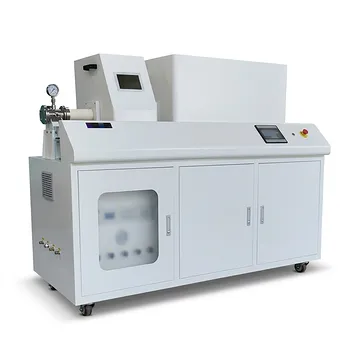
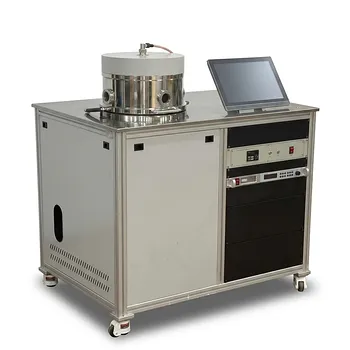
The primary advantages of a hot-walled viscous-flow tube reactor for TiO2 ALD stem from its ability to provide a highly stable thermal environment paired with controlled gas flow dynamics. This specific architecture ensures efficient precursor diffusion and saturated chemical adsorption, enabling the growth of high-fidelity thin films on complex, patterned substrates.
By maintaining a strict thermal window and optimizing gas transport, this reactor design overcomes the challenges of coating intricate geometries, ensuring uniform TiO2 deposition through complete surface saturation.
Optimizing the Reaction Environment
Thermal Stability
The "hot-walled" design ensures that the entire reaction chamber is maintained at a uniform temperature. This stable thermal environment prevents temperature gradients that could lead to uneven deposition or precursor condensation on the reactor walls.
Controlled Gas Flow Dynamics
The reactor utilizes viscous-flow dynamics to manage how gas moves through the tube. This control creates a predictable transport mechanism, ensuring that precursor gases are delivered consistently to the substrate surface.
The Critical Process Window
To maximize these advantages, the reactor operates within a specific process window of 120 °C to 270 °C. Operating within this range is essential for facilitating the correct chemical reactions for TiO2 growth.
Mechanisms of Film Growth
Efficient Diffusion
The reactor's design promotes the efficient and uniform diffusion of precursor gases. This ensures that the reactant molecules can penetrate deep into features rather than just coating the top surface.
Saturated Chemical Adsorption
The system is engineered to achieve saturated chemical adsorption. This ensures that precursors relevant to TiO2, such as TDMAT and TiCl4, fully react with the surface sites during each cycle, which is fundamental to the self-limiting nature of ALD.
Handling Complex Geometries
The combination of thermal stability and efficient diffusion allows for high-fidelity thin film growth. This is particularly advantageous when working with patterned substrates or complex geometries that are difficult to coat using line-of-sight deposition methods.
Understanding the Operational Constraints
Adherence to Temperature Limits
While the reactor is highly effective, its performance is contingent on staying within the 120 °C to 270 °C range. Exceeding or falling below this window may disrupt the adsorption balance or diffusion efficiency required for high-quality TiO2 films.
Precursor Specificity
The system is optimized for specific precursors like TDMAT and TiCl4 (as well as WF6 for other applications). Success depends on using chemistries that are compatible with the reactor's thermal and flow characteristics.
Making the Right Choice for Your Goal
To determine if this reactor configuration aligns with your project requirements, consider your specific constraints:
- If your primary focus is coating intricate 3D structures: Rely on this reactor's viscous-flow dynamics to ensure precursors diffuse thoroughly into deep trenches and patterns.
- If your primary focus is film uniformity and quality: Leverage the hot-walled thermal stability to guarantee saturated adsorption across the entire substrate surface.
The hot-walled viscous-flow reactor is the definitive choice when your application demands absolute conformality on difficult geometries within a moderate temperature range.
Summary Table:
| Feature | Advantage for TiO2 ALD |
|---|---|
| Hot-Walled Design | Ensures uniform temperature & prevents precursor condensation |
| Viscous-Flow Dynamics | Predictable gas transport for consistent substrate delivery |
| Process Window | Optimal 120°C - 270°C range for high-quality film growth |
| Surface Adsorption | Enables saturated chemical adsorption for self-limiting growth |
| Substrate Capability | Superior coating of complex geometries and patterned substrates |
Elevate Your Thin Film Precision with KINTEK
Are you struggling with non-uniform coatings on complex 3D geometries? KINTEK specializes in advanced laboratory solutions, offering high-performance CVD and PECVD systems alongside our comprehensive range of high-temperature furnaces and vacuum reactors designed to meet the rigorous demands of TiO2 ALD research.
Our expertise in thermal stability and gas flow dynamics ensures you achieve the high-fidelity thin films your project requires. Whether you are working on battery research, semiconductor development, or material science, KINTEK provides the high-quality equipment and consumables—from ceramics to hydraulic presses—necessary for groundbreaking results.
Ready to optimize your deposition process? Contact our technical experts today to discover how our tailored solutions can enhance your lab's efficiency and film quality.
References
- Hannah R. M. Margavio, Gregory N. Parsons. Controlled Air Gap Formation between W and TiO <sub>2</sub> Films via Sub‐Surface TiO <sub>2</sub> Atomic Layer Etching. DOI: 10.1002/admt.202501155
This article is also based on technical information from Kintek Solution Knowledge Base .
Related Products
- Customer Made Versatile CVD Tube Furnace Chemical Vapor Deposition Chamber System Equipment
- Chemical Vapor Deposition CVD Equipment System Chamber Slide PECVD Tube Furnace with Liquid Gasifier PECVD Machine
- Customizable Laboratory High Temperature High Pressure Reactors for Diverse Scientific Applications
- Multi Heating Zones CVD Tube Furnace Machine Chemical Vapor Deposition Chamber System Equipment
- Customizable High Pressure Reactors for Advanced Scientific and Industrial Applications
People Also Ask
- What is a CVD tube furnace? A Complete Guide to Thin-Film Deposition
- What is the function of a high-temperature CVD tube furnace in 3D graphene foam prep? Master 3D Nanomaterial Growth
- What are the technical advantages of using a CVD tube furnace? Optimize Silicon-Carbon Battery Anodes
- How does a CVD tube furnace inhibit the sintering of silver supports? Boost Membrane Durability and Performance
- What is the function of a tube furnace in CVD SiC synthesis? Achieving Ultra-Pure Silicon Carbide Powders