Knowledge What are the safety considerations for titanium? From Biocompatible Metal to Fire Hazard
Author avatar

Tech Team · Kintek Solution

Updated 6 days ago

What are the safety considerations for titanium? From Biocompatible Metal to Fire Hazard


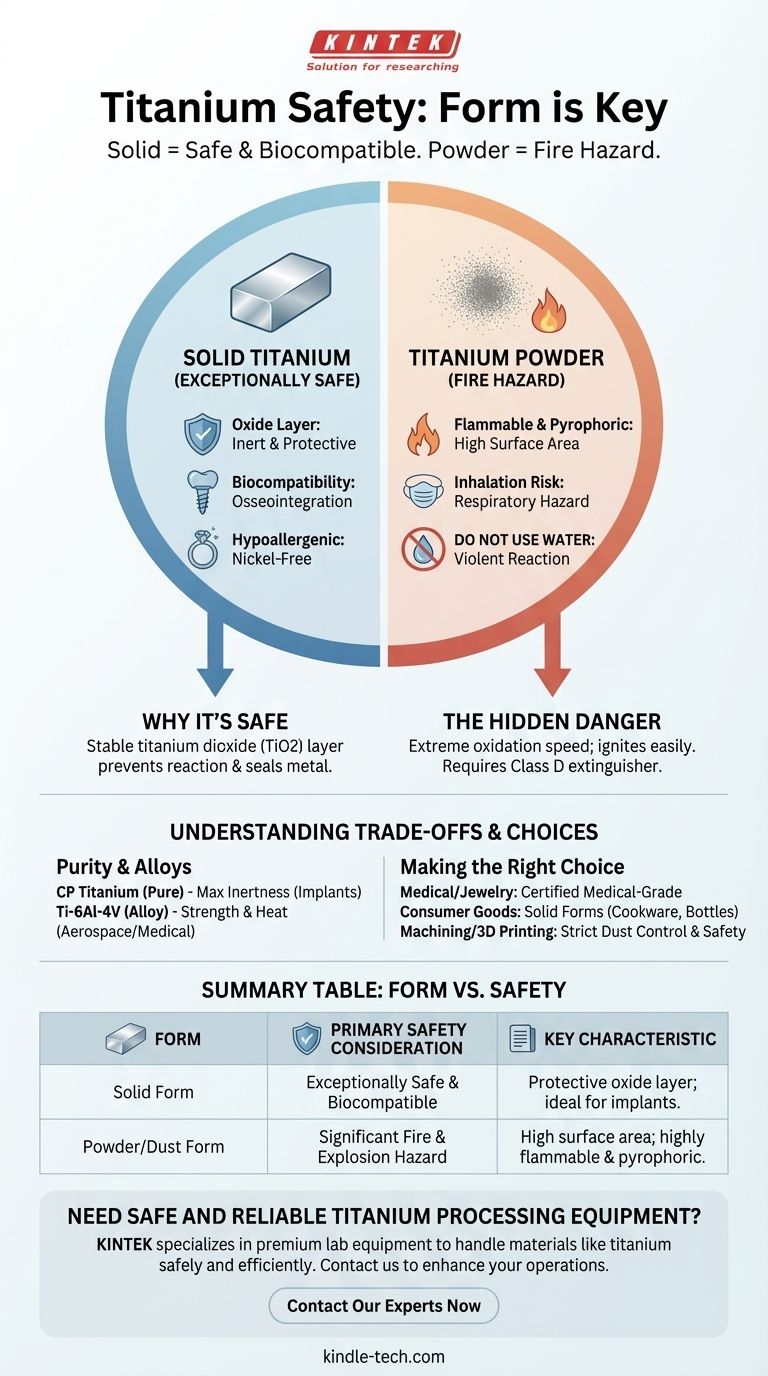
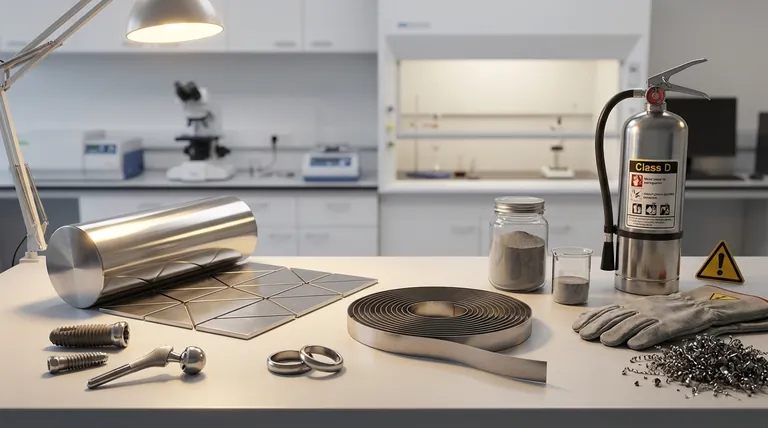
In its solid, finished form, titanium is one of the safest and most biocompatible metals available. It is prized for its inertness and resistance to corrosion, making it an ideal material for medical implants, jewelry, and consumer products. However, the safety profile of titanium changes dramatically when it is in a fine powder or dust form, where it becomes a significant fire hazard.

The safety of titanium is not absolute; it is entirely dependent on its physical form. While solid titanium is exceptionally inert and safe for everything from medical implants to consumer goods, titanium powder or dust is a significant and dangerous fire hazard.
What are the safety considerations for titanium? From Biocompatible Metal to Fire Hazard

Why Solid Titanium Is Exceptionally Safe

The excellent safety record of solid titanium is not an accident; it is a direct result of its fundamental chemical properties. When exposed to oxygen in the air or water, it instantly forms a thin, stable, and highly protective layer of oxide.

The Power of the Oxide Layer

This passive layer of titanium dioxide (TiO2) is the key to its safety. The layer is incredibly tenacious, self-healing, and chemically inert, meaning it does not react with its environment.

This oxide film effectively seals the pure titanium metal from the outside world, preventing it from leaching into the body or reacting with bodily fluids.

Superior Biocompatibility

Because of this inert oxide layer, the human body does not recognize solid titanium as a foreign object. This allows for osseointegration, where human bone can grow directly onto the surface of a titanium implant.

This property makes it the gold standard for dental implants, artificial joints, and plates or screws used to set broken bones.

Hypoallergenic Properties

Many metal allergies, particularly to nickel, are a common problem with jewelry and implants made from stainless steel or other alloys.

Commercially pure titanium is free from nickel and other common sensitizing agents, making it an excellent hypoallergenic choice for anyone with sensitive skin or metal allergies.

The Hidden Danger: Titanium in Powder or Dust Form

The safety equation flips entirely when dealing with fine titanium particles, such as dust from grinding or machining, or manufactured powder used in 3D printing. The same property that makes it stable—its high affinity for oxygen—makes its powder form dangerous.

Extreme Flammable & Pyrophoric Risk

A powder has an incredibly high surface-area-to-volume ratio. This massive surface area allows the titanium to oxidize (burn) with extreme speed and intensity if ignited.

Titanium dust is highly flammable and can be ignited by a simple spark, static discharge, or excessive heat. In certain conditions, fine titanium powder is pyrophoric, meaning it can spontaneously combust upon contact with air.

Inhalation and Handling Concerns

While solid titanium is non-toxic, inhaling any fine metallic dust is a respiratory hazard that can cause lung irritation. Workshop dust must be managed with proper ventilation and personal protective equipment (PPE).

Water should never be used to extinguish a titanium fire, as it can dissociate the water into hydrogen and oxygen, leading to a violent explosion. Only a Class D fire extinguisher is suitable.

Understanding the Trade-offs: Purity and Alloys

Not all titanium is created equal. The distinction between pure titanium and its alloys is an important safety and performance consideration.

Commercially Pure (CP) Titanium

Commercially Pure (CP) titanium is unalloyed and graded based on its allowable oxygen and iron content. Grade 1 and 2 are the most pure and ductile.

Because of its purity and proven biocompatibility, CP titanium is often the preferred choice for dental and surgical implants where maximum inertness is the primary goal.

Common Titanium Alloys

Alloys are created to enhance properties like strength and heat resistance. The most common is Ti-6Al-4V (Grade 5), which contains 6% aluminum and 4% vanadium.

This alloy is widely used in aerospace and is also certified for many medical applications. While there have been some historical scientific discussions about the long-term effects of vanadium, it is considered safe and stable within the alloy matrix for approved medical uses.

Making the Right Choice for Your Goal

Your application dictates which safety considerations are most relevant.

  • If your primary focus is medical implants or body-contact jewelry: Use only certified medical-grade titanium (CP Grade 2 or Ti-6Al-4V) from a reputable supplier to ensure purity and safety.
  • If your primary focus is consumer goods like cookware or water bottles: Solid titanium products are exceptionally safe, non-toxic, and present no chemical leaching concerns.
  • If your primary focus is machining, 3D printing, or processing titanium: The dominant risk is fire and explosion from dust. You must implement strict dust control, ventilation, grounding, and use Class D fire suppression systems.

By understanding that titanium's safety is defined by its form and application, you can leverage its remarkable properties with confidence and control.

Summary Table:

Form of Titanium Primary Safety Consideration Key Characteristic
Solid Form Exceptionally Safe & Biocompatible Protective oxide layer prevents reaction; ideal for implants and consumer goods.
Powder/Dust Form Significant Fire & Explosion Hazard High surface area makes it highly flammable and pyrophoric.

Need Safe and Reliable Titanium Processing Equipment?

Whether you are developing medical implants or manufacturing consumer goods, managing the risks associated with titanium is critical. KINTEK specializes in premium lab equipment and consumables, serving the precise needs of laboratories and production facilities.

We provide solutions that help you handle materials like titanium safely and efficiently. Contact us today to discuss how our equipment can enhance the safety and productivity of your operations.

Contact Our Experts Now

Visual Guide

What are the safety considerations for titanium? From Biocompatible Metal to Fire Hazard Visual Guide

Related Products

People Also Ask

Related Products

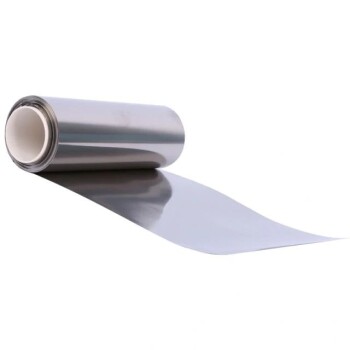
High-Purity Titanium Foil and Sheet for Industrial Applications

High-Purity Titanium Foil and Sheet for Industrial Applications

Titanium is chemically stable, with a density of 4.51g/cm3, which is higher than aluminum and lower than steel, copper, and nickel, but its specific strength ranks first among metals.

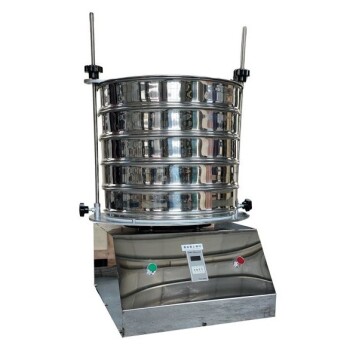
Laboratory Test Sieves and Sieving Machines

Laboratory Test Sieves and Sieving Machines

Precision lab test sieves & sieving machines for accurate particle analysis. Stainless steel, ISO-compliant, 20μm-125mm range. Request specs now!

Laboratory Sterilizer Lab Autoclave Pulse Vacuum Lifting Sterilizer

Laboratory Sterilizer Lab Autoclave Pulse Vacuum Lifting Sterilizer

The pulse vacuum lifting sterilizer is a state-of-the-art equipment for efficient and precise sterilization. It uses pulsating vacuum technology, customizable cycles, and a user-friendly design for easy operation and safety.

Laboratory Sterilizer Lab Autoclave Vertical Pressure Steam Sterilizer for Liquid Crystal Display Automatic Type

Laboratory Sterilizer Lab Autoclave Vertical Pressure Steam Sterilizer for Liquid Crystal Display Automatic Type

Liquid crystal display automatic vertical sterilizer is a safe, reliable and automatic control sterilization equipment, which is composed of heating system, microcomputer control system and overheating and overvoltage protection system.

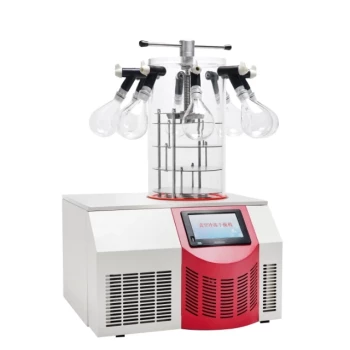
Benchtop Laboratory Freeze Dryer for Lab Use

Benchtop Laboratory Freeze Dryer for Lab Use

Premium benchtop laboratory freeze dryer for lyophilization, preserving samples with ≤ -60°C cooling. Ideal for pharmaceuticals & research.

Anti-Cracking Press Mold for Lab Use

Anti-Cracking Press Mold for Lab Use

The anti-cracking press mold is a specialized equipment designed for molding various shapes and sizes of film using high pressure and electric heating.

HFCVD Machine System Equipment for Drawing Die Nano-Diamond Coating

HFCVD Machine System Equipment for Drawing Die Nano-Diamond Coating

The nano-diamond composite coating drawing die uses cemented carbide (WC-Co) as the substrate, and uses the chemical vapor phase method ( CVD method for short ) to coat the conventional diamond and nano-diamond composite coating on the surface of the inner hole of the mold.

Benchtop Laboratory Vacuum Freeze Dryer

Benchtop Laboratory Vacuum Freeze Dryer

Benchtop laboratory freeze dryer for efficient lyophilization of biological, pharmaceutical, and food samples. Features intuitive touchscreen, high-performance refrigeration, and durable design. Preserve sample integrity—consult now!

Custom PTFE Teflon Parts Manufacturer for Gaskets and More

Custom PTFE Teflon Parts Manufacturer for Gaskets and More

Gaskets are materials placed between two flat surfaces to enhance the seal. To prevent fluid leakage, sealing elements are arranged between static sealing surfaces.

915MHz MPCVD Diamond Machine Microwave Plasma Chemical Vapor Deposition System Reactor

915MHz MPCVD Diamond Machine Microwave Plasma Chemical Vapor Deposition System Reactor

915MHz MPCVD Diamond Machine and its multi-crystal effective growth, the maximum area can reach 8 inches, the maximum effective growth area of single crystal can reach 5 inches. This equipment is mainly used for the production of large-size polycrystalline diamond films, the growth of long single crystal diamonds, the low-temperature growth of high-quality graphene, and other materials that require energy provided by microwave plasma for growth.

Single Punch Electric Tablet Press Machine Laboratory Powder Tablet Punching TDP Tablet Press

Single Punch Electric Tablet Press Machine Laboratory Powder Tablet Punching TDP Tablet Press

The single-punch electric tablet press is a laboratory-scale tablet press suitable for corporate laboratories in pharmaceutical, chemical, food, metallurgical and other industries.

High Purity Zinc Foil for Battery Lab Applications

High Purity Zinc Foil for Battery Lab Applications

There are very few harmful impurities in the chemical composition of zinc foil, and the surface of the product is straight and smooth; it has good comprehensive properties, processability, electroplating colorability, oxidation resistance and corrosion resistance, etc.

High Energy Vibratory Laboratory Ball Mill Grinding Mill Single Tank Type

High Energy Vibratory Laboratory Ball Mill Grinding Mill Single Tank Type

High-energy vibration ball mill is a small desktop laboratory grinding instrument.It can be ball-milled or mixed with different particle sizes and materials by dry and wet methods.

High Energy Planetary Ball Mill Milling Machine for Laboratory

High Energy Planetary Ball Mill Milling Machine for Laboratory

The biggest feature is that the high energy planetary ball mill can not only perform fast and effective grinding, but also has good crushing ability

CVD Diamond Cutting Tool Blanks for Precision Machining

CVD Diamond Cutting Tool Blanks for Precision Machining

CVD Diamond Cutting Tools: Superior Wear Resistance, Low Friction, High Thermal Conductivity for Non-Ferrous Materials, Ceramics, Composites Machining

High-Energy Omnidirectional Planetary Ball Mill Machine for Laboratory

High-Energy Omnidirectional Planetary Ball Mill Machine for Laboratory

The KT-P2000E is a new product derived from the vertical high-energy planetary ball mill with a 360°rotation function. The product not only has the characteristics of the vertical high-energy ball mill, but also has a unique 360°rotation function for the planetary body.

High Energy Planetary Ball Mill Milling Machine for Laboratory

High Energy Planetary Ball Mill Milling Machine for Laboratory

Experience fast and effective sample processing with the F-P2000 high-energy planetary ball mill. This versatile equipment offers precise control and excellent grinding capabilities. Perfect for laboratories, it features multiple grinding bowls for simultaneous testing and high output. Achieve optimal results with its ergonomic design, compact structure, and advanced features. Ideal for a wide range of materials, it ensures consistent particle size reduction and low maintenance.

Vacuum Hot Press Furnace Machine for Lamination and Heating

Vacuum Hot Press Furnace Machine for Lamination and Heating

Experience clean and precise lamination with Vacuum Lamination Press. Perfect for wafer bonding, thin-film transformations, and LCP lamination. Order now!

Laboratory Horizontal Planetary Ball Mill Milling Machine

Laboratory Horizontal Planetary Ball Mill Milling Machine

Improve sample uniformity with our Horizontal Planetary Ball Mills. KT-P400H reduces sample deposition and KT-P400E has multi-directional capabilities. Safe, convenient and efficient with overload protection.

Small Vacuum Heat Treat and Tungsten Wire Sintering Furnace

Small Vacuum Heat Treat and Tungsten Wire Sintering Furnace

The small vacuum tungsten wire sintering furnace is a compact experimental vacuum furnace specially designed for universities and scientific research institutes. The furnace features a CNC welded shell and vacuum piping to ensure leak-free operation. Quick-connect electrical connections facilitate relocation and debugging, and the standard electrical control cabinet is safe and convenient to operate.


Leave Your Message